

Houston's Created Its Own Problem: The Unnecessary Fight To Snatch Up The Discovery Space Shuttle Continues
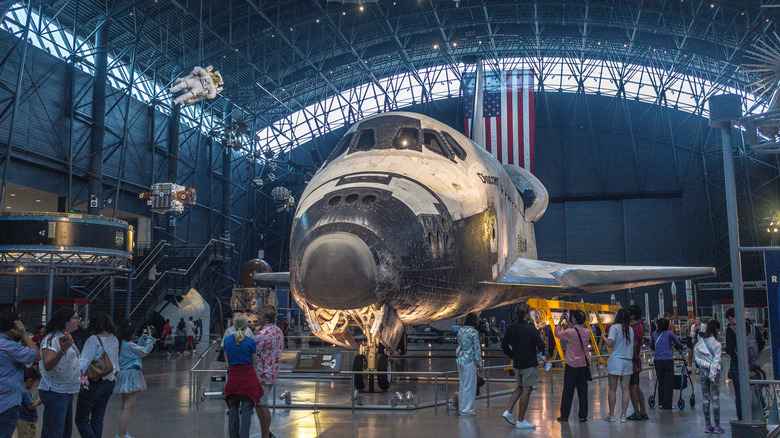
It's been 15 years since NASA announced the permanent homes for the agency's retired space shuttles, and Houston has yet to get over it. So much, that Texas Senator Ted Cruz and soon-to-be former Senator John Cornyn, have led a campaign to basically rob the Smithsonian of the most precious shuttle in the program, Discovery. Part of those efforts involved getting a little money out of last year's "Big Beautiful Bill" to move it across the country. And if you thought this too shall pass, and everyone was maybe joking, Houston certainly wasn't.
If a sudden case of deja-vu just hit you, that's because we wrote about this nearly a year ago when the bill passed and Senators Cruz and Cornyn landed the $86 million they wanted earmarked for the endeavor of moving the shuttle. But the story has become so much more than just moving a space shuttle from Virginia to Texas. Unfortunately embroiled in this "custody battle" as the Wall Street Journal described it, is the Smithsonian's National Air and Space Museum, home to the space shuttle Discovery for the last 15 years.
The Smithsonian was a top selection and the only non-negotiable destination for one of the space shuttle orbiters when the program ended. The museum already had one of NASA's orbiters, Space Shuttle Enterprise, on display. The Enterprise would be given to another institution so that the Smithsonian could receive the Discovery.
But we have space stuff here too!
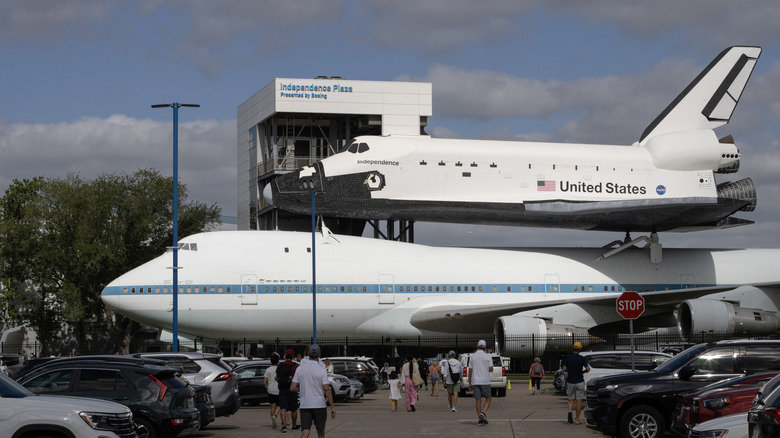
Space Center Houston was one of 29 museums and institutions that applied to receive one of three decommissioned space orbiters after President George W Bush retired the space shuttle program. The Texas staple of the space program, and its native city will have you believe they were a top contender for receiving one of those shuttles, even dubbing it the "Houston Shuttle Snub." But it wasn't a snub, because the official report breaking down the selection process says it was far from.
What Houston seemed to forget was the intention behind finding the best places for the space shuttles to go. NASA's goal and guidelines during the selection process stated they wanted to place these orbiters where the most individuals could enjoy them, and also someplace that could reimburse costs for restoration and transportation to their new, permanent homes.
To make that determination, NASA formed a selection committee of individuals from across the agency's departments who then made up a score sheet to determine what facilities could provide the best exposure for the space shuttles. In the first round of scoring, Houston was ranked 10 of the 29 entries. By the final count, it landed seventh, with one of its lowest-scoring categories having to do with attracting visitors, especially internationally. Outside of Virginia's Smithsonian, which was always going to get an orbiter, the other three locations were New York, California, and the Kennedy Space Center in Florida. All internationally-renowned travel destinations.
$86 million isn't going to cut it, boys
The thing of it is, when each of the space orbiters' new homes were selected, NASA then transferred ownership to those facilities. The Smithsonian is the rightful owner and keeper of Space Shuttle Discovery. Neither Houston, nor NASA have the ability to just take it off the museum floor. And considering Discovery is 58 feet tall and 122 feet long, with a wingspan of 78 feet and a weight of 86 tons, it's not something you can just move without attracting some attention, either.
Terry White, Discovery's retired orbital processing chief, told WSJ, "This whole this is aggravating because there's no place in American where you can just take it down the road. Moving it without damage will be next to impossible and extremely expensive."
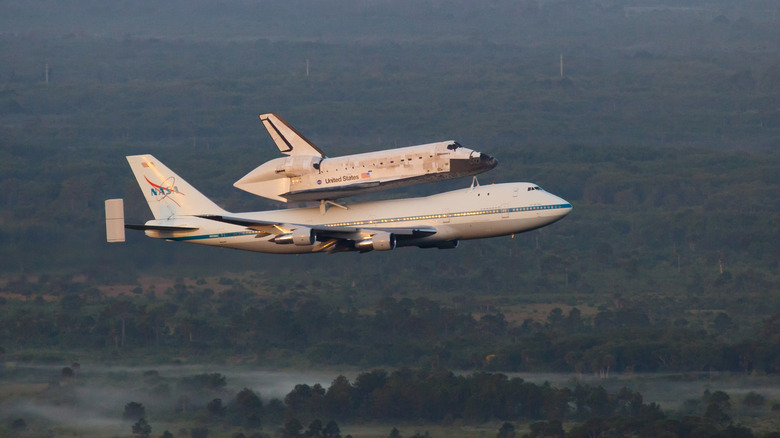
The $86 million of tax payer money set aside for the move likely won't cut it as retired engineers from the program estimated the bill would be closer to the hundreds of millions of dollars. In our last article, the National Air and Space Museum said it would cost between $200-300 million. With both Shuttle Aircraft Carriers designed to carry these space vehicles around decommissioned (one is at Space Center Houston), the option is to move it by barge. Enterprise was moved around the south end of the Manhattan island from John F. Kennedy International Airport to Intrepid Museum via barge for a cool $8.5 million. That was just a few dozen miles, not several hundred.
When you can't have what was never yours, you obviously double down
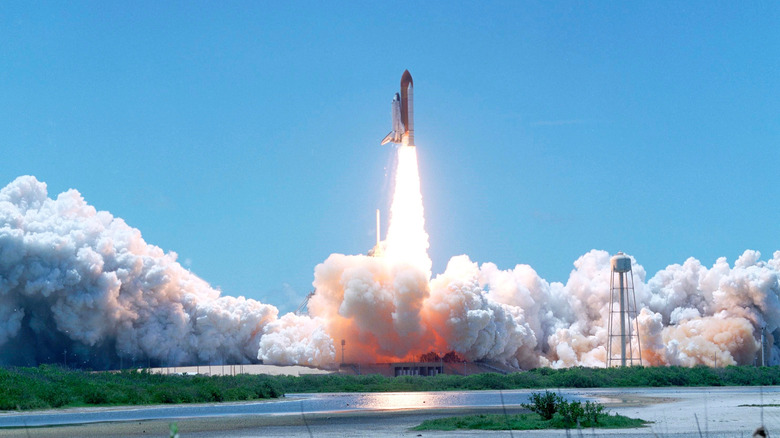
But that hasn't stopped NASA from working on preplanning some movements anyway. According to the WSJ the agency met with "heavy-lifting" companies that could perform the logistics and movement of something the size of Discovery sometime last week. There's also been a draft proposal making its rounds that discusses moving several NASA vehicles, which includes what WSJ reports is the "conceptual relocation of a large aerospace vehicle comparable in size and complexity to a Space Shuttle Orbiter or solid rocket booster." That's not suspicious sounding at all.
The Smithsonian in the meantime (and you thought we forgot about them) stands its ground on its rightful ownership, as it should. In its latest cool-mom statement to Jalopnik: "The Smithsonian Institution owns the Space Shuttle Orbiter Discovery and holds it and all of its collections in trust for the nation. The Smithsonian has a unique responsibility to properly manage, preserve, and make accessible the collections in its care for current and future generations to appreciate, enjoy, and study."
If there is a custody battle to be had, the Smithsonian has it locked down. Thinking of this like you would argue for kids in a similar case, what would be best for the shuttle? It has an established home, with its own friends and support system. It also has a brighter future educating more individuals around the world on the space program — more than Houston could dream of.