

Why The Mercedes 540K Special Roadster Was The 1930s Ultimate Supercharged Grand Tourer
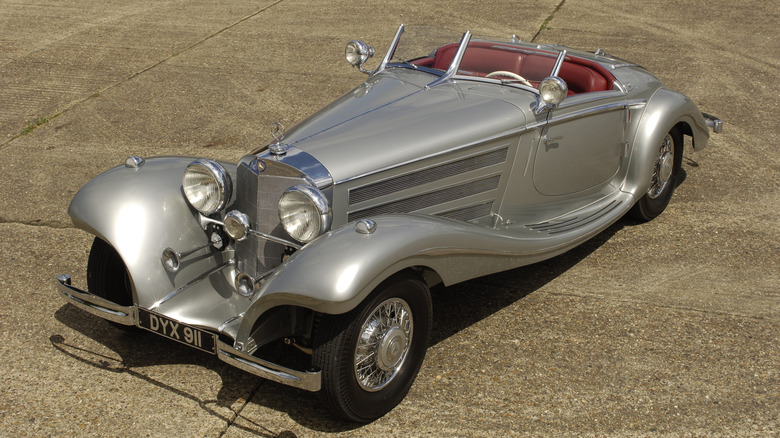
The Mercedes-Benz 540K Special Roadster indeed earns its name. Its lineage stretches back to 1926, when the very first supercharged K model debuted. From here, Mercedes launched the S, SS, and SSK, which were celebrated in their own right but undoubtedly overshadowed by the later W29-series 500K and 540K models. They were the ultimate evolution of this lineage — especially the 540K, housing a reworked 5.4-liter straight-eight with a supercharger bolted on top. That mighty engine was packaged into a sophisticated chassis, which boasted an independent suspension, vacuum-assisted hydraulic drum brakes, and a choice of four- or five-speed transmissions. Clearly, Mercedes had its eyes set on effortless high-speed touring when crafting the 540K.
At the very top of the 540K tree sat the Special Roadster. It was the sportiest expression of the model. Custom coachwork provided dramatic proportions which set it apart from the crowd, while low-volume production ensured exclusivity. This recipe of power, impressive engineering, and handcrafted lines elevated the 540K above merely being transport and turned it into an expensive status piece. Seven-figure values, immaculate restorations, and prestigious prizes across numerous concours fields ensure the 540K Special Roadster is still seen as the ultimate grand tourer today, just as it was almost a century ago, when the world first set eyes on it.
Everything about the 540K exudes excellence
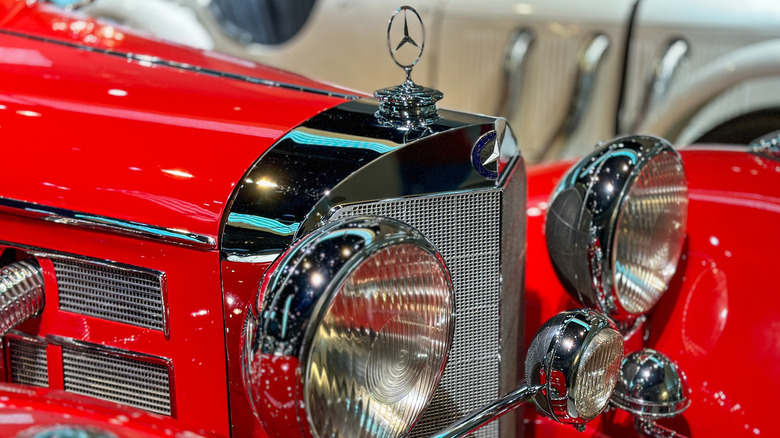
Mercedes-Benz is known for having produced some of the most famous straight-eight engines of all time, and the 540K was particularly special thanks to a Roots-type supercharger, which increased its output from a standard 115 to 180 hp, providing a top speed in the region of 110 mph. By way of comparison, the popular Ford Model 48 of the mid-'30s was powered by a 3.6-liter flathead V8, which cranked out 85 hp and allowed the car to reach 65 to 70 mph.
Further aiding the 540K's grand-touring abilities was a five-speed manual transmission. Earlier cars boasted four-speed units, but the extra speed allowed engine revs to drop when cruising at high speeds — an important trait for an ultimate grand tourer, as is exclusivity, and the 540K had that in spades.
These cars were produced at the Sindelfingen 'special vehicle production facility,' and a smattering of elite buyers were charmed by their appeal. No ultimate grand tourer should be affordable or easily attainable, and the 540K Special Roadster certainly fit the bill. New ones would cost up to 28,000 Reichsmarks in 1935 — roughly $11,272 U.S. back then, or $274,000 when adjusted for inflation today – at a time when the Beetle was pegged to cost around 990.
Its legacy cements it as the ultimate '30s GT car
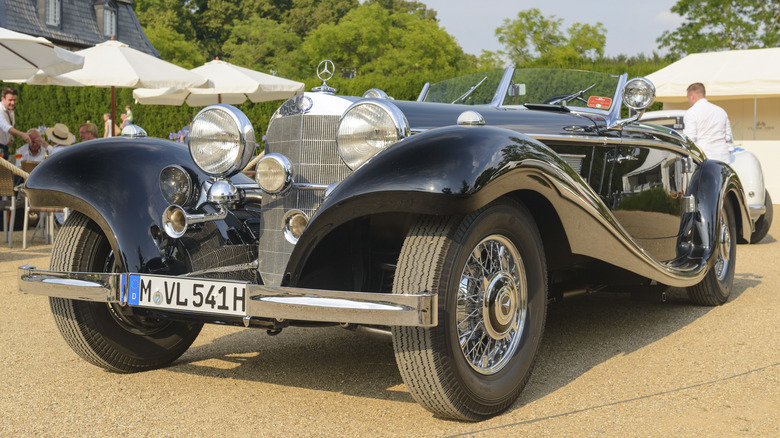
Times do change, though, and to still be considered the ultimate supercharged '30s grand tourer today, the 540K Special Roadster's history since production had to be equally impressive. Production ended in 1939 with just 761 W29 models ever produced across both 500K and 540K variants, but only 50 were Special Roadsters.
One of the most notable examples that survives today includes one originally commissioned for Afghanistan's royal court in 1937. According to Hemmings, it was purchased in a pre-restoration state for the monumental sum of $9.9 million. A comprehensive restoration was undertaken with direct assistance from Mercedes-Benz Heritage, and the results were astounding. It was awarded the coveted Best of Show prize at Pebble Beach's 2023 Concours d'Elegance — just 2 years after another 540K won Pebble in 2021.
Typical Special Roadsters — if there is such a thing — tend to trade from $1.2 million through to eight-figure sums, with the current record-holder for the nameplate being an $11.7 million 1936 example, known as the 'Von Kreiger Special' (via Classic Driver). Almost a century on from the model's birth, Mercedes-Benz describes the W29 as a "persuasive testimony to the engineering and design expertise," cementing it as a benchmark for pre-war excellence, luxury, performance, and historical significance.