

The Coventry Climax Engine Started As A Fire Pump Then Won Formula 1 Titles
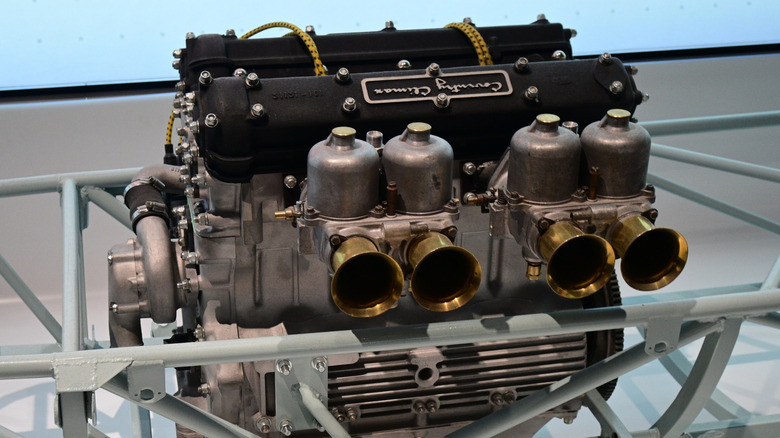
The heart of every Formula One car is the engine, and there have been a few that have been more celebrated than most. The Renault-Gordini EF1 1.5-liter turbocharged V6 won 15 grand prix races between 1977 and 1983. Honda's RA121E was the only V12 engine to snatch a grand prix title in 1991, and it did it so in the hands of the great Ayrton Senna and the mighty McLaren MP4/6. In addition to these well-known names, there's a lesser-known engine builder that conquered F1 circuits between 1957 and 1963. It made its mark by pocketing 18 grand prix victories, enabling Cooper to win the constructors' championship in 1959 and 1960.
The bewildering part is that the Coventry Climax FPF is a humble naturally-aspirated four-cylinder motor that traces its origins to a stationary fire pump. The company was founded in 1903 by former Daimler engineer Pulham Lee and built a reputation by supplying the tractor engines for Sir Ernest Shackleton's epic 1914 Antarctic expedition. Coventry Climax began supplying car engines to Triumph, Clyno, and Morgan, but the Great Depression of the 1930s forced Leonard Lee, Pulham Lee's son, to pivot into making water-pumping engines so the company could survive.
The British Ministry of Defense requested bids for lighter water pumps with a faster flow rate in 1950, and Coventry Climax sprang into action by unleashing the FW (featherweight) engine, a 62 cubic-inch (1020 cc) pumping monster that produced 38 horsepower while weighing only 180 pounds (81.6 kilograms).
From pumping water to racing at Le Mans
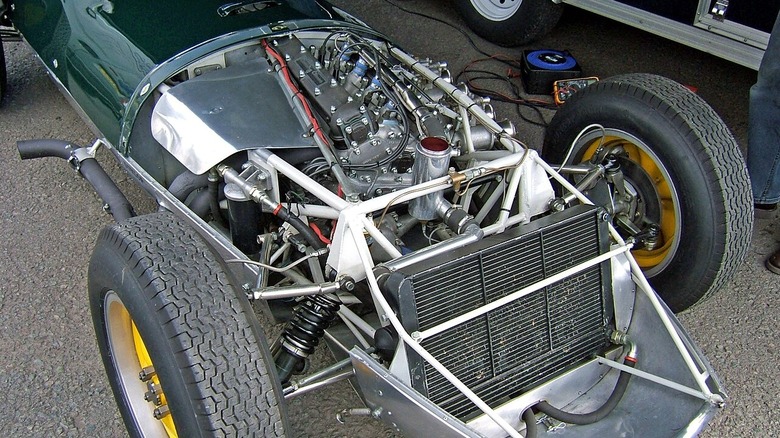
The Coventry Climax (CC) FW inline-four engine was advanced for its time. It had an aluminum block and head with single overhead cams (SOHC) and dry cast-iron cylinder liners. It had three main bearings to make the engine lighter, and the cast-iron crankshaft has four balancers to mitigate vibration. All of that and more was enough for the British government to request 15,000 FW fire pump engines, and it gave Lee the motivation to enter the racing world by exhibiting the engine at the 1953 Earls Court motor show, where the FW engine caught the attention of Lotus founder Colin Chapman and Welsh racing driver Cyril Kieft.
Again, Coventry Climax went to work and produced the FWA (featherweight automotive), which was immediately put into action for Kieft Cars at the 24 Hours of Le Mans in 1954. The car failed to finish and retired, but the engine became renowned for its durability. The CC FWA engine returned to Le Mans in 1955,1956, and 1957 (Lotus finished seventh overall in '56), and it was clear that the Coventry Climax name was primed to move up the ranks.
Earning glory in Formula One and beyond
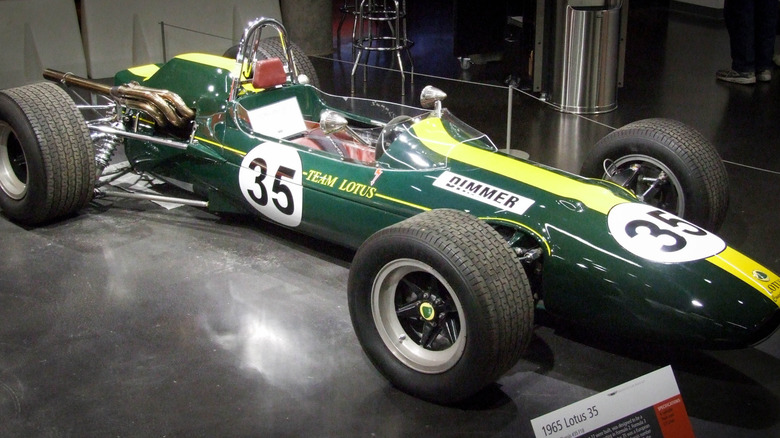
Before entering the F1 realm, Coventry Climax dabbled in F2 racing in 1956, but it didn't take long for the engine to find a home in the pinnacle of motorsport racing. In 1958, Stirling Moss won the Argentine Grand Prix in a Cooper T43 powered by a Coventry Climax 2.0-liter FPF engine. By 1959, the CC FPF grew to 2.5 liters and won the 1959 F1 championship for Jack Brabham and Cooper-Climax.
Of the legendary Jim Clark's 25 Grand Prix victories, 19 were powered by Coventry-Climax engines, and the engine builder found homes with the greatest names in international motorsports, including Cooper, Lotus, Elva, and Lola. Furthermore, a mid-engine Cooper with a CC FPF 2.75-liter engine finished ninth at the 1961 Indy 500, becoming the first rear-engined roadster to do so. By the time the V8-powered F1 era began in 1962, the Coventry Climax FPF had gained cult status in the racing world.
Coventry Climax retired from Formula 1 racing at the end of the 1965 season. The famed engine builder was absorbed into the British Leyland Special Products division after Jaguar merged with the British Motor Corporation in 1965, which eventually formed British Leyland after merging with the British Leyland Motor Corporation in 1975. It began manufacturing forklifts in 1977 but entered receivership in 1986. Despite ending up making industrial forklifts, Coventry Climax and the race-spec FPF four-banger remain engraved in F1 folklore as one of the most celebrated racing engines in motorsports.