

What's Generally More Reliable: An Automatic Or Manual Transmission?
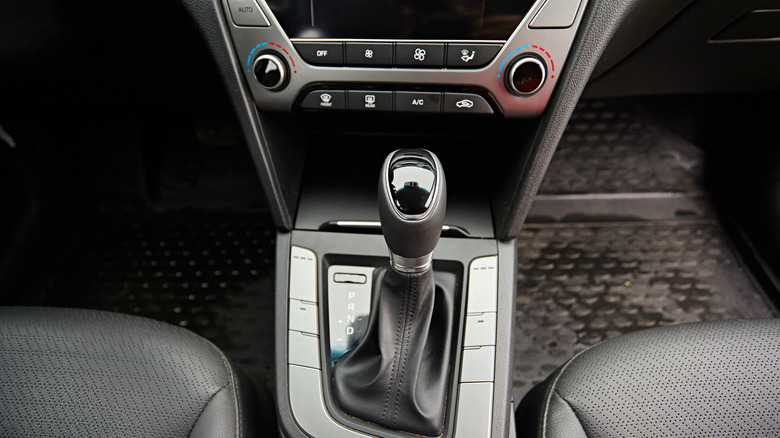
Reliability is one of the most important concerns for a car buyer, but it's far from the only one. Some want more space, some want quieter engines, and some want the latest technology. Preferences shift market demand on a larger scale, and manufacturers adapt accordingly. When it comes to transmissions, buyer preference in the U.S. is even clearer: By 2025, only a handful of new cars will still be available with a manual. Automatics are simply easier to drive, and most buyers prefer them. Still, easier to drive doesn't necessarily mean more reliable — so which transmission actually holds up better over time? It is impossible to give a definitive answer regarding which one is more reliable because too many factors influence transmission day-to-day functionality and longevity.
For starters, manual transmissions are generally simpler mechanically. This means that they should require less maintenance, which can contribute to reliability. However, every gear change in a manual is a mechanical input made by the driver, and bad inputs made consistently will show up in the wear. Automatic transmissions are more complex, but modern automatics have been refined to a point where the reliability gap has largely closed. All in all, long-term reliability depends more on maintenance, driving habits, and specific transmission designs than on transmission type alone.
Real-world factors that influence transmission reliability
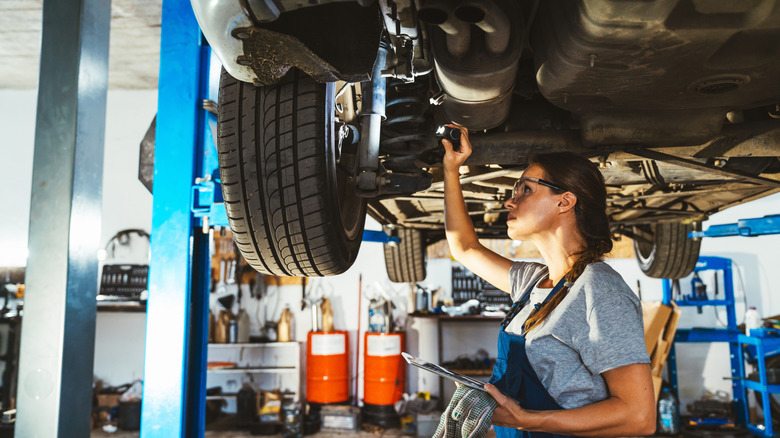
With a manual transmission, the burden to shift correctly is placed on the driver, not a computer. Since every gear change is a mechanical input, bad inputs can accumulate. For example, even experienced stick shift drivers are sometimes prone to riding the clutch. Riding the clutch is described by Edmunds as, "Whenever the clutch pedal isn't all the way up or all the way down, you're putting wear on your clutch."
If one is not gentle enough, that can cause accelerated wear and tear on the clutch and the flywheel, and the price to fix such issues can be high. With an automatic, you cannot ride the clutch. Maintenance is also a big factor here, and frequent fluid changes are the bare minimum for most transmissions.
When neglecting automatic transmission service, you could face more serious repair costs because an automatic has more working components, which means more potential points of failure. Granted, some automakers advertise lifelong transmission fluid, meaning that they never need replacing, which can mislead drivers since factors like driving habits influence how well a transmission is going to perform.
The driving environment also plays a huge role, and in many cases, drivers don't even realize that. AAA asked motorists about their driving behaviors and found that 62% qualified as driving under severe service conditions. Factor in model-specific reliability, climate, software, and electronics, and a definitive answer regarding whether manuals or automatics are more reliable becomes increasingly elusive.
Reliability vs. real-world driving needs: Why there's no clear transmission winner

By now, it should be clear that reliability alone cannot determine a clear winner between manuals and automatics. There are simply too many variables at play. The more useful question is which transmission suits you, as this directly influences reliability.
If you're not experienced with manuals, have no particular interest in learning, or spend most of your time in stop-and-go traffic, an automatic is the straightforward choice. An automatic transmission handles shifting for you, reduces the margin for driver error, and, in most modern vehicles, will serve you well long-term with basic maintenance. Additionally, if you're heavy-handed behind the wheel — meaning not particularly delicate with mechanical inputs — an automatic is likely the better bet, both for daily driving and long-term reliability. Still, if you sometimes want to take control over the gears, you can do so in many automatic cars via steering paddle shifters or manual shift modes. On the other hand, if you want more control over your driving experience, find the engagement of a clutch and gearshift rewarding, and want a car that can deter thieves who don't know how to drive one, a manual has its merits.
As this article has outlined, a manual in the wrong hands is not more reliable than an automatic. It may have fewer parts to break, but that advantage doesn't mean much in real-world conditions where maintenance and usage matter most.