

Which BMW Models Are Made In America?
BMW may be one of Germany's iconic automotive brands, but many of its vehicles now come with South Carolina birth certificates. Since opening Plant Spartanburg in 1994, the company has transformed the facility into an economic powerhouse. More than 30 years later, the factory has produced over 7 million vehicles. According to BMW, about 200,000 units are shipped globally each year, an output worth $9 billion in 2025, accounting for about half of the company's U.S. production. Last year, BMW was the top U.S. automotive exporter.
In an SUV-hungry market, it's no surprise that the bulk of BMW's crossovers are assembled in the U.S. Each day, 1,500 X3, X5, X6, X7, and XM models leave the assembly line. However, the 11,000 workers at the factory haven't always been focused on Sport Activity Vehicles (SUVs in BMW-speak). The facility has a history with the company's sedans and sports cars, like the 318i and Z3. So, despite the Teutonic origins, the bulk of what BMW sells in the U.S. is built here.
Current U.S. production: BMW X3, X5, X6, X7, and XM
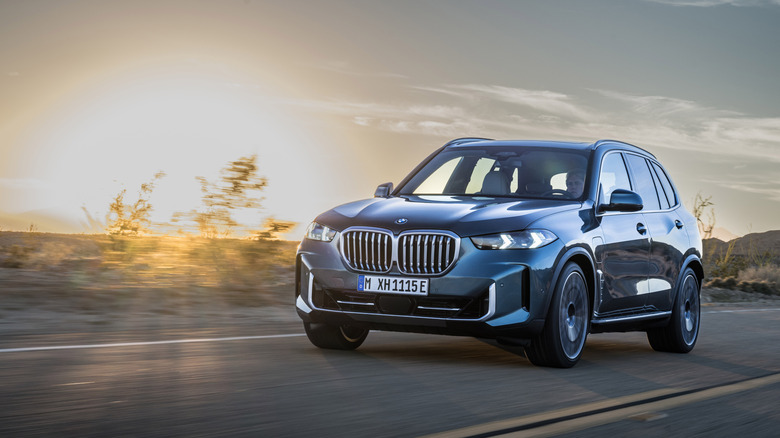
The company's benchmark X5 is the South Carolina factory's longest continuous-running nameplate, with production starting in 1999 (for the 2000 model year). While luxury SUVs are a dime a dozen now, that wasn't the case a quarter century ago. BMW was racing to catch up to the Mercedes ML and Lexus RX, which had already hit the market. The current X5 is part of the fourth (G05) generation. Given its shared roots with the X5, it was only natural that the X6 be manufactured at the same factory. The X6 launched for the 2008 model year, a year after the second-generation X5 appeared.
The X3 started out being built in Austria, among other places, when it hit showrooms in 2004. However, BMW expanded the Spartanburg plant to add this compact SUV to the production roster, beginning with second-generation X3 for the 2011 model year. The company released the third generation for 2018, with production split between South Carolina and other global locations. The X3 became BMW's best-seller in 2023, and U.S. manufacturing continued with the 2025 X3, the start of the weird-looking fourth generation.
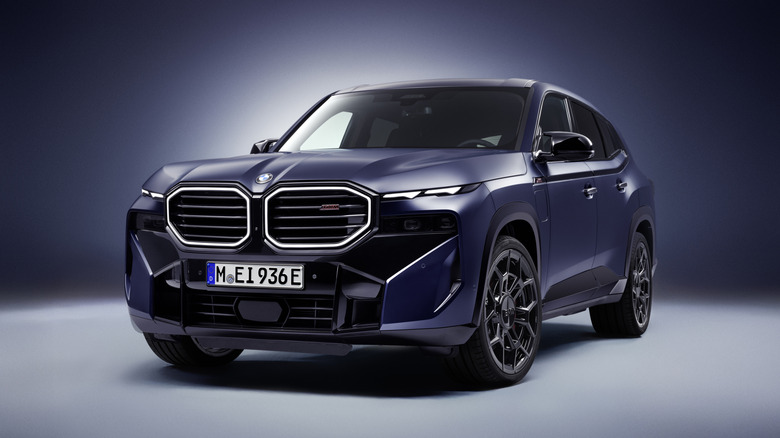
Despite the X5 offering third-row seating for many years (a feature dropped in 2024), the vehicle never matched the space of larger Mercedes-Benz GLS. To address this shortcoming, BMW introduced the three-row X7 for 2019, which has been built in South Carolina since day one. While the X7 arguably earns flagship status for size in BMW's SUV lineup, the U.S.-built XM earns bragging rights as the company's most expensive utility for 2026: $160,775 (including destination charges). The XM can hit 60 mph from a standstill in 3.6 seconds, thanks to the 738 horsepower from a twin-turbocharged 4.4-liter V8 paired with a plug-in hybrid system.
Past U.S. production: BMW 318i, Z3, Z4
While SUVs are the focus of BMW's current U.S. manufacturing, this wasn't always the case. In 1994, the first model to roll off the assembly line in the States was an Alpine White 318i sedan. By today's standards, the 138 horsepower produced from its 1.8-liter four-cylinder engine is modest. Even the lackluster 2026 Nissan Sentra makes more (149 ponies). Yet, many purists would appreciate the 318i's rear-wheel drive and standard five-speed manual gearbox. Production ended after 1996.
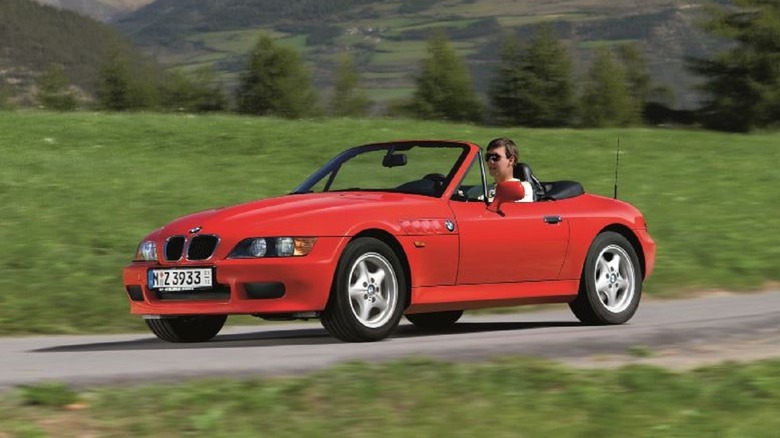
The 318i's departure from the Spartanburg facility made way for the Z3 roadster, the first BMW to be built outside of Germany. Manufacturing began with the 1996 model year, offering the same output (138 horsepower) as the 318i but with a displacement of 1.9 liters. The quirky, sneaker-like hatchback version joined the lineup for 1999. By the Z3's final year, 2002, the inline-six engine choices included a base 2.5-liter powerplant making 184 horsepower or an optional 3.0-liter unit producing 225 horsepower.
BMW's South Carolina plant also had a history with the Z4, the Z3's successor. Launched for the 2003 model year, the Z4 continued with the same six-cylinder offerings. For 2006, BMW ditched the 2.5-liter setup in favor of two versions of the 3.0-liter inline-six, with outputs of 215 or 255 horsepower. Z4 production in the U.S. ended with the 2008 model year. Manufacturing for the second-generation Z4 shifted to Germany the following year, to allow for more X model production in South Carolina.