

Michelin Used To Award Eco-Friendly Green Stars, Now, Some Restaurants Want Them Back

Most people know Michelin as a conglomerate that owns multiple tire brands and doubles as the world's most influential restaurant guide. But few know that Michelin also awarded a separate distinction for genuine commitments to sustainability. After only five years, though, the Green Star is gone and the chefs who earned one aren't quietly accepting the decision.
Revealed in 2020 and introduced across several editions of the following year's Michelin Guide, the Green Star recognized restaurants at the forefront of environmental and ethical practices in the industry. Qualifying kitchens held themselves accountable on sourcing by working with sustainable producers and actively reducing — or removing — non-recyclable materials from their supply chains. Michelin inspectors considered ingredient provenance, seasonal produce, food waste systems and resource management. They also took note of how openly a restaurant communicates its sustainability approach to guests.
Similar to the more widely known Michelin star for culinary excellence, there was no fixed formula for the Green Star. Restaurants across the globe faced unique conditions because of their surrounding regions — inspectors instead looked for those at the top of their environmental game. Any restaurant already listed in the Michelin Guide was eligible, whether it held a traditional star, a Bib Gourmand, or a Michelin Plate. At one point, over 290 restaurants held the Green Star distinctions across the globe.
Michelin announced earlier this month that the Green Star would be retired and replaced by Mindful Voices, a new editorial platform spotlighting individuals "pioneering new approaches in the fields of gastronomy, hospitality and wine." Notably, Mindful Voices will not bestow any official accolade on restaurants — a detail Green Star holders say makes this new designation a poor substitute.
Why the Green Star is gone and what restaurants are losing
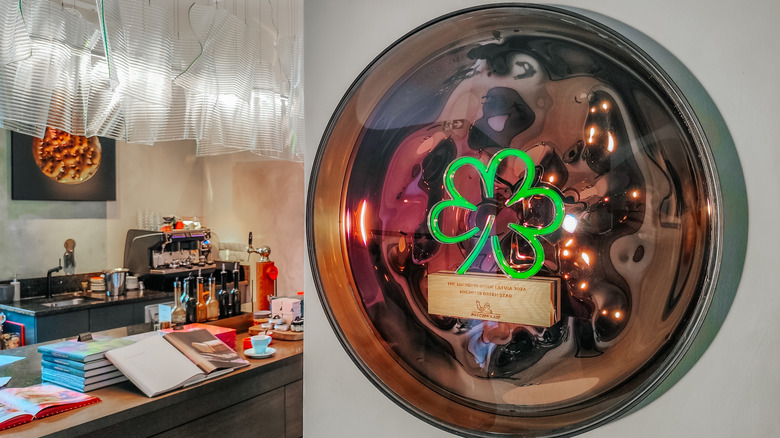
Michelin has not publicly explained the reasoning behind the Green Star's departure, though the most glaring critique was the insubstantial verification process to receive a Green Star — owners filled out a questionnaire about their own practices. Critics argued the award reflected a polished sustainability narrative over hard ecological data, as inspectors weren't actively auditing kitchens in any significant way.
The Green Star was initially introduced in certain markets as a "green clover" or "sustainability clover," before being standardized globally. These initial branding cues created confusion of their own. Because it could be awarded to restaurants without traditional culinary stars, some venues marketed themselves as "Michelin-starred" based solely on the green emblem.
For the 37 restaurants in the United Kingdom and Ireland currently holding the Green Star, the announcement landed hard — and without warning, according to The Times. Owners across the islands voiced their frustrations, with some bluntly criticizing the decision and noting that the influx of diners who once came for a "Michelin star" experience was thwarted. Others, however, hoped the moment might signal something more optimistic; a world where sustainable practices have become common enough that singling them out is no longer necessary.
In a statement supplied to The Guardian, a Michelin spokesperson framed the shift as a progression, rather than a retreat. "The Guide's ambition is evolving towards a broader and more universal expression, one that now encompasses our three pillars of excellence: gastronomy, hospitality and wine." One can only hope that Michelin's new sustainable tire will prioritize substance over symbolism.