

Why Magazine Acceleration Testing Actually Matters
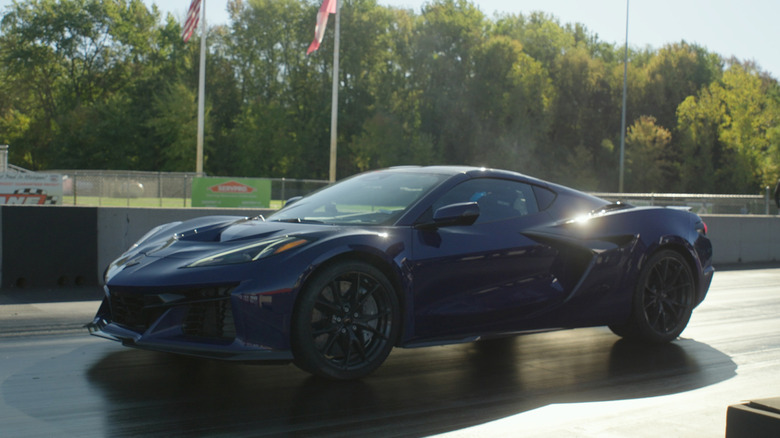
Whether it's picking the wrong winner of a comparison test, leaving out the car that totally would have won, writing too much or too little about a subject, or anything else on the internet's long list of complaints, buff books catch a lot of flak these days. The numbers aren't realistic. They're too hard on the cars. Numbers are meaningless. In many cases, those criticisms aren't completely unfounded. Heck, we just published a post about 5-60 mph times being more useful. But it's still time someone stood up for the car magazines and their testing.
I didn't work on the test team back when I was at MotorTrend, but they did sign my paychecks for a couple of years, and since they're one of the magazines I'm talking about here, it's probably important to admit that up front. I liked most of the people I worked with, and that probably still comes with some bias. However, I don't think my previous employment has much of a bearing on my argument here. It's not that buff book times are some perfect standard with zero shortcomings. They're just tailored for better comparisons.
Remember, if you record a car's actual 0-60 or quarter-mile time on a hot day at a Florida drag strip, you're going to see a different number than if you tested it in the winter at 5,000 feet. That's also to be expected, because real-world performance depends on so many factors other than horsepower, including tires, temperature, and altitude. So we're already setting ourselves up to have a bad time if we're trying to pick one number to represent a value that changes with every run. But I promise you, by making 0-60 times less realistic, they actually make them more useful.
Correct me if I'm wrong, but
The buff books know times vary, of course, so they record the conditions at the track, run the acceleration tests, and then use a formula to normalize the recorded time. Everyone does it, so it's not like I'm exposing one magazine's secrets or anything. Car and Driver has even written expansive stories about how they conduct testing. In fact, these outlets don't have a choice. It's just the only realistic way to accurately compare one acceleration test to another. But if you're already mad that some outlets use rollout, it could be tough to accept that those numbers are "fake" with or without rollout included.
Does that mean 0-60 times are useless? Not at all. Also, it depends. A test result is just a measurement. It tells you something, but the real value is in how you use it. If you want to know, down to the tenth of a second, exactly how long it will take your car to hit 60 mph from a stop on the highway near your house tonight, Car and Driver's time will almost definitely be "wrong." For you. This time. Tonight. Run it again the next night, and that could change.
Compare one car's 0-60 time to another's, though, and suddenly, that "fake" number becomes a lot more useful. Whether you're able to match the number printed in the magazine on your own or not, a car with an as-tested 0-60 time of 4.6 seconds will reliably beat one with an as-tested time of 5.0 seconds, and it doesn't really matter how hot it was during either test. At least as long as you use the same driver and stick to 0-60 testing. Change the test, though, and the winner could change, too.
Measure what matters
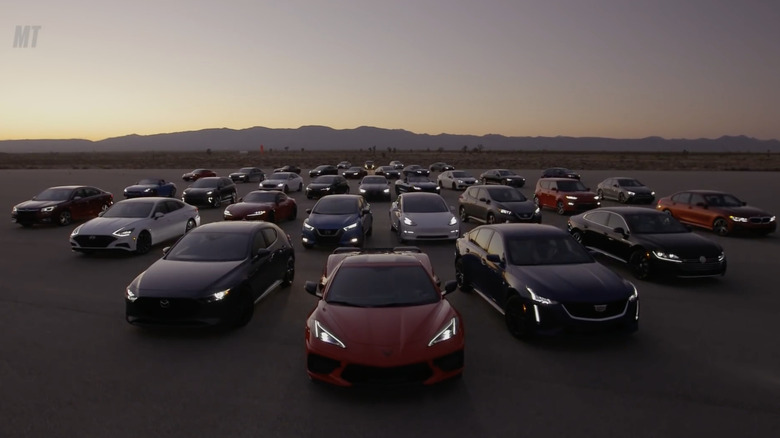
These corrections formulas they use are good, too. I very specifically remember one test we re-ran on a cooler day because we were so worried the first test's extremely high track temps could have thrown off the calculations. After rerunning the numbers, we got a different result, but our official test time only changed by a tenth of a second. In the grand scheme of things, that's basically nothing. Like I said, test engineers have this correction factor thing dialed in.
As long as they do it right, correcting acceleration times also lets you compare a Car and Driver number to a MotorTrend number with a pretty reasonable degree of accuracy. Sure, you might eek out a real-world win racing a 3.7-second car in a straight line against a 3.6-second car. It happens. But if Car and Driver says the CollinCar hits 60 mph in 1.9 seconds, and MotorTrend says the AndyCar needs 2.3 seconds, you don't have to wait for Car and Driver to test the AndyCar to know the CollinCar is far superior.
If you don't care about being able to accurately compare multiple cars' acceleration times when they were tested at different times and in varying conditions, that's fine. Maybe for your purposes, buff book test numbers really are useless, but that doesn't mean they're a joke or a scam. They just prioritize accurate comparisons over real-world repeatability, and that's a good thing. Imagine how much dumber online car arguments would be if different outlets published wildly different numbers. It would be horrible.
So yeah, you may be disappointing to record a 6.5-second run when MotorTrend said it was a 5.9-second car, but it's not like that really means anything. It's just a number. It captures a snapshot of a car's performance, but it can't tell you anything about how enjoyable it is to drive. It can't tell you whether you'll fall in love with or merely tolerate the car. And it definitely can't tell you which car is the best for you. Just drive cars you enjoy and don't worry about the numbers. Until it's time to argue about cars on the internet, that is.