

Hartsfield-Jackson Might Replace TSA With Private Security After Shutdown Walkouts
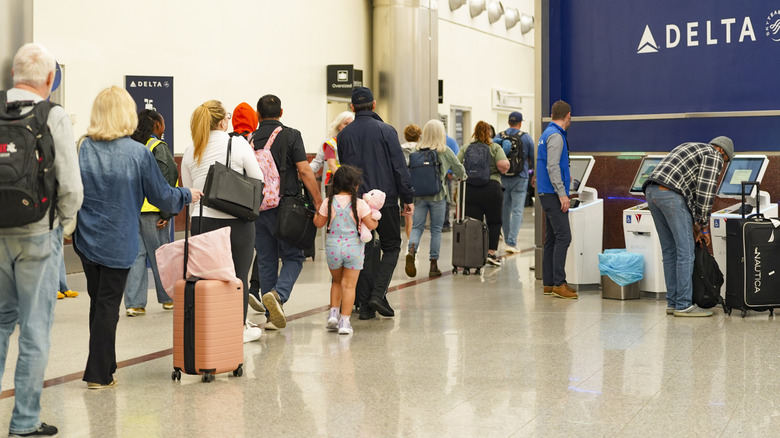
The shutdown of the Department of Homeland Security earlier this year left travelers at airports waiting for hours to get through understaffed security checkpoints. Elected officials are now exploring methods of preventing this from ever happening again at the world's busiest airport. The Atlanta City Council voted 11-1 on Monday in favor of launching a study into privatizing security at Hartsfield-Jackson International Airport, where over a third of TSA agents walked out during the shutdown. While security privatization would be new for American airports, it raises concerns about corporations directly profiting off of taxpayers for a previously government-run operation.
The feasibility study will compare the cost of private security screening with that of its current federal counterpart, including employee pay and benefits. Officials will also evaluate the impact that privatization would have on current TSA employees, especially their job security and the likelihood of being hired by the potential contractor. With Hartsfield-Jackson having a TSA workforce of about 1,200 people, a mass firing wouldn't be well-received by the city. Councilman Byron Amos, the resolution's lead sponsor, told WABE:
"This feasibility study is only asking about what it would look like if we can better serve grandmothers standing in line all day long because our federal government can't get its act together to keep our TSA workers employed. Our customers are the people who frequent our airports. They are the ones we should be worrying about."
Airport security privatization isn't new, but it shouldn't be encouraged
The resolution also states there will be a review of the precedents set by the TSA's Screening Partnership Program. The federal program lets airports contract out security screening services to private companies with TSA oversight. Currently 20 airports participate in the SPP, including San Francisco International. The federal government covers the cost of SPP contracts, not the airport. At SFO, the Department of Homeland Security awarded a five-year, $715 million contract to Covenant Aviation Security.
Atlanta Councilmember Kelsea Bond, the lone vote against the resolution, said she was defending the public sector and that TSA privatization was part of the Heritage Foundation's Project 2025. Fitting a familiar theme of President Donald Trump's second term, TSA privatization would provide an opportunity to further dismantle the federal government and hand out massive contracts to his allies. While there are plenty of valid criticisms of big government, speed-running the same privatization arc as 1990s Russia straight into an oligarchy eager to appoint the next U.S. president is indisputably worse.