

How The U.S. Strategic Petroleum Reserve Actually Affects Gas Prices
Right now, the U.S. is sitting on the second-largest stockpile of crude oil in the world, totaling hundreds of millions of barrels. Why is the country hoarding so much oil when gas prices are so high? Why not sell some of it? The U.S. has, in fact, released reserves onto the market at certain points in history to stabilize oil prices, and it's doing so today, though we don't expect gas prices to come down anytime soon. It is structured as an exchange — the U.S. government releases some of its oil to the highest bidder, who must eventually return the same amount of oil, plus some additional oil on top of that.
The government has done this during the Gulf War in 1991, in response to Hurricane Katrina in 2005, during the war in Libya in 2011, during the invasion of Ukraine in 2022, and this year, in response to the closing of the Strait of Hormuz. This has historically resulted in a modest decrease in gas and oil prices in the short term, but those prices go up again as the oil companies have to pay the oil back.
It's important to remember that crude oil is not the same as gasoline, so it is not the sole determining factor in the price of gas. More oil on the market does not necessarily mean cheaper gas. There are a whole lot of other factors that impact the cost of producing fuel.
Releasing reserves can make gas cheaper
We've all seen gas prices go up since the beginning of the current U.S.-Israeli war with Iran, but this isn't the first time. In 2022, Russia invaded Ukraine, causing a crude oil supply crisis, which sent gas prices skyrocketing. In response, President Biden released a total of 370 million barrels from the Strategic Petroleum Reserve (SPR), the largest release in the reserve's history. What impact did that have on gas prices? It depends on how the math is done. By some figures, it lowered the price of gas by 17 to 42 cents per gallon. Other figures put it at 38 cents. Yet, another set of figures puts it at 13 to 31 cents per gallon. Regardless of which way it's calculated, the price of gas went down a bit.
How does this work? It follows the law of supply and demand. When the U.S. stockpiles crude oil, that oil isn't in the supply. If supply is meeting demand or falling short of meeting it, the price of crude remains high. When stockpiles are released onto the market, that increases the supply, thereby lowering the price of crude oil. Because gas is refined from crude oil, crude accounts for around half of the cost of gasoline. Some estimates state that there is often a 1:1 relationship between changes in the cost of crude and gas. In other words, if crude prices decrease by $1 per barrel, gas prices also decrease by $1 per barrel, though tight markets can impact that.
The U.S. has a finite reserve of oil
So, why doesn't President Trump do the same as Biden and release a bunch of crude oil? Well, he is, but not quite on the same level. The U.S. is gradually releasing just 172 million barrels, half as much as was released in 2022, and it is doing it a few million barrels at a time. Why not more? For one thing, those 370 million barrels released in 2022 represented 64% of the stock, and refilling the reserve takes years. Currently, the SPR amounts to just under 400 million barrels. Releasing the same amount as 2022 would nearly empty the stockpile.
While the U.S. holds the second-largest stockpile of crude, it's just a drop in the bucket compared to the world market. The U.S. alone uses 20 million barrels of oil a day, so the entire current stockpile represents just a 20-day supply. In fact, 20 million barrels is about the amount of oil that was being shipped daily through the Strait of Hormuz before the current war. The world collectively uses around 100 million barrels per day.
It's important to note here that the U.S. isn't the only country releasing its oil reserves on to the market. It's part of a global effort coordinated by the International Energy Agency (IEA). Altogether, its 32 member nations will be releasing 400 million barrels of oil from their reserves, which amounts to a 4-day supply for the globe.
Why not just drill more oil?
So, our strategic reserves are limited, but the U.S. is sitting on billions of barrels of oil that are yet to be drilled. Why not just tap into that? That has become a political issue with debates over environmental concerns and the use of public lands. However, supposing the country were to be more aggressive about drilling, it would take time to set everything up for extracting and transporting the oil, which means it wouldn't be an immediate solution to the current crisis.
And even if we did drill all of that oil, the U.S. would still have to import about 40% of the oil it refines. That's because oil pumped from American soil is largely light, sweet crude. But a significant percentage of U.S. refineries are set up for processing heavy, sour oil. At the time they were built, America was, and still is, importing much of its oil from other countries. Why not change the refineries over to processing light, sweet crude? That would take decades and billions of dollars. That's why the strategic reserves maintains about 60% light, sweet oil and 40% heavy, sour oil.
Still, oil is a global commodity, so if the U.S. could export enough oil, even sweet oil, wouldn't that result in lower gas prices? Perhaps, to some extent. But as you can see, it's more complex than just dumping oil into the supply.
Gas prices are impacted by more than just the supply of crude oil
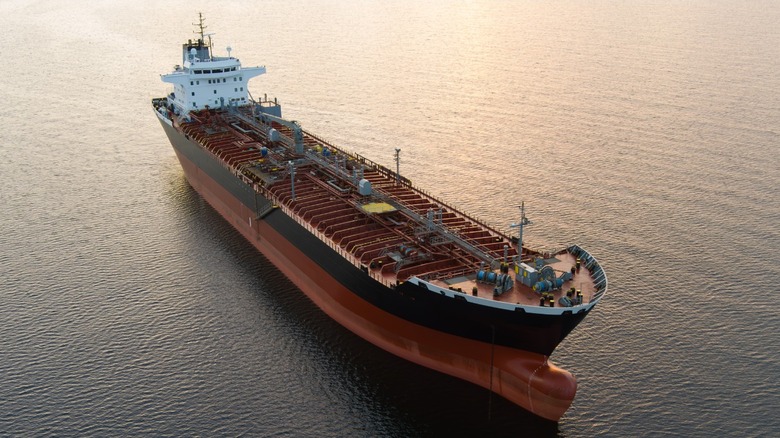
As we said, crude represents only half the cost of gasoline. There is also distribution, transportation, refining, marketing, and other costs. Transportation is a big one. Part of the reason why the U.S. imports so much oil is that it's cheaper in some cases to import it than to transport it across the country. The U.S. is a big country, and pipelines don't run everywhere within its borders. It's easier and cheaper in some locations just to get oil from Mexico, Canada, or elsewhere. Still, there is a cost with international transport, especially across the ocean. The oil companies pass that cost on to the gasoline distributors, who pass it on to the rest of us.
And there's more to it than just the cost of producing gasoline. The actual prices of oil are set by those who trade it. Global traders speculate and bid based on how much profit they may be able to make. A crisis, like what's going on in the Strait of Hormuz, is exactly the kind of thing to make bids on oil commodities go through the roof. That is what we see reflected at the gas pump.
It takes a while to affect gas prices, and the effect doesn't last
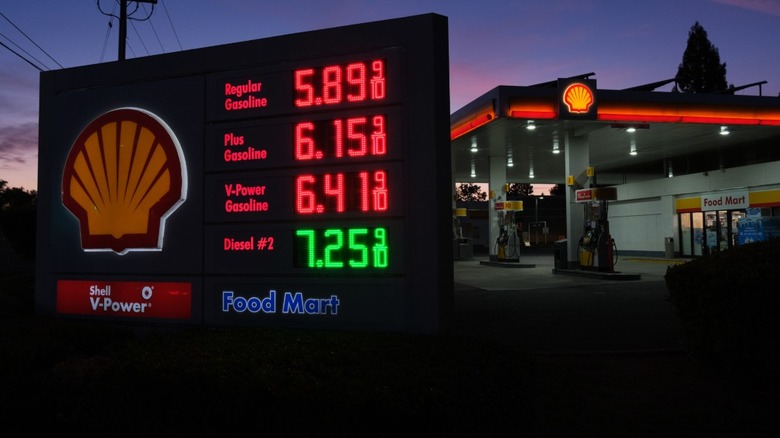
Another thing to keep in mind is that it takes time for a reduction in the price of crude to trickle down to gas prices. Reserve crude takes about 13 days to make it to the market, and gas stations will have already bought the gas they expect to use in the meantime. In other words, gas station owners are paying today's prices for gas they intend to sell down the road. That's why, as you've likely noticed, that gas prices shoot up quickly but tend to come back down very slowly.
What's more, gas prices often stay down only temporarily after an SPR release. Take 2011, for example, when reserves were released to mitigate the civil war in Libya's impact on gas prices. This move did result in a 6% drop in fuel costs, but that drop lasted just 2 weeks before gas prices began to rise again. As we pointed out, the historically large release of reserves in 2022 during the invasion of Ukraine caused gas prices to go down by 13 to 42 cents. However, prices went back up to the point that they were over $5 per gallon by June.
The takeaway here is that releasing oil from the national reserves can help when it comes to surges in gas prices. But it's a temporary solution with limitations. It's not a miracle cure for high gas prices.