

Here's What That Ticking Lifter Might Be Telling You
There are a myriad of components that make engines tick. By which we mean "tick" in the sense of the sound, not what makes them angry. Fuel injectors make a ticking noise as they quickly squirt precise amounts of fuel into the combustion chamber, either by way of the intake manifold or directly in there. Sometimes worn accessory drive bearings can make such a noise. But the lifters, also known as buckets, tappets, or camshaft followers, can develop a tick as well.
Some solid-lifter engines will always have a slight tick to them, but when its hydraulic units adorning the valvetrain, it could be a sign that something's wrong and needs remedying. Or the tick could be a bit more internal and concern the crankshaft. What might that ticking lifter be telling you? Let's dig into the various reasons, as well as what could happen if it isn't addressed. In a sense, the tick could actually, eventually, indeed make the engine angry.
Who's that tappeting at the window?
Engines that use hydraulic lifters are found in both single and overhead camshaft forms. They fill up with oil and utilize its pressure to maintain precision valve clearances, as well as quiet and efficient operation.
In many (not all) overhead situations, they're pushed down by the camshaft as it spins around and then push down on the intake or exhaust valve, keeping the engine in perfect timing. In single-cam fare, they're pushed up by the camshaft and transfer that push up to the pushrods, which then move the rocker arms and valves.
Over time, lifters can become filled with sludge and no longer pump up and down. Or, the passageways that fill them could become clogged with the wretched stuff. Or, there may not be enough oil to pump them up to begin with. A tiny tick on startup that quickly goes away isn't a big issue, especially on a cold morning or if the vehicle has been sitting a while. But if it persists, especially after the engine is warmed up, it's important to dig deeper. A good method for zeroing in on the tick is taking the blade of a flathead screwdriver, pressing it against the valve cover, and gingerly putting one's ear on the handle to act as a stethoscope.
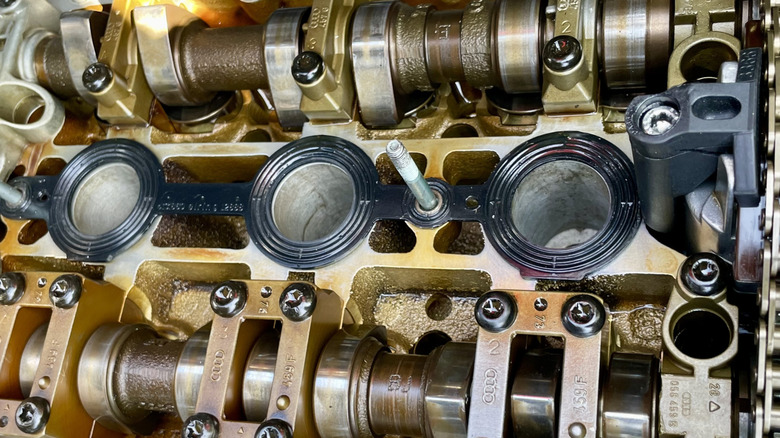
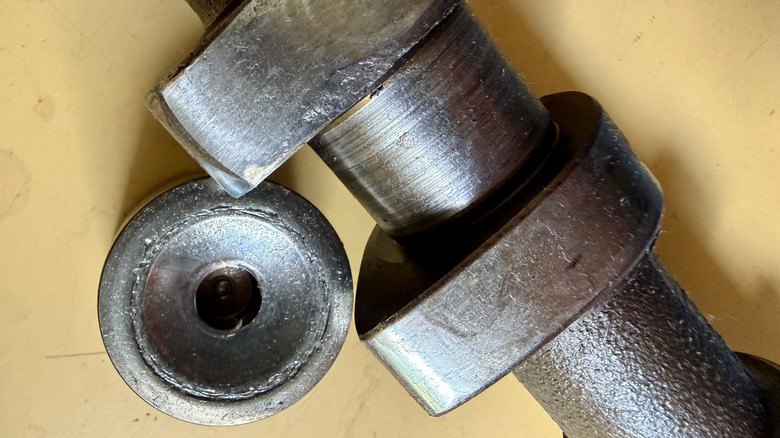
In this author's experience, years of neglected maintenance by previous owners led to a frozen lifter in the driver bank of their B5-generation Audi S4's twin-turbo 2.7-liter V6. How did I discover it? Upon removing the valve cover there it was; punctured by the camshaft and damaging it in the process. Thirty new lifters, a lightly used camshaft, and an oil change later, and the engine's been happy ever since.
More ticking concerns
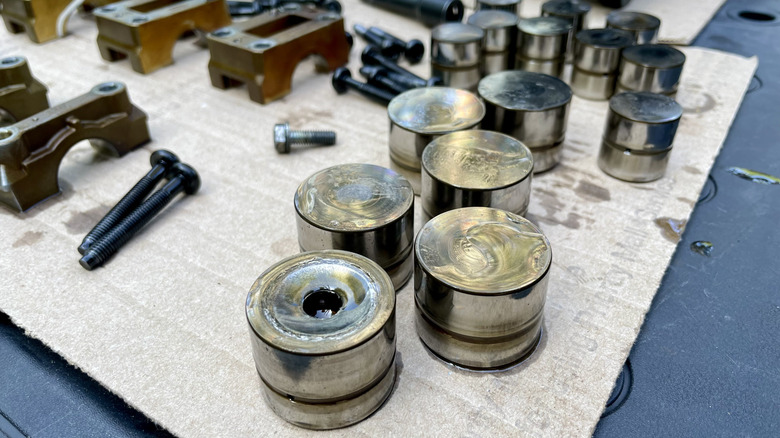
Ticking that goes away shortly after the engine fires could mean that a lifter (or lifters) is (or are) on the way out. And if it starts to take longer for them to pipe down, it's better to replace them sooner than later to avoid them becoming destroyed and sending metal shrapnel through the engine and causing more harm. This author got lucky and avoided such fate.
The ticking may go away under acceleration or load, then return when back at idle. This is a telltale sign. Though, if it gets more intense, it could mean a dead lifter or a much deeper and more serious problem: catastrophically bad rod knock. This is when the crankshaft's rod bearing is worn out or spun, the piston rod and crankshaft are making direct contact with each other without the proper film of oil. This will eventually lead to catastrophic engine damage.
As Speedway Motors details, "a lifter tick sound is usually rapid and regular, in tune with the camshaft's speed. Because the camshaft spins at half the crankshaft's speed, lifter noise can sound slower or "softer" than rod knock at a given engine speed."
The best way to avoid lifter tick is ensuring the engine is always topped up with oil. Additionally, regular oil changes at or before the manufacturer's recommended interval with a good quality oil and filter. Then, revving the engine out once it's up to temperature ensures hot oil passes through all crevices and cleans any potential sludge. Additionally, it's not a bad idea to pour in an oil additive/valvetrain cleaner for peace of mind.
That ticking lifter might be telling you that you need to check your oil, change it, or replace the lifters before all heck breaks loose.