

5 Car Parts You Should Never Buy From A Junkyard
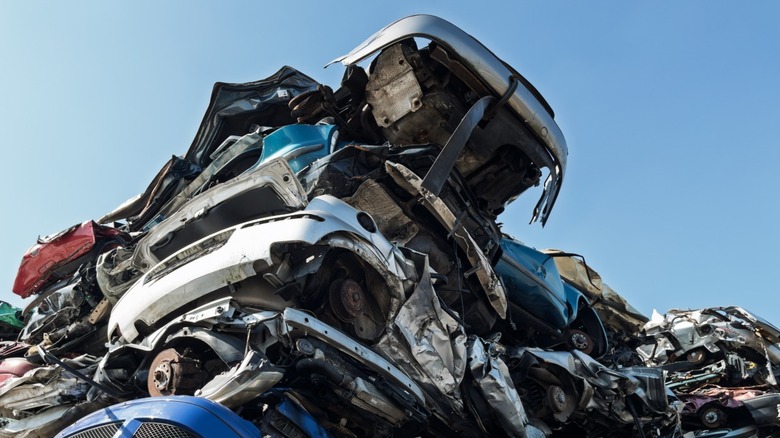
If you're the kind of person who would never put a used part on your car, we're happy for you. Not all of us have the budget for that, so we've been around the junkyard a time or two. It can be a decent way to save money when you have some repairs to make. There's no shame in the scrap game. That's especially true when you're looking for body parts like fenders, bumpers, or mirrors.
Of course, there are some parts that you're just better off buying new, and some parts you can't buy used. For example, did you know that it is illegal for a junkyard to sell a used catalytic converter unless it's been tested? But there are some parts you just shouldn't buy from a junkyard, even if you can.
Any parts that are a matter of safety should be avoided. This includes seat belts and airbags. Many junkyards won't strip the seat belts for resale for that reason. The same goes for things that wear out multiple times over the life of your car, such as tires and brake pads. You'll also want to avoid other brake components, like shoes and drums, as well as any rusted parts. Shocks and struts should also be bought new. Really, with most of these parts, there's a lot of overlap between concerns about safety and how long you can expect them to last.
Tires
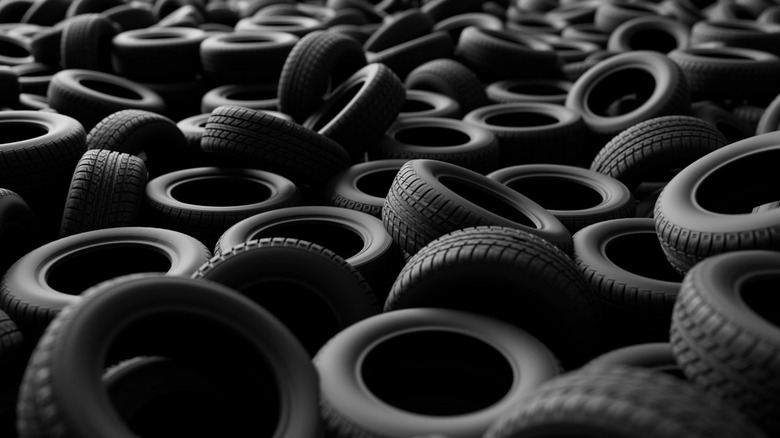
New tires are expensive, and the ones on your car don't always wait until you're flush with cash to wear out. That's why there's a whole industry out there that sells used tires, which are far less expensive. For many, used tires may seem like the only affordable option. But if you feel your bank account will only allow you to buy used tires, a junkyard is not the place to get them.
A reputable used tire shop will at least look over the used tires before they sell them. Even then, you're rolling the dice when you make that purchase. You can't tell just by looking at the tire whether the previous owner ever checked the pressure or left them underinflated. You don't know if they drove around with too much weight in their vehicle and put undue stress on the tires. There can also be damage inside the tire that you can't see. What's more, you don't know how long they've been sitting in that junkyard. And tires will deteriorate as they sit.
That's why Bridgestone recommends replacing tires every 10 years, regardless of how the tread looks. Goodyear recommends six years. Sure, these folks want to sell you tires, but tires do wear out eventually. If you must buy used, check the DOT number on the sidewall, specifically the last four digits. The last two of those digits tell you the year the tires were manufactured.
Brake parts
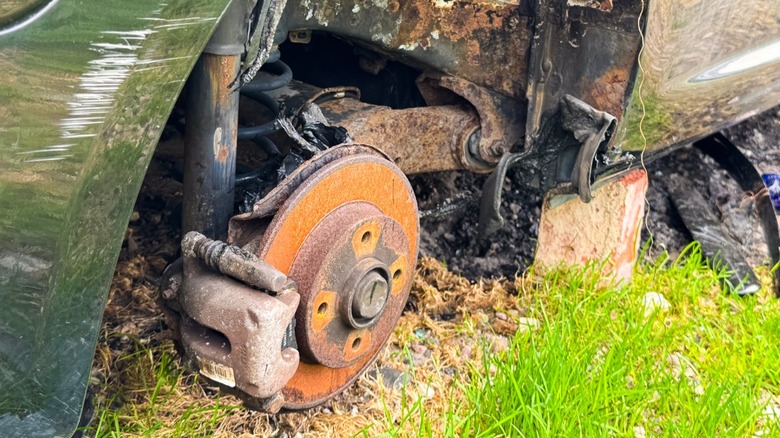
As you're hurtling down the highway, and your brakes are all that stands between you and a head-on collision with a semi-truck, the last thing you want going through your mind is whether you should have bought them at a junkyard. The quality of your replacement brakes can literally be a matter of life and death. Why risk your safety just to save a few dollars? And considering how cheaply you can buy brake pads, how much would you really save? You can buy some pads from AutoZone for less than $20. Buying them used just doesn't make sense.
But that goes for more than just the pads. Drums, lines, and shoes should all be bought new when they need to be replaced. Rotors can sometimes be resurfaced, but you still shouldn't buy them from a junkyard. This is not a matter of "they look okay." You have no idea whether the previous owner rode their brakes all the time, how many times they had to slam on their brakes because they weren't paying attention, or whether they were in an accident. That means those brake components could have internal damage that you can't see, like warping, cracks, or uneven wear.
Even rotors are supposed to be changed from time to time, sometimes as frequently as every 20,000 miles, depending on how they've been used. How many miles are on those rotors you found in the junkyard? How would you even know?
Safety restraints – seat belts and airbags
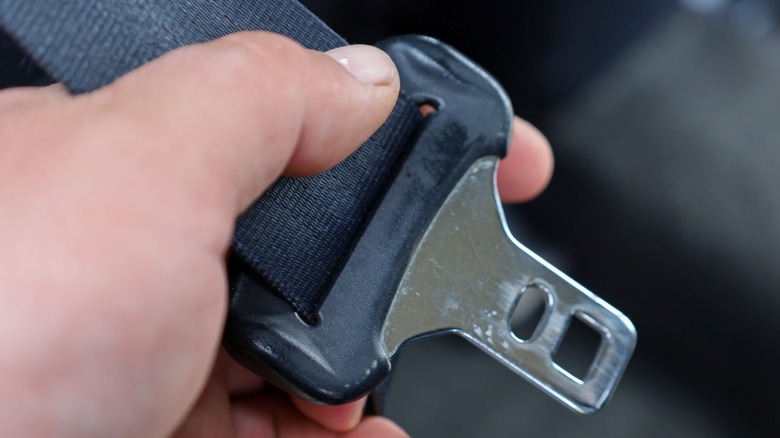
We've established that it's more important to think about safety than potential savings when deciding whether to buy used parts from a junkyard. This is even more apparent when it comes to actual safety components like seat belts and airbags.
In 2024, the National Highway Traffic Safety Administration (NHTSA) released a consumer alert regarding defective aftermarket airbags, which had killed three people and seriously injured two others in the year prior. These weren't cases of the air bag just failing to deploy. According to the alert, these malfunctioning units sent "large metal fragments into drivers' chests, necks, eyes and faces, killing or severely injuring drivers in otherwise survivable crashes." It urged consumers to be careful when buying used vehicles and to check the car's history to make sure the airbags hadn't been replaced with a substandard aftermarket model. It's pretty hard to check that history in a junkyard. Regardless, when you're talking about something that can save your life or the life of a loved one, why risk buying a used one? After all, airbags have a lot more going on than you might think.
The same goes for seat belts. Once the tensioning mechanism has been deployed in an accident, the system is compromised. Even if there doesn't seem to be collision damage on the outside of the car, you can't be sure it wasn't in an accident.
Shocks and struts
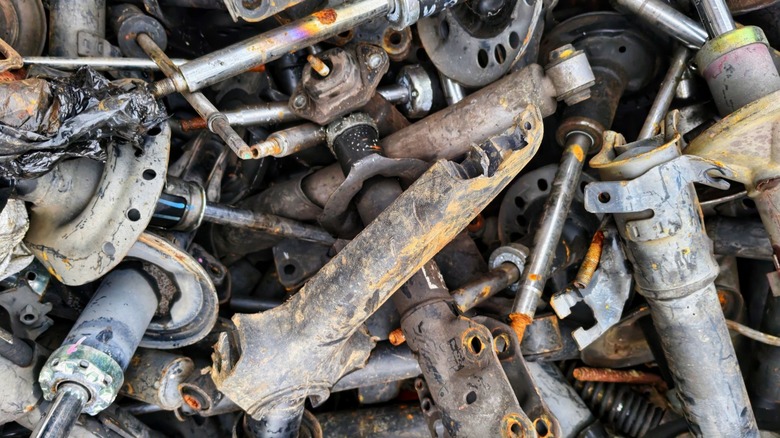
Monroe has a term for one of its inspections, called the "Safety Triangle." Apparently, Monroe has even trademarked the term. It refers to the tires, brakes, and the ride control components, which includes the shocks and struts. This makes sense, since the shocks and struts work in conjunction with brakes and tires to ensure that the car can be relied on to stop when required, and to provide the driver with the control needed to keep the car on the road. In fact, riding on worn shocks can cause tires to go bad, which shows how interconnected they are.
Depending on the vehicle, tires can be more expensive than shock absorbers — and bad things can happen when driving on worn shocks or struts. Not replacing shocks and struts when they need to be replaced can also damage suspension bushings, ball joints, and axial rods.
Like tires and brakes, shocks and struts weren't meant to last forever. That's why Ford recommends they be inspected during every single maintenance visit. No matter how long shocks and struts are scheduled to last, they should be replaced when they show signs of wear before they cause any damage to the rest of the vehicle. But even without signs of wear, shock absorbers should be replaced around every 50,000 miles or so. That's why it makes no sense to buy shocks and struts from a junkyard, where you have no way to tell how many miles they have on them.
Parts that are rusted

All cars will get a little rust somewhere on them at some point, and not all rust is an indication of a serious problem. Surface rust, for example, is more of a cosmetic problem than a mechanical one. Sometimes a tap from a hammer will cause a little rust to fall off. If there's no rust underneath, then it's just surface rust. The problem is when rust penetrates beneath the surface. This can cause structural issues.
You should especially look for rust around where the part bolts into the engine block. Rust can eat right through metal, causing holes and cracks. The last thing you want is for a part to fall off as you drive down the road. If there is just surface rust in that area, make sure to clean the rust out thoroughly before installing the part. Even surface rust can seize bolts and nuts, making them difficult to remove.
It's a myth that installing a rusty part on your car will make other parts rust. Rust is caused when iron is exposed to water and air. This process is accelerated when the car is around salt, like in a coastal area or where icy roads are treated with salt in the winter. The reason rust appears to spread is that it gets worse the longer the metal is exposed to those conditions. Junkyards can be a great place to find cheap parts. Just be careful about what you're buying.