

Can A Pressure Washer Damage Your Tires?
We may receive a commission on purchases made from links.
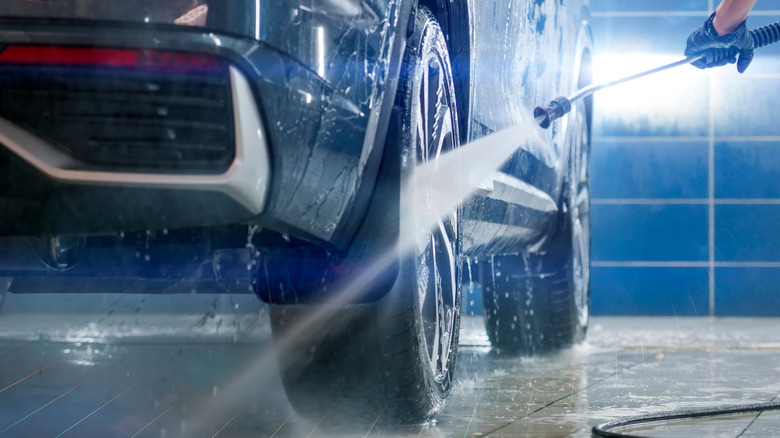
Inexperienced car owners should be extra mindful when using a pressure washer on their vehicles. Consumer Reports warns against using a pressure washer when cleaning cars, since it doesn't take much to screw everything up. Using too much pressure, failing to keep the proper distance while pressure washing, and using the wrong nozzle can damage the paint job and inevitably lead to rust formation. However, in the right hands, pressure washing makes everything easier and faster, and that includes cleaning filthy wheels and tires. With that in mind, pressure washing tires isn't a bad idea, but you have to do it properly.
A TyreSafe survey revealed that about 80% of car owners had no idea that intense pressure washing can harm tires. Pointing a pressure washer directly at the tire sidewall could be enough to inflict micro perforations or cause visible damage to the rubber, leading to early degradation and potential air leaks. Slow leaks will lead to underinflated tires, which is one of the most common causes of tire blowouts. Fortunately, there are some steps you can take to ensure that you keep your tires clean without causing damage.
Choosing the correct pressure goes a long way
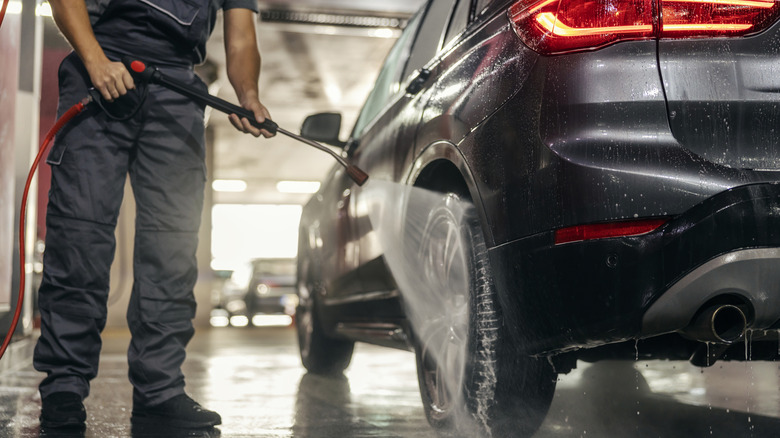
If you insist on pressure washing your car, there are a few tips to keep in mind. Keep the air pressure between 1200 and 1900 psi, preferably using a light- to medium-duty pressure washer for cleaning cars. That range is ideal for ridding the paint of dust, dirt, grime, road salts, and dried-on bird droppings, while still being safe on paint, glass, rubber, plastic, and chrome trim.
You should also pay attention to the water flow rate, which is typically expressed in liters per minute (LPM) or gallons per minute (GPM). The ideal ratio is 1,200 to 1,900 psi and a gentle flow rate of 1 to 2 GPM (about 3.7 to 7.6 LPM), making sure to maintain a distance of 12 to 18 inches from the surface when washing. Using that mix, you can safely power wash cars, wheels, tires, and even your patio.
When washing the body, a 40-degree nozzle is ideal, but switching to a 25-degree nozzle for washing wheels and tires can remove dirt safely without surface damage. Moreover, take care not to aim the jet nozzle directly between the edge of the tire shoulder and the wheel to mitigate water intrusion or air leaks, especially on older tires with visible signs of decay and dry rot.
Is it safe to pressure wash your car's precious wheels?
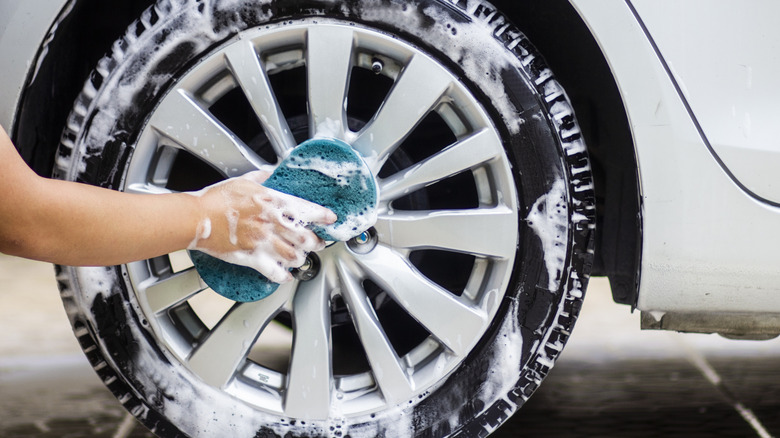
It's not without risks, but you can definitely pressure wash most wheels without nicking, scratching, or damaging the finish. Pressure washing makes it almost effortless to blast away harmful brake and tire dust, grime, and mud from dirty wheels, but you'll have to be mindful of the water pressure, distance, and spraying angle, similar to washing tires and the rest of the car.
Pressure washing any part of the car at close range and at above 2,000 psi can turn a pleasurable day into a stressful one, so keep your distance when power washing wheels (at least 12 to 18 inches from the surface), use a 25-degree nozzle tip, and spray the water at a 45-degree angle to blast dirt from the wheels. A useful tip is to pre-rinse the wheels and tires with a pressure washer, apply some wheel cleaner (like the Adam's Polishes Wheel & Tire Cleaner or Turtle Wax Hybrid Hyper Foam Wheel and Tire Cleaner), agitate the wheel surface with a soft brush, and power rinse the entire thing until clean.
Consumer Reports may be especially cautious about its stand on power washing the entire car. However, you can do it safely and effectively, as long as you keep the pressure right, mind your distance, maintain a broad spray pattern, and avoid the urge to use harsh cleaners or chemicals.