

What Are The Main Differences Between GM's LS2 And LS3 Engines?
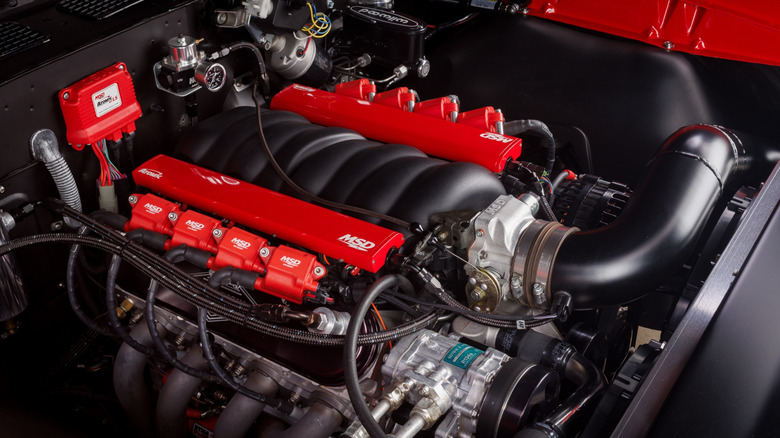
There's no shortage of canon behind the GM LS series of V-8s. When the LS1 debuted in the fifth-generation Chevy Corvette in 1997, it quickly proved itself as a sturdy, compact, and power-rich engine. Its basis is a single-cam, pushrod small-block V-8, but a few choice changes by General Motors (GM) engineers ensured it would be the blueprint for years to come, including the new LT family of single-cam V-8s under the hood of many GM vehicles. Among them is the current C8-generation Corvette, which kicks off the lineup with a 490-horsepower LT2.
The LS2 and LS3 followed in the LS1's footsteps, refining the formula even further and pushing out more power to keep enthusiasts interested. But while the LS2 ran from 2005 to 2009, the LS3 was produced from 2007 until 2017 in street cars and is still built and available new from GM's catalog. Let's dig into some basic, clear-as-day differences between the two engines, and then dive more into the finer details.
The most important differences between the LS2 and LS3 V-8
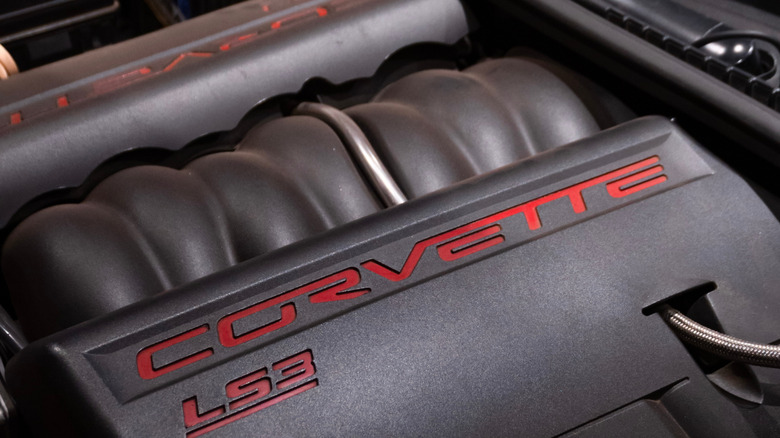
The most obvious difference between the LS2 and the LS3 is in their displacements. While the LS2 measures in at 6.0 liters, the LS3, which debuted in the sixth-generation Corvette, was bumped up to 6.2. Both engines have the same stroke length, but the LS2's bore size is exactly 4 inches while the LS3's is 4.065. As a result, the larger engine has an upper hand in power output, putting out as much as 436 hp and 428 lb-ft, compared to the LS2's 400 hp and 400 lb-ft.
Additionally, GM made changes to the casting and machining to improve the LS3's airflow. The LS2 has what are called cathedral intake ports, which come to a rounded point at the top. The LS3's are a full rectangle, allowing more air to enter the cylinders. Flow truly is the name of the game, as the LS2's intake valves are exactly 2 inches wide, whereas the LS3's measure in at 2.16. Despite that, the latter are 13% lighter, which helps the engine rev faster as it approaches its 6,600-rpm redline. On the exhaust side: the valves are 1.575 inches wide in the LS2 and 1.6 inches in the LS3.
The LS3 also gets the 7.0-liter LS7's higher-flowing injectors. With more air and more fuel, the LS3 seems better primed for forced induction, making it a popular choice for aftermarket mods among owners. The LS3 flows better, makes more power, and is more aftermarket-ready. It's widely considered one of the best GM LS engines ever.