

Here's What A Wet Kit On A Semi Truck Does
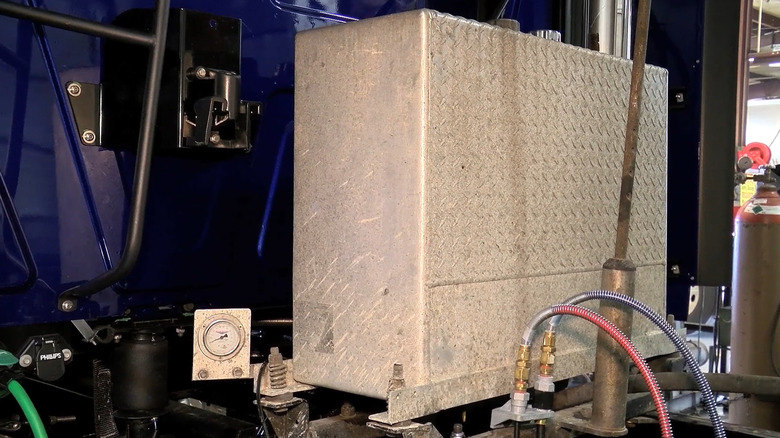
On the face of things, it seems that semi trucks do pretty simple work. Sure, specialist trucks like the largest semis in the world have differing applications, but generally speaking, semi trucks drive from one place to another, delivering goods. Dig a little deeper, though, and the average person would discover the fact that semis are actually far more versatile. For example, some come equipped with dump trailers, blowers, and walking floors. These extras allow semi trucks to take on a more advanced role, but they all require hydraulic power. Enter the wet kit. It's essentially an additional system which allows the truck to power hydraulic equipment.
Here's how it works: the truck's engine — typically an inline-six (as semi trucks don't use V8s) — provides the power through the transmission, which runs a hydraulic pump to move pressurized hydraulic fluid from a reservoir, enabling it to operate attached equipment. That's where the name comes from, as the system relies on "wet" hydraulic fluid rather than mechanical or electrical power. The oil heats up during this process, which forces the truck to cool and filter it. Pretty simple in theory, but it's important to use the correct system and install everything correctly, so these are generally fitted by specialists rather than being a DIY job.
Understanding the three main types of wet kits
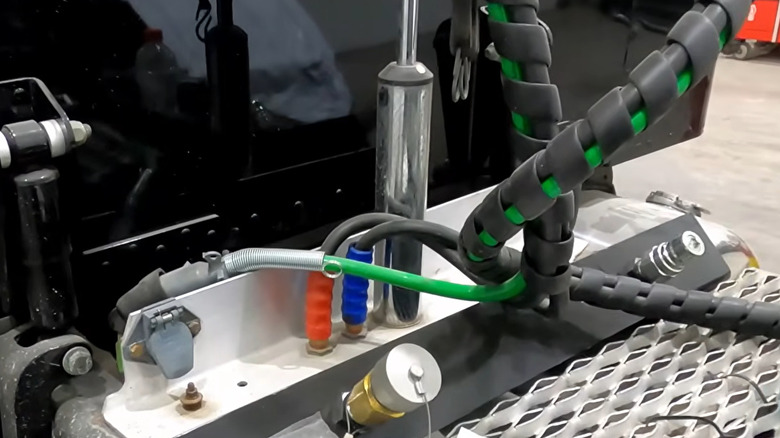
There are three major wet kit systems: single-line, dual-line, and three-line. The style of accessory that is to be powered will dictate which configuration of wet kit is required. There are various intricacies to each type, but generally speaking, a single-line setup uses one hose and is the simplest option for basic jobs. It only makes use of simple physics to move oil back into the truck instead of having a dedicated line. They're also the cheapest, and while they're ideal for simple applications like dump trailers, weaknesses can show in more demanding circumstances, so they aren't the best match for frequent and continuous use.
For more advanced work, dual-line systems use two hoses, with the second used as a return line. This allows for cooler operating temperatures, making them ideal for more frequent use, but along with that comes a slightly elevated initial cost. For heavy-duty applications, though, a three-line system is the way to go. While a dual-line system sends hydraulic oil out and back through two hoses, a three-line system introduces a separate return line into the mix. This works to reduce pressure, enabling the system to handle heavier, more demanding operations without overheating.
Wet kits do require regular maintenance
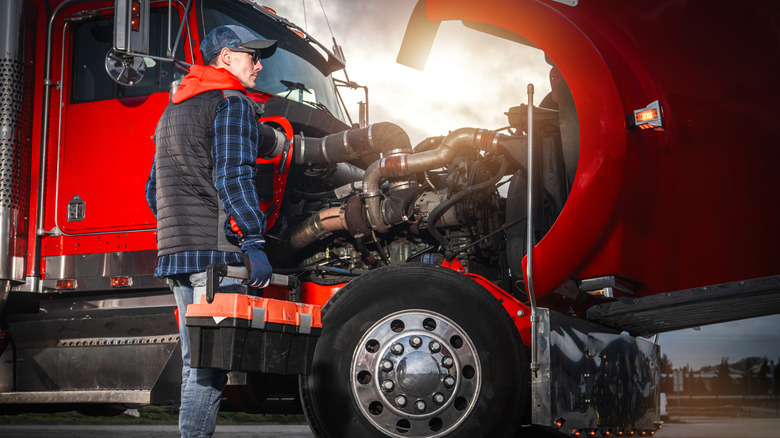
As ideal as it would be, wet kits are not "fit-and-forget" systems. THEY require frequent checks and maintenance. First and foremost, it is important to keep an eye on the hydraulic fluid. Much in the same way that there are different grades of motor oil, the same is true of hydraulic fluids, too.
Not only does the correct grade of hydraulic oil need to be selected, but operators should keep an eye on the condition, too. Water can contaminate the fluid and heat can damage it, so operators should regularly inspect the oil. A milky or particularly dark finish would indicate that it's time to refresh the fluid. In addition, filters within the system should be changed on a regular basis, too, in order to keep the fluid clean and healthy.
More concerning signs that maintenance has been missed include loud noises, excessive heat, difficulty in actually carrying out the operation, and — of course — leaks. Over time, leaks can develop, fluid levels can drop, and operation can slow. Issues like these need addressing quickly, as they can quickly spiral into critical failure. That naturally translates into semi truck downtime, so spending a little extra time and money on keeping the system in good order is worth it.