

These 5 Lawnmower Checks Will Ensure Your Little Engine Can Cut It This Summer

It's that time of year again — the time that no one looks forward to, when you need to get the lawnmower out of the garage and cut the grass. Maybe you've already started. Hopefully, you didn't forget to give your lawnmower a good once-over.
All machines need regular maintenance, and your lawnmower is no exception. The good news is that lawnmower maintenance is pretty simple. A little TLC at the beginning of the mowing season can help ensure that your mower lasts the summer and beyond. You may also find that the better you maintain your lawnmower, the better your yard looks.
We're going to focus on five things to check to keep your lawnmower running smoothly. The first thing would be make sure that there is only fresh gas in the tank, not gas that has been sitting there all fall and winter. Secondly, sharpen your blade to get the best out of your mower. The other three items are things you would probably expect: change your air filter, oil, and spark plugs, just like you would with your car. Of course, if you have a riding mower, there will be a couple of more things to do in addition to those five things, like checking your tire pressure. And even for a push mower, we're sure that there are things you could think to check that aren't listed here. But we think these five things are crucial.
Check the gas
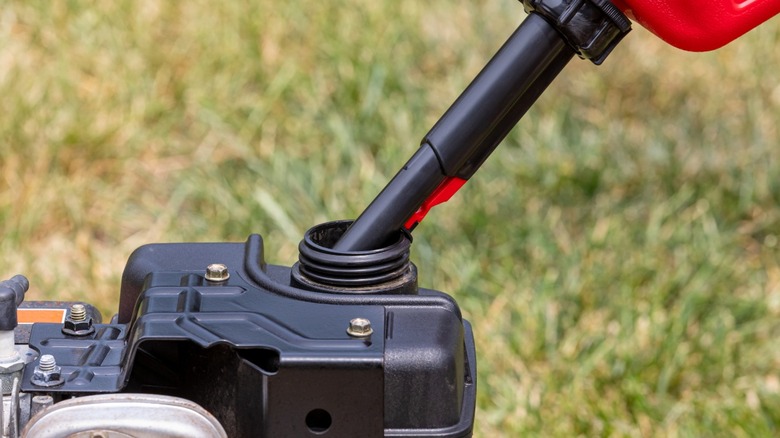
So, you roll the lawnmower out for the first time of the season, and check the gas tank. Hey, look! There's still gas left over from last season. You're good to go, right? First of all, allowing gas to sit like that for a few months is not good for the engine. Gasoline eventually begins to evaporate and gum up, which can clog things up. Often, gas begins to degrade after about 30 days.
We like run the tank to empty during our last mow of the season. You can also add fuel stabilizer to the tank to keep the gas in good shape until spring. What about the gas in the little can we keep in the garage for the lawnmower? We'll empty that in our vehicles during the winter. But what if you forgot to do all of that? How do you drain the gas and what do you do with it?
There are a few ways to drain the gas from a lawnmower. You can use a syphon and pump the gas out of the tank into an appropriate container. You'll want to set the mower above the container for this. A much messier option would be to tip the mower over and pour the gas into a container. Or you could pull the fuel line from the carburetor and let it drain into the container. Look up recycling centers in your area to dispose of the gas safely.
Change the oil
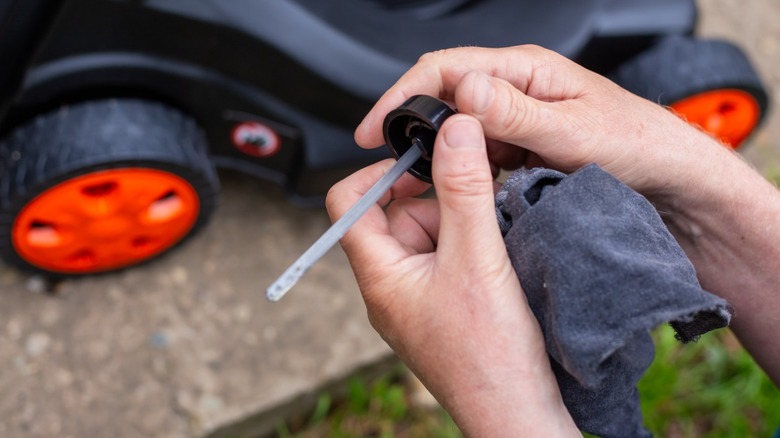
You likely check your mower's oil, but next time, look at its color to see if its dirty. How long has it been since you changed it? If it's dirty, you might as well perform an oil change, regardless of when you did it last. On the other hand, if the oil is clean and you know it hasn't been that long since you changed it, you can just top it off and call it a day. Just remember to change it at least once during the mowing season. Dirty oil can cause your engine to wear out prematurely, smoke, seize up, or overheat. You don't want any of that to happen.
Make sure you're using the right oil for your mower. Small engine oils are designed for the kind of engine that likely on your lawnmower. Beyond that, SAE 5W-30 oil is good for most mowers, as it does its job in a wide range of temperatures. Vanguard 15W-50 is also good for the same reasons, and works well for commercial lawn cutting. If you live in a warm climate, SAE 30 is good for hot temperatures. SAE 10W-30 and Synthetic SAW 5W-30 work well in cold climates.
It's recommended to change your lawnmower's oil after every 25 to 50 hours of use. That won't apply if Home Depot has its way, and most of us are using electric mowers by 2028. Until then, keep changing the oil in your gas mower.
Change the air filter
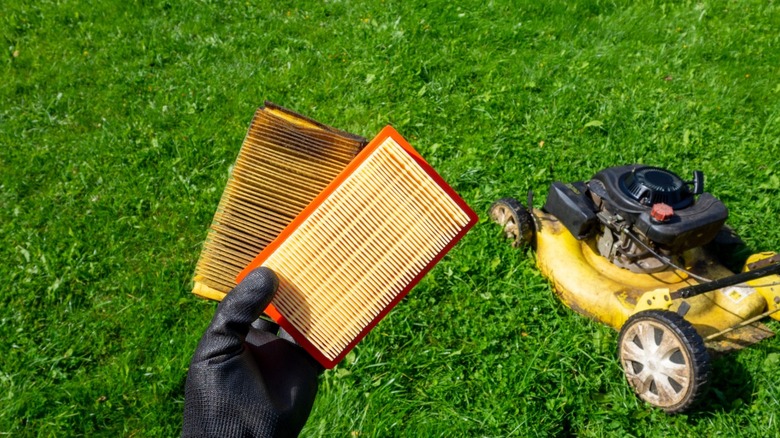
It's easy for the air filter on a lawnmower to get dirty and clogged, especially on a push mower, since it's close to the ground where so much dirt and cut grass is getting kicked up. But did you know that an air filter can get dirty even while the lawnmower is sitting between mowing seasons? A dirty air filter restricts airflow through the motor, making it work harder than it needs to. Someone could be fooled into thinking that the motor on their lawnmower needs to be fixed because it's having trouble starting or doesn't run as well as it used to, when in fact, the problems is actually a clogged air filter.
Changing the filter is usually one of the easiest maintenance tasks you can perform on a push mower. Just open the boxy case on the side of the engine. In our experience, this often involves unscrewing just one screw. Then, take out the old filter and pop in a new one. For safety reasons, it's good to disconnect the spark plug wire before doing this. If it's a foam filter, you can even wash and dry it instead of replacing it every time it's dirty. Filters are pretty cheap, too. Depending on the type your mower uses, you might be able to find one for less than $10. It's recommended to change your filter at least once per season.
Sharpen or replace the blades
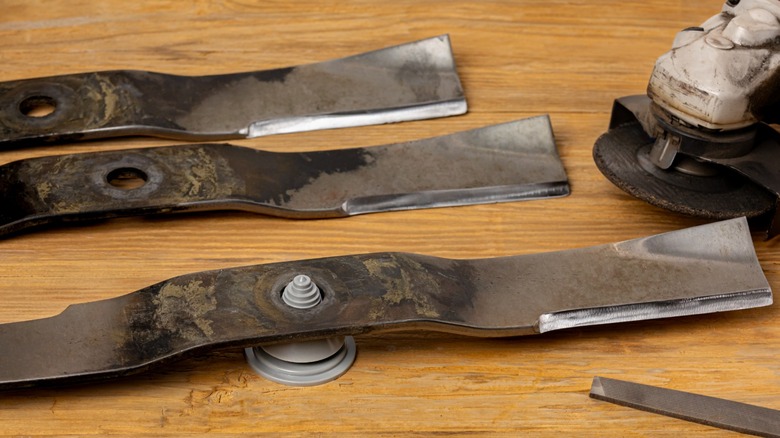
The benefit of having sharp blades on your mower probably seem obvious. You want to cut your grass, after all, not just push it down. But it goes deeper than that. Sharp blades cut grass, while dull blades tear it. Tearing the grass leaves jagged, brown edges that are more susceptible to pests and disease. Tearing the grass also weakens it, messing up the appearance of your lawn. Using sharp blades and changing up your mowing patterns also helps with weed control. Using dull blades can be bad for your mower, as well. The mower has to work harder with dull blades, which cuts down on fuel efficiency and increases wear and tear.
Sharpening mower blades isn't difficult, but requires a little elbow grease. You'll also need a vise and a grinder or file. Detach the blade from the mower then place it in the vise, tight enough so that it won't move. Sharpen each each end of the blade. You don't need to get it super sharp, but try to sharpen it to the original bevel angle, usually about 30 degrees.
You'll also need to balance your blade, because an unbalanced blade can make an uneven cut and damage the mower. You can see if the blade is balanced by placing it in on a blade balancer or hanging it on a nail. If one end is heavier than the other, remove more metal from it by sharpening it a little more.
Check the spark plug
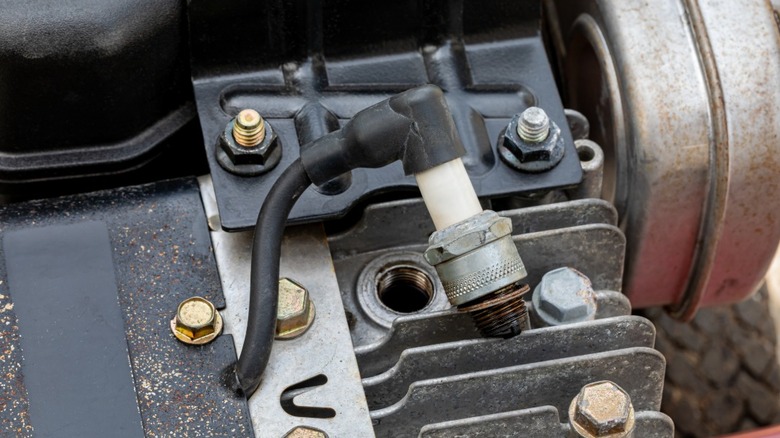
Most sources we found recommended changing the plug in your mower once a mowing season. Just like neglecting plug changes can damage a car, overlooking the spark plugs in a mower can be detrimental, as well. At the very least, you'll want to take the spark plug out, check it, and clean it. A dirty plug can interfere with your engine starting, cause a power loss, decrease fuel efficiency, or result in misfire. In fact, if your mower is having trouble starting, changing the spark plug is one of the easiest fixes you can do.
To remove your lawnmower's spark plug, disconnect the spark plug cable from the tip of the plug. Then take it out with a spark plug socket and socket wrench. If you're just checking and cleaning it, make sure it's still gapped correctly before putting it back. Many say there's no need to gap a new spark plug before putting it in because new spark plugs come pre-gapped. We like to gap our plugs anyway, since it's easy and plug gappers are cheap. To finish screwing the plug in, use a torque wrench to tighten it to specs. You don't want a plug to be too tight or too loose.
Lawnmower maintenance is really pretty simple. Spending an hour at the beginning of each mowing season can make a world of difference in how your mower runs as well as starts, how long it lasts, and how nice your lawn looks.