

Don't Just Pour It Out – How To Get Rid Of Old Gas The Right Way

If you've got a forgotten jerry can in your garage that smells more like paint thinner than unleaded, congrats! You're the proud owner of stale gasoline ... and an early dementia. Fuel, whether diesel or gasoline, is the lifeline of a vehicle. Regular gasoline typically breaks down after three to six months. Even high octane and premium gas for modern engines last only around nine months. Add in rust, moisture, and other foreign matter, and you've got a concoction that will gum up injectors and corrode metal parts.
Many drivers assume old fuel just "loses a little kick." In truth, it goes through an entire chemical change, turning into varnish-like liquid that is arduous for the engine to burn. Then come the dreadful problems like inability to start, raspy idle, and even loss of power. Modern ethanol blends amplify these issues -– ethanol attracts water, and once phase separation kicks in, it's game over.
The kicker is that stale gasoline isn't just bad for your car, but everything else. Dumping on the ground or down a drain can contaminate soil and groundwater, creating an environmental nightmare – it's not called hazardous waste for nothing. So no, you can't just pour it into the dirt and hope nature handles it. Spoiler: mother nature doesn't run on gasoline.
The right way to say farewell to bad gas
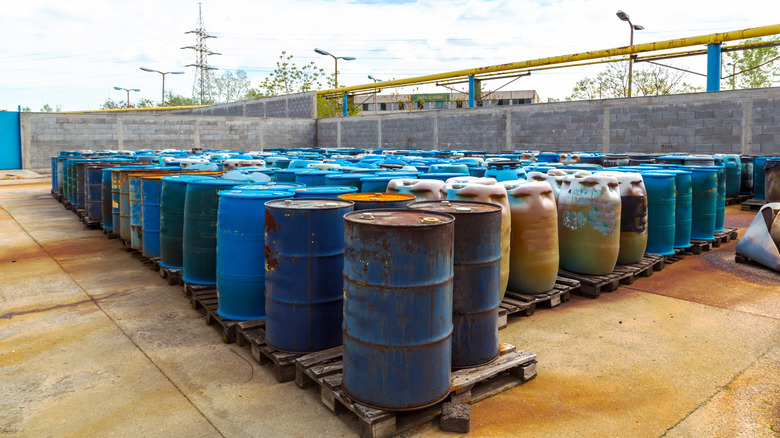
So now you've got a few liters of volatile regret and no idea what to do with it. Here's the grown-up move: dispose of it properly. For small amounts –- say, less than a gallon –- most municipalities have household hazardous waste (HHW) collections where you can drop off old fuel safely in a certified gasoline container. Similarly to disposing of used motor oil, certain fire stations, car repair shops, or recycling centers will even take it, though you'll want to call ahead of time. When transporting your gasoline, be sure to put it at the back of the pickup or trailer, never inside a car. You'll either get high off the vapors or airborne from the explosion.
If you're sitting on a larger stash, contact a professional hazardous waste disposal service. Companies like ActEnviro and Hazardous Waste Experts specialize in the safe transportation of fuel to prevent environmental contamination. You might've heard of "recycling" stale gas by diluting it with fresh fuel. Don't. Mixing degraded gas with new fuel just contaminates everything – it's like topping off spoiled milk with fresh. Not worth the risk.
Disposing of gasoline is a bit of work, but it's a small price for keeping your car (and the planet) from suffering the consequences. And with gas prices in constant fluctuation, every drop counts. Handle it right, you've paid enough for it already.