

These 11 Cars Would Be Awesome Junkyard Finds For Your Next Project
Having mechanical skills is a cheat code. But also having the patience to browse online junkyard listings — or to physically peruse a lot full of broken-down cars — is a recipe for a criminally cheap four-wheeled score. Every single day, clean title cars are shoved into a pull-a-part lot for minor damage or simple mechanical issues that previous owners either didn't know how to fix or didn't have the time to.
So what makes a "good" junkyard find? It's a subjective question based purely on who is answering, but one might say that an enthusiast-appreciated car is a great place to start. In other words, something that enough people (including you) are interested in enough to work on, share information about, and sell parts for. A good junkyard car may also be fairly simple to wrench on and generally reliable, giving it a higher chance of existing mechanical soundness and greater degree of ease during the project's process.
Each of the cars in this piece follow at least one rule (or both) from this rubric, in addition to one additional qualifier — all 11 of these cars are based on real junkyard listings we found Copart. If you're one of those automotive superheroes with the patience to spend a day or two searching and the wrenching skills to fix up your own junk, let these picks serve as some inspiration for your next automotive endeavor.
BMW M3 (E36)
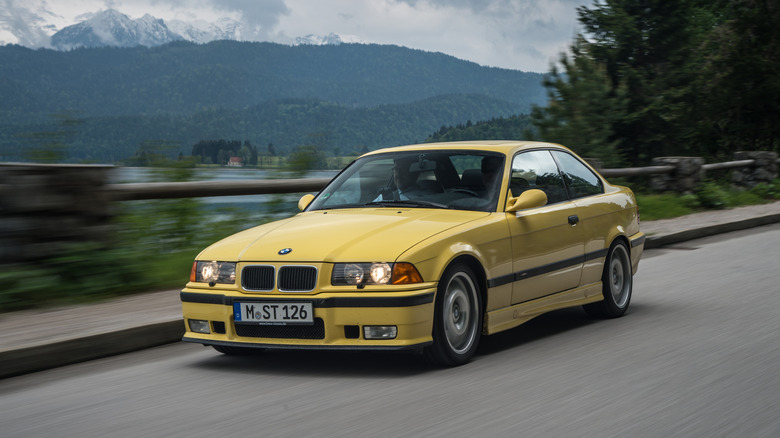
Our first potential find is the E36 BMW M3, which was chosen primarily because private seller examples are continually getting more expensive (around $30,000 on average). They're straying further away from the cheap, underrated M car this model used to be, so junkyards are some of the only places you'll find M3s within an affordable price range. Of course, they'll need a bit more work to make perfect — but that's what this article is all about.
The E36 makes a great platform to work on and drive for multiple reasons. First of all, though this model comes from BMW, a lot of E36s exist (around 70,000 worldwide), meaning parts aren't going to be as hard to find as those of other, rarer performance cars. Additionally, the M3's U.S.-spec straight-six is considered very reliable, and though it's not quite as powerful as the Euro models, it still pairs with the car's near-perfect balance like steak and red wine. From the factory, the 3.2-liter straight-six made 240 horsepower and 236 pound-feet of torque. That allows the E36 M3 to hit 60 mph from a stop in the mid-five-second range.
Ideally, you'd want to find an example with as little mechanical damage as possible. You can find a few like that, but with a car like the M3, buy-out prices (aka, the cost to bypass the bidding process and purchase the car outright) are generally going to be higher than your average junkyard car. Even so, you can always just physically inspect the car and ensure it's worth that higher buy-out price.
2001 Mazda Miata (NB)
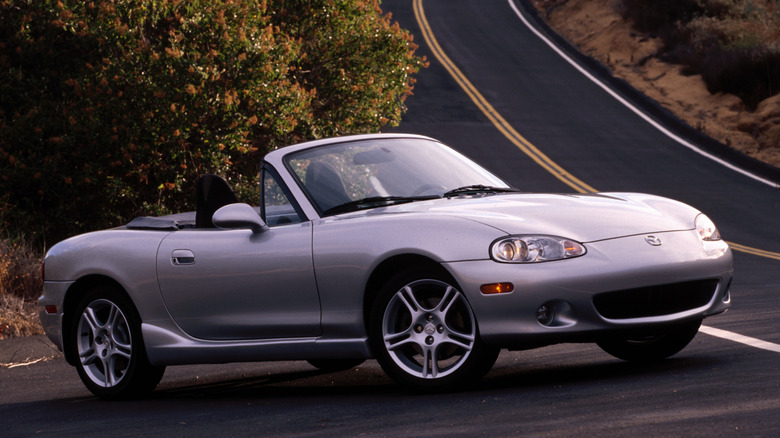
An NB Mazda Miata is potentially perfect as a project. They're simple, Mazda built a ton of them, and their aftermarket scene is as big as any other enthusiast car out there. The NB, specifically, was built between the 1999 and 2005 model years, starting life with a 1.8-liter inline-four capable of 140 horsepower and a standard five-speed manual. A few years into production, the 1.8-liter got a bump to 155 horsepower, with some additional special editions (there were a lot) receiving a six-speed manual.
Given the sheer volume and variety of NB Miatas, you likely won't have difficulty finding junkyard examples that fit your level of mechanical skill, tastes, and budget. The real difficulty with a junkyard Miata is getting to it before anyone else. It's a massive community, and cheap whole cars — or the parts from them — will get snatched up in no time. So if you find the perfect listing online or in real life, go take a look immediately.
Referring to a few real listings we found, the average late-stage bidding wasn't usually more than $1,000, and the main issues tended to be front or rear-end damage, as well as soft top/glass issues. So, the option is there to rip out the soft top, put a roll bar in there, replace the bumpers, and make it into a clear-weather canyon carver or a track build. As the saying goes, everyone should drive a Miata at least once — so who cares if it came from the scrapyard?
Ford Mustang GT (New Edge)
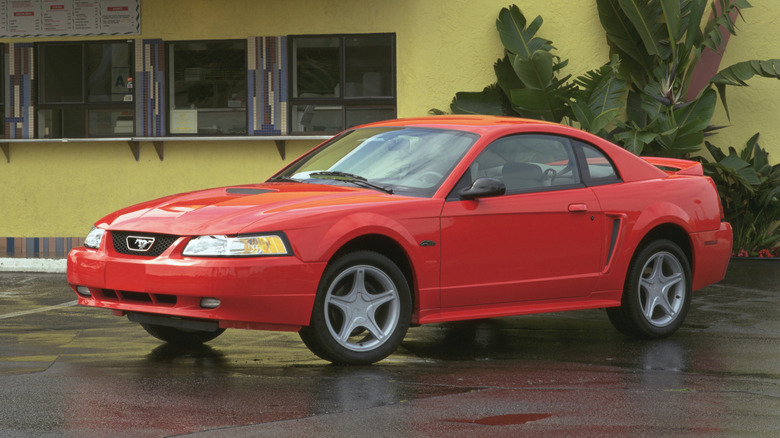
This probably isn't your favorite Ford Mustang. But with average New Edge-generation GTs selling for nearly $13,000 on average in 2026, you shouldn't rule out junkyard finds — especially if you can find a running and driving example. Starting in 1999 with the updated SN95, the GT produced 260 horsepower and 302 pound-feet of torque with its 4.6-liter Modular V8, which could be paired with either a four-speed automatic or five-speed manual.
Just like the Miata (and really any other mass-produced front-engined, rear-wheel drive car of this era) the Mustang was simple. It had a tried and true solid rear axle (excluding the SVT Cobras), simple suspension components, and a popular V8 that now has all relevant information you could ever need listed online. Plus, the Mustang is one of the most aftermarket-friendly cars on earth. Mechanical bits, body panels, trim pieces, and even entire reproduction interiors are out there to suit your project.
We found several New Edges that would be fantastic projects, and even some with less than 150,000 miles that were running and driving. To anybody with eyes for American muscle, these ponies are the epitome of a golden junkyard daily driver, and something that anyone can find with enough browsing patience.
Porsche Boxster (986)
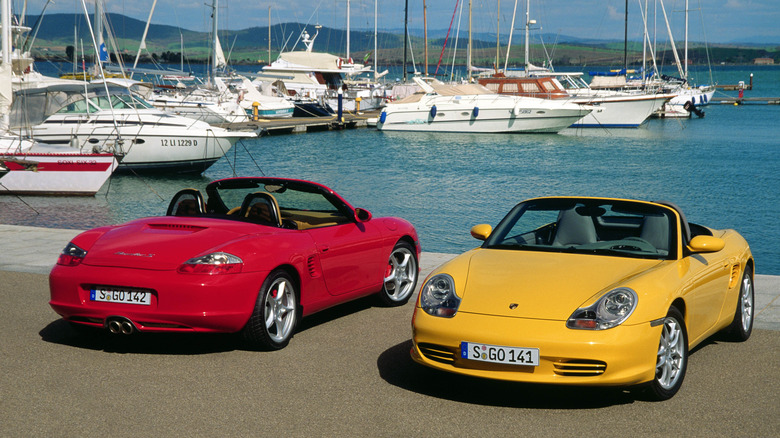
A junkyard Porsche sounds like a nightmare for the average DIY mechanic, but rest assured, there are good ones out there. We found a couple of running and driving early 2000s Porsche Boxsters online with around 120,000 miles or less. The Boxster also is also a somewhat flexible choice for the junkyard, considering the eight-year-long production cycle and the choice between the base and upgraded S models.
Built from the 2000 model year on, the S sports the 258 horsepower 3.2-liter flat-six, as opposed to the base model's weaker 2.7-liter, 217-225 horsepower engines. And it even comes with the option for a six-speed manual versus the regular five-speed. As with any Porsche, preventative maintenance is your best friend, and those in market for a 986 Boxster could benefit from factoring in the cost of getting the IMS bearing replaced, as well as other full services.
On the tail of that point, there's another to consider: unless you are closely familiar with Porsche rebuilds, buy one in decent condition, even if it costs more. Those with significant damage, mechanical or cosmetic, could quickly turn from a Dr. Jekyll into a Mr. Hyde without proper knowledge. Otherwise, a mechanically sound 986 Boxster is generally solid in the reliability department, despite the common fear of problematic German cars.
Dodge Challenger SRT-8 (2008-2014)
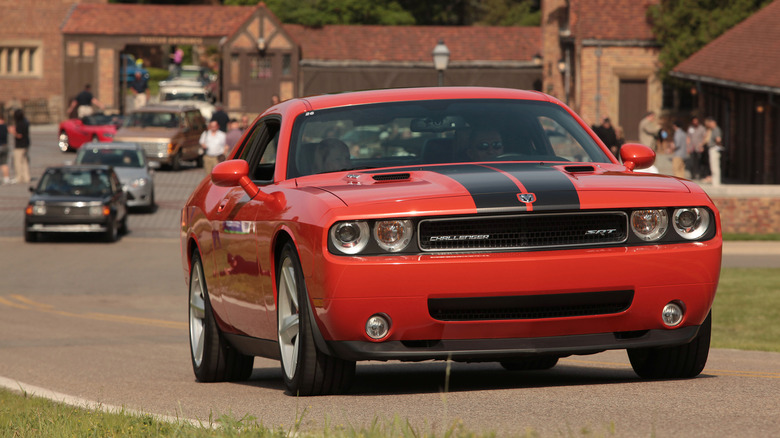
A Hellcat is likely too much work for the average mechanic, but an early SRT-8 might just be within reach if stock horsepower is what you're after. These cars, while fairly tech-laden for a late 2000s Chrysler product, benefit from the fairly simple Gen III Hemi and straightforward construction they're based upon. Someone with enough time on their hands could surely resurrect one from the yard.
When the Dodge Challenger returned for the first time in more than 30 years during 2008, the SRT-8 was actually the only version available, sporting a 425 horsepower 6.1-liter Hemi V8, sport-tuned suspension, Brembo brakes, and a five-speed automatic transmission. By 2009, lower trims were introduced, along with the six-speed manual and other updates for the SRT-8. Those 2009-2010 cars are the most common finds, though the SRT-8 trim continued on until 2014 (before the mighty Hellcat stepped in as top dog).
The examples we found were typically bidding in the hundreds, with buy-outs around $5,000-$10,000, which may be too steep for some. But finding a non-crashed performance platform like this for only a few thousand bucks is a proper win; current secondhand market SRT-8s are trading for a whopping average of about $23,700 as of early May 2026.
Chevrolet Camaro (3rd-gen)
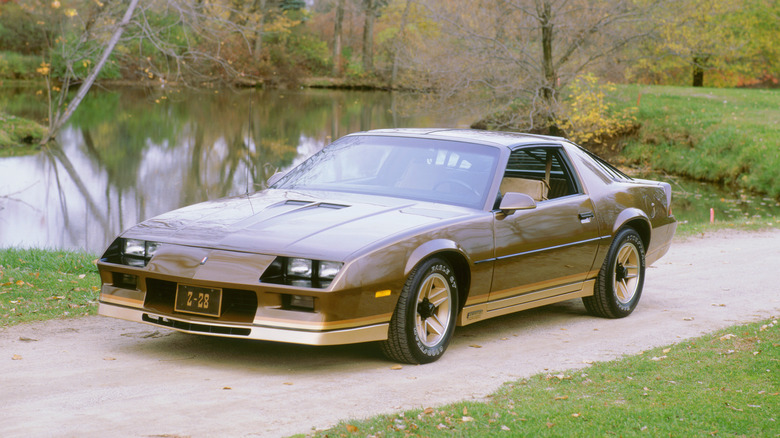
If modern American isn't the right fit, perhaps some third-gen era muscle will satisfy. The Camaro was chosen to be on this list a few reasons. Firstly, there are several available on junkyard sites. Secondly, they are generally cheaper than the average Fox Body. And finally, they present a ton of choices when it comes to how you want to build yours with the wide aftermarket availability.
Most of the examples we encountered came equipped with the pathetic 135 horsepower 2.8-liter V6, and all showed significant wear inside and out. In this case, the obvious choice is to lean into the cheap thrills street/strip route. Nobody feels bad about ripping out a GM 2.8-liter V6, even if it came from a factory manual car. And at the end of the day, a junkyard small-block Chevy or crate motor suits these cars far better.
The bulk of these third-gens we sourced hadn't been bid to more than $300, and the buyouts weren't far off, either. That low entry fee likely means that it's gonna be a long-term project. But the multitude of directions you can take it and the learning opportunities are massive, whether it's for a first engine swap, an at-home paint job, or an interior overhaul.
Mitsubishi 3000GT VR-4
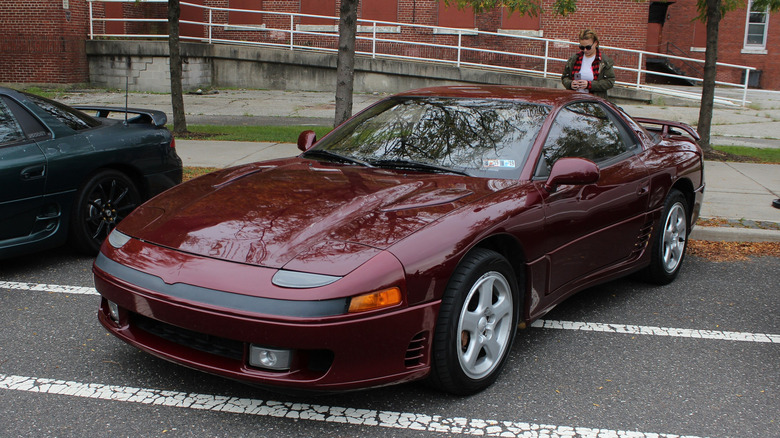
As an initial disclaimer for this car, let's clarify that a 3000GT VR-4 is not going to be an "awesome junkyard find" for someone without extensive mechanical skills. Back in the 1990s, the VR-4-trimmed cars came with a twin-turbocharged 3.0-liter V6, all-wheel drive, all-wheel steering, and even active aero elements back in 1992. As cool as those components are when operational, these once-advanced technologies are not always easy to repair or source parts for.
However, for those who are equipped to handle a project like this, you'll find a similar sentiment to the M3 from earlier. Prices are far above what they used to be, now entering the $20,000 range in the private sale sector. And for those who love these Mitsubishis, you should jump on the chance to save one — if its condition allows.
Our search turned up multiple VR-4s, with a couple that were still running and driving. Average-case scenario, if you can bring a VR-4 back to stock, you're looking at 300 factory horsepower, a 4.8-second 0-60 mph time, all-wheel drive grip, electronically controlled suspension, and active exhaust. And you'll also gain access to a large and dedicated community to help you with your latest project.
Subaru Legacy GT 2.5 Spec B
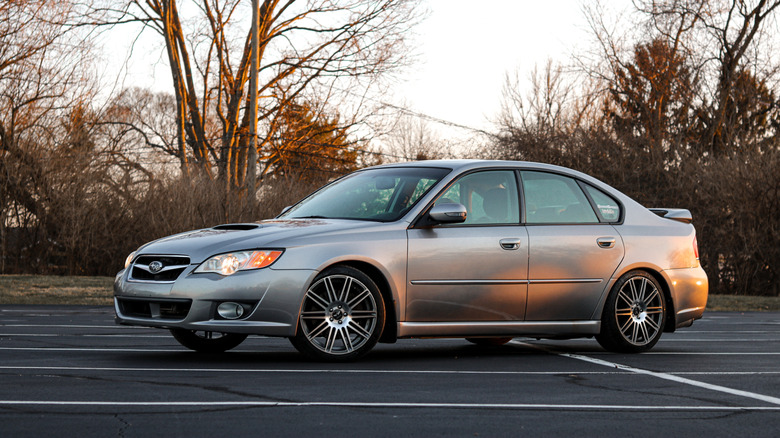
Subaru love is always shown to the WRX or older Foresters, but don't forget about the mid-size Legacy. Though it was just recently discontinued after the 2025 model year, the Legacy represents a decades-old period of success for the brand that is best displayed with its high-performance GT trims. As such, we've landed on the unique 2006-2009 Legacy GT 2.5 Spec B models.
The Spec B was initially a limited production 2006 trim that came with a 243 horsepower turbocharged 2.5-liter flat-four, powering all four wheels via a six-speed manual transmission. The main difference between it and a regular GT was under the wheel arches, where the Spec B got lighter aluminum control arms, larger wheels, stickier tires, and special Bilstein dampers. However, despite the Spec B's short run, its shared platform with the regular Legacy and Legacy GTs guarantees that it has a supportive aftermarket.
You might have a bit of trouble finding these models for yourself. They don't seem to be particularly costly, but their limited availability will leave you at the mercy of whatever condition you find on eat. Still, if you're going to buy a broken car, it might as well be both rare and fast.
Toyota Supra Turbo (A70)
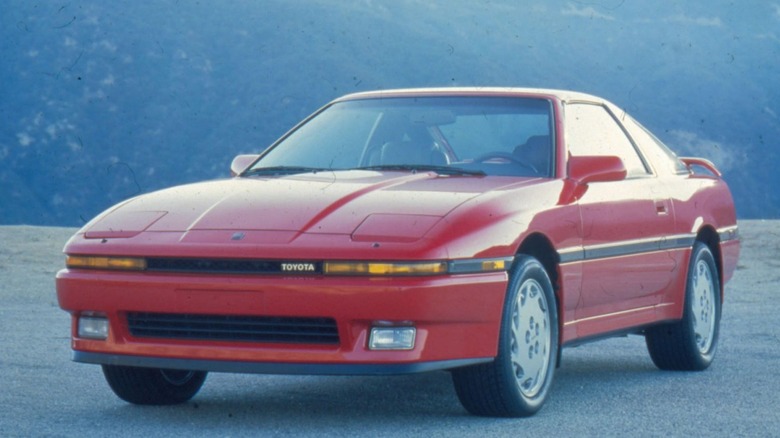
For our younger readers: The term "Supra Turbo" does not immediately mean 2JZ-GTE. While our chosen model, the A70-generation Supra, does have a turbocharged 3.0-liter straight-six, it is a vastly different engine that predates the iconic 2JZ used by the A80 (Mk. 4) car. Rather, the A70 uses the 7M-GTE (single turbo) engine, which originally produced 230 horsepower and 246 pound-feet of torque to the rear wheels, paired with a four-speed automatic (a five-speed manual was also available).
With 0-60 mph figures in the low six-second range, the Supra Turbo was the quickest Japanese car available at the time – and probably the best-looking, too. Additionally, with how popular (and ridiculously expensive) the A80 has become, the A70 has now grown into one of the only truly attainable Supra generation still offering enough performance to impress on a spirited drive.
Production for the A70 lasted from 1986 to 1993, and while there were several changes from year to year, the one we could actually find was the 1989 Turbo. This is the model year where you could have the collectible White Appearance Package as well as a three piece rear wing design, making it one heck of a score if you can locate it for yourself.
Nissan 240SX (S14)
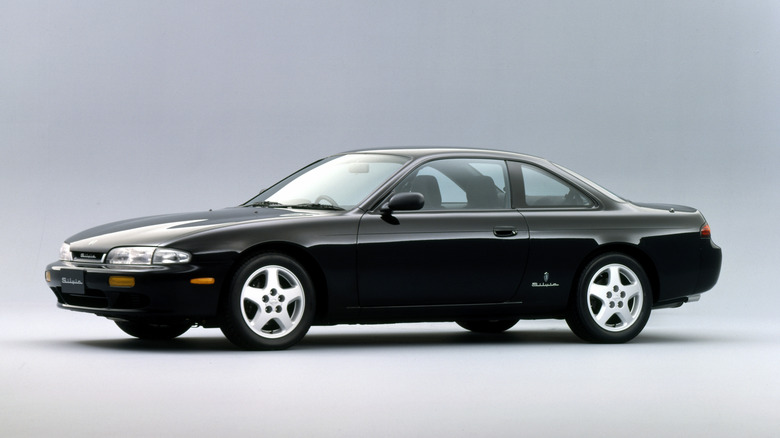
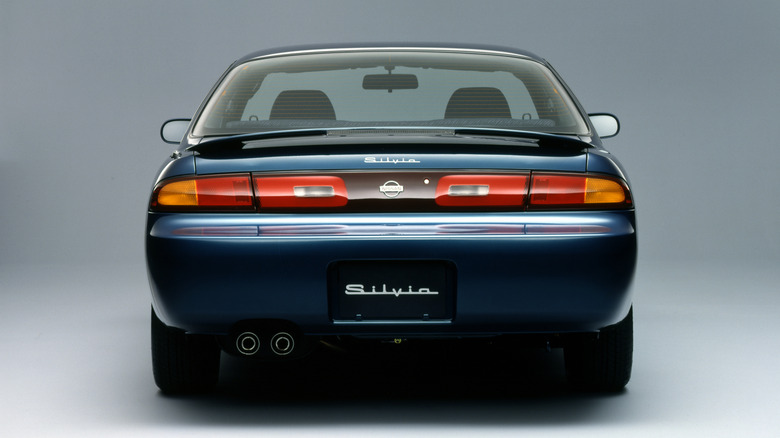
How often do you find untouched, unmodified S-chassis cars in a junkyard? The answer is never, which is exactly why you should pick up any remotely decent 240SX if you can. The S14 followed the popular S13-generation cars, debuting for the 1993 model year and cranking everything up a notch compared to its predecessor. The body and wheel tracks were wider, the car was lower overall, and the sheet metal had transitioned from the stamped and edgy 1980s look to a softer 1990s aesthetic, much like the difference between the A70 and A80 Supra.
Being a Japanese car, the "Silvia" (as it was called across the Pacific) received much better (and turbocharged) engine options in Japan, like the special SR20DET. U.S. spec cars were stuck with the less-powerful, but still robust, naturally aspirated 155 horsepower 2.4-liter inline-four known as the KA24. You could argue that these S-chassis cars nearly single-handedly caused the explosion of affordable drift culture outside of Japan due to its predictable handling and ease of modification. No matter how bad your specific find may seem in the lot, don't forget how wonderful this platform can be.
Essentially, you have to take the wins where you can find them. The examples we found had tons of miles, pesky rust areas, and generally weren't the ultra-clean survivors one hopes for. But again, a car like this has enough community support to achieve almost anything you could dream of.
Mercedes-Benz 500SL (R129)
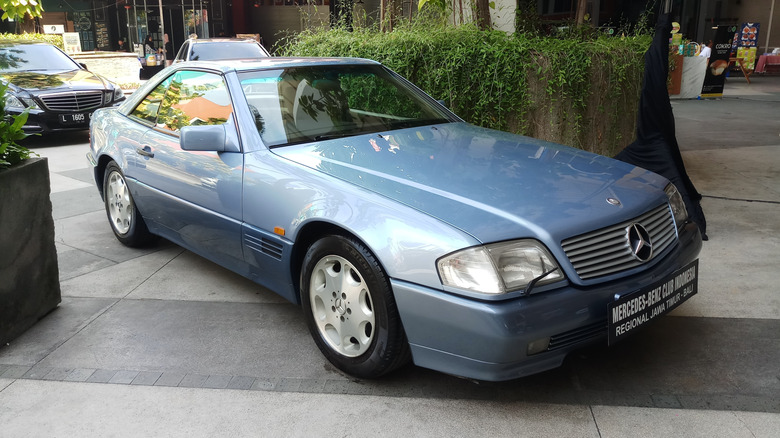
The R129 Mercedes-Benz SL remains one of this brand's most sophisticated and well-built platforms of all time. Thanks in large part to the late, great chief designer Bruno Sacco (who completely transformed Mercedes-Benz for the better), safety, design, performance, comfort, and engineering came together seamlessly in this roadster that has only become more beloved over time. And as far as the junkyard goes, sightings happen more often than you think.
Over its long production period from 1989 to 2001, Mercedes built almost 205,000 units, leaving plenty of opportunity for someone today to find the less-fortunate examples parked in a dusty space. Admittedly, the R129 SL isn't the first car you think of for a junkyard rescue, but we found more than a handful online in a short amount of time. And based on this SL's range of surprisingly reliable engines, it's almost a no-brainer for someone familiar with older German vehicles.
In a decision between the V6, V8, or V12 SL, the Goldilocks option is likely the V8. The 5.0-liter M119 V8 is widely considered the top choice among the three, and with up to 322 horsepower (depending on the model year), you'll have plenty of power on tap. And it's certainly possible to find incredibly promising V8 500SLs up for grabs with only minor front-end damage. There's no guarantee that such a model can be an immediate daily driver, but if you never look, you won't get lucky on lots like this.