

Why Doesn't Ford Make Ghia-Badged Cars Anymore?
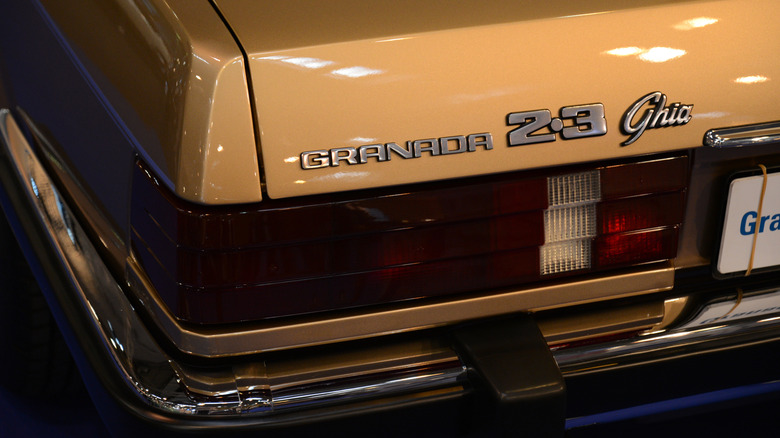
Changing trends and new technologies often call for a change in marketing, and that's exactly what happened to the "Ghia" name. As technology developed in the early '00s, Ghia-badged Fords started to look a little outdated. Ghia stood for luxury and comfort, but it didn't stand for style, modernity, and technology, which is why Ford opted to introduce the Titanium trim into the mix. This would supersede the Ghia trim and effectively replace it before a new raft of exciting names, such as ST-Line and Vignale, joined in as well. The Titanium name first arrived in 2004, just in time for the launch of the then-new second-generation Ford Focus — a nameplate which, just like Ghia, was around for decades before Ford made it disappear.
According to Just-Auto, Ford's U.K. Director of Marketing at the time, Steve Hood, had this to say about the Titanium trim's debut: "These will be a techno–luxury derivative with the emphasis on modern technology and materials. We are including features like an MP3 player and metal and graphite interior trims and these put the new models above the current Ghia versions." The Ghia badge would be removed from the Ford range just a few years later, with BusinessCar sharing words on the matter from one retail source. "Ghia has echoes of vinyl roofs on Granadas, lots of chrome and velour upholstery. Ford is trying to meet the demand for higher tech interiors. In a fleet context Ghia did not represent a premium new or used product."
A brief history of Ghia-badged Fords
Ford and Ghia enjoyed a long relationship with one another which started back in 1970, when Ford purchased the Italian design house. A few years later, in 1974, Ford would introduce its first Ghia-badged model — the range-topping Granada Ghia. The new model sported wooden door cappings, luxurious cloth seats, an electronic digital clock, and more. It acted as a way for Ford to offer buyers a Blue Oval alternative to the likes of Audis and Jaguars. The brand would continue to affix the Ghia badge to many of its models, always as a top trim furnished with luxurious, comfort-oriented extras.
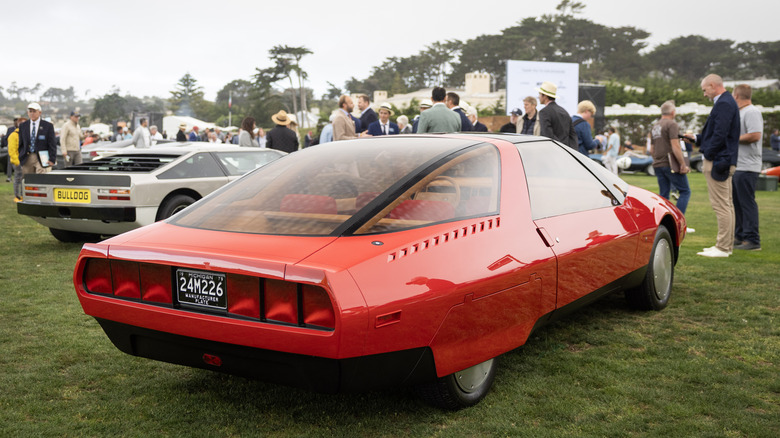
Ghia also designed numerous striking concept cars for Ford, such as the 1979 Ghia Probe Concept which was unfortunately destroyed in a fire. Furthermore, the "New Edge" design language seen in concepts like the later Ghia-penned Saetta would alter Ford's own design language from the late '90s through to the debut of the second-gen Focus. In fact, the Saetta would influence Ford to completely rework its own Ka design, resulting in a production version that unusually looked way cooler than its own concept.
Sadly, Ford and Ghia's journey would come to a close in the early 2000s, with Ford making the decision to drastically reduce Ghia's workforce. In short, it transitioned from being a Turin-based design house to one that existed only virtually. Within years, Titanium would sweep in as the sportier, tech-led new flagship, and Ghia-badged Fords would be consigned to the history books.