

Forced Labor-Made Goods Are Illegal In Canada, And That Might Be A Problem For U.S. Car Manufacturers
Canada takes forced labor very seriously, going so far as to rigorously ban products from China that might have been made by folks under duress. That law, the Supply Chains Act, was written to target Chinese human right's abuses, but it applies just as much to American products, Canadian human rights lawyers say. A few car-focused manufacturers were put in the crosshairs of their complaint.
Sandra Wisner, director of the International Human Rights Program at the University of Toronto, got together with some of her colleagues and submitted a complaint with the Canada Border Services Agency about American produce and products made in the U.S. with prison labor, specifically in Alabama. Their argument? The Canadian law that was meant to ban goods made by forced labor in China applies just as much to the U.S., and it's hard to not see their point. From The Canadian Press:
"Discussions about forced labour tend to focus on global supply chains in the Global South, so in factories in Southeast Asia or agricultural fields in Latin America. But the use of forced or prison labour in the U.S., including under deeply coercive and abusive conditions, receives far less attention, especially here in Canada."
Wisner's team submitted a detailed complaint this month to the Canada Border Services Agency asking it to block goods made with forced labour coming in from the United States.
Nabila Khan, a researcher who co-authored the complaint, said her team of fellow lawyers examined reports from government and citizen groups in the U.S. about prisoners being coerced into working on parts for Hyundai and Genesis vehicles and Dorsey Trailer products. The also conducted interviews with currently and formerly incarcerated workers.
Hyundai categorically denies that it is still involved with any parts supplier that uses forced or child labor and hasn't since...2023. Well, better late than never, I say. One of those parts suppliers "...employed child refugees to operate heavy equipment," according to Automotive News, which is just a wild sentence.
A report from researchers at Columbia University just last year surveyed Hyundai's supplier workers in Alabama and found 13% of them were in a "prison work release program," AL.com reports. Hyundai is aware some of its suppliers participate in these programs, but they are all still required to adhere to a strict code of conduct.
It's not just cars
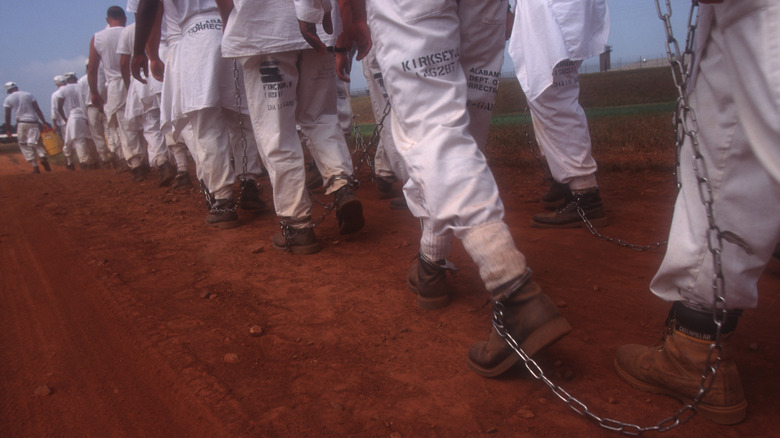
A whole lot of stuff is made in the U.S. under what could conceivably be called slave labor. Everything from playground equipment to fruits and vegetables could be produced under coercion, as the U.S. constitution does not ban slavery for incarcerated people. Funnily enough, parole rates are dropping fast in Alabama, a state with one of the highest incarceration rates in the nation. Here's how the Canadian Press — basically the Associated Press, only in Canada — describes conditions in the U.S.:
The U.S. Constitution bans slavery and involuntary servitude, except when used as punishment for a crime — leading to so-called chain gangs of shackled prisoners performing road construction.
American academics have argued that using prisoners for labour is not appropriate when they are denied health and safety protections afforded to regular employees, and when private corporations running prisons punish and reward inmates based on the quality of their work output.
Last fall's report noted that the percentage of Alabama prisoners granted parole has dropped from more than half in 2018 to less than 10 per cent in 2023, amid an increase in prison labour.
That part about chain gangs? It sounds like an anachronism, but Alabama actually brought those back in 2021 after the practice rightfully spent 30 years in the dust bin of history.
Canada is America's second largest trading partner simply due to the fact that they are right next door, but the relationship between the two countries have been strained ever since Donald Trump got back into the White House. Between him slapping tariffs on goods at the border, calling the country the 51st state, and raising a stink about a bridge we didn't even pay for, Canada has just about had it with our antics.
Wisner and Co.'s complaint isn't meant to throw a wrench into already un-oiled gears, however, but a call for greater visibility about what goes into U.S. products bound for the north. "We're worried that there's a real risk that forced labour becomes a part of a tariff strategy and the danger is that enforcement becomes selective or politicized. The reality is that forced labour isn't one-sided," Wisner told the Canadian Press.