

Driving Without A Catalytic Converter Is Possible, But Is It Worth The Risk?
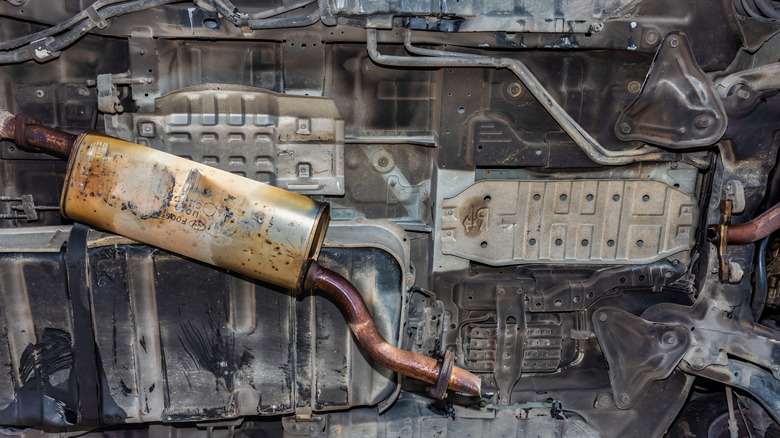
You walk to your driveway in the morning, get into your car, and turn the key. Instead of the gentle hum of your daily driver, you are greeted by an engine roar that sounds like a Spitfire on a low-altitude mission. You are now the victim of the cat burglar, a sawzall-wielding entrepreneur who made off with your catalytic converter. Catalytic converters contain valuable metals like platinum, which is part of why they cost so much. They are also quicker and easier to steal, making catalytic converters particularly lucrative in the criminal underworld. And that forces you to deal with the consequences — but you might not have the money or time to replace it. So, can you drive your car without a catalytic converter, or do you have to look for a flatbed?
Technically speaking, you can actually drive your car without the catalytic converter. With the catalytic converter gone, the exhaust gases simply have a more direct route from the manifold to the tailpipe. In fact, in the pre-1975 era, every muscle car and land yacht led a cat-free life. But those were simple, analog cars, unlike modern vehicles — which are rolling computers that need specific data to keep the engine running optimally. And in those, it's not worth trying to ride without a catalytic converter.
The first thing you'll notice with the cat gone, besides the racket, is the check engine light. Your modern car uses oxygen sensors located before and after the catalytic converter to monitor its efficiency. When the post-cat sensor detects that the exhaust coming out is just as toxic as the pre-cat sensor, it triggers a low catalyst efficiency error code (P0420). Some modern ECUs respond to this error by entering Limp Mode, which absolutely slams its performance.
Other troubles beyond limp mode
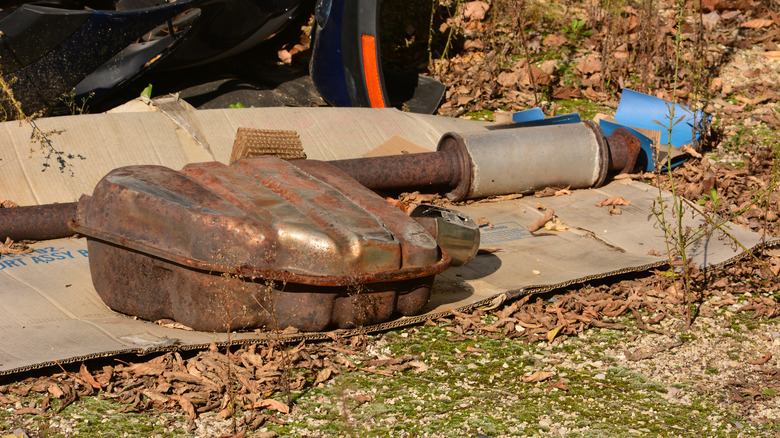
Even if your car doesn't go into limp mode, you could still face issues like poor fuel economy and a car that doesn't feel optimal to drive. There are legal troubles to watch out for, as well. Removing or tampering with a catalytic converter constitutes a federal offense in the United States. If you're caught driving without a catalytic converter, you will fail any emissions inspections and be forced to deal with fines. In states like California, Colorado, or New York, which have strict CARB standards, you won't even be able to register your vehicle without a compliant catalytic converter being reinstalled.
Beyond legal troubles, you'll also need to worry about the smell. A car without a catalytic converter smells bad. This happens because the converter isn't changing the harmful smoke into something less dangerous. Here's a deep dive into catalytic converters to help you understand better. The smell isn't the only problem, as these unfiltered gases are a health hazard. Carbon monoxide is odorless and deadly, and these toxic fumes can easily seep into your cabin through vents or window seals while you are idling at the stoplight.
Is a cat-less car worth the risk?
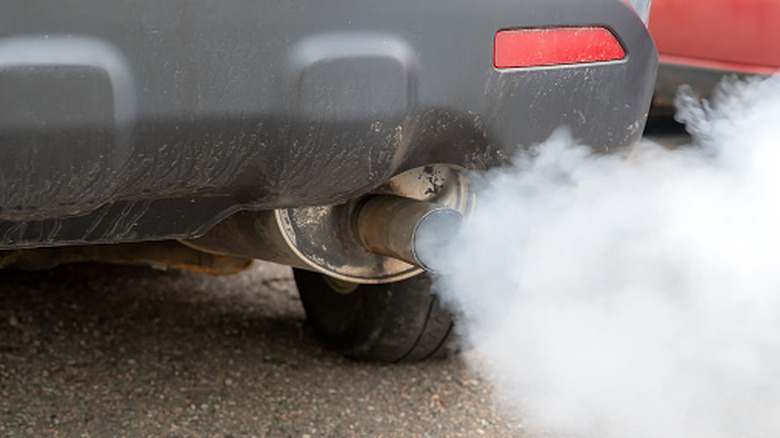
If your converter was stolen and you need to drive the car five miles to the repair shop, you'll most likely make it without damaging the engine. However, driving around without a catalytic converter could be an expensive strategy in the long run. While some enthusiasts may argue that a "cat-delete" improves exhaust flow and adds a few horsepower, in modern fuel-injected cars, it can be the opposite. You lose low-end torque, get poor fuel economy, and become a police magnet thanks to a deafening exhaust note.
Without a catalytic converter, the lack of exhaust backpressure could even cause turbocharged engines to experience "boost creep," where the turbo spins over its operating range due to an unrestricted exhaust flow. This overboost phenomenon could lead to catastrophic engine failure. You may also enjoy the loud, booming exhaust in the first week, but after the novelty fades, it turns your daily drive into a migraine-inducing drone.
You might save thousands of dollars by not replacing your catalytic converter, but in the long run, you could lose a lot of money. Between the potential engine damage, the inevitable fines, and the fact that you will have to eventually fix it anyway, it isn't worth ignoring. While "straight piping" was once a viable performance mod, the modern car engine — consisting of an ecosystem run by sensors and back pressures — is not going to take well to it.