

Astoundingly, Two Separate Companies Tried Rotary-Engined Chainsaws
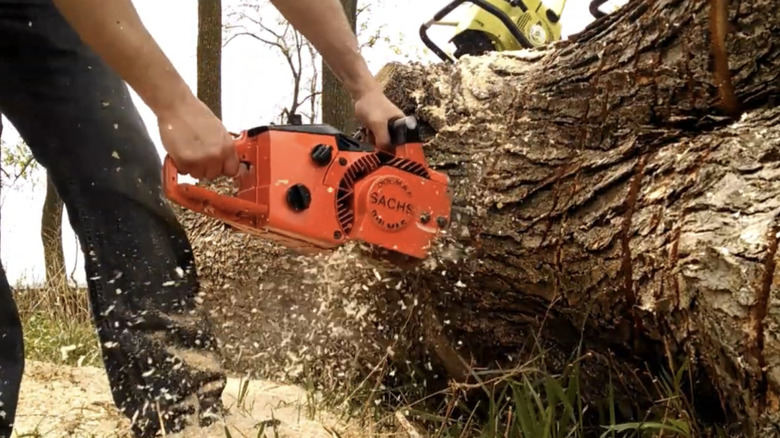
There have only been a handful of rotary engine-powered cars, and most of them start with "Mazda." While fascinating and not without their benefits, rotary engines are pretty inefficient, don't make a ton of torque, struggle with reliability issues, and are difficult to make emissions-compliant. So they died off pretty much right after Mazda killed the RX-8. However, cars haven't been the only machines to use rotary power, as the "Wankel" engine has been used in all sorts of stuff. A 118-year-old French spinner was used in planes, and meanwhile, Sachs Dolmar from Germany and Yanmar from Japan even used them to power chainsaws.
These two separate companies from different parts of the world experimented with rotary-powered chainsaws in the 1970s. Dolmar made the KMS-4 Wankel, which debuted in 1975, and Yanmar reportedly made multiple models, though the RH 350 S is the one you're most likely to see information on out in the wild. Judging by their lack of presence today, though, they weren't exactly the most popular items to begin with. However, enthusiasts appreciate these vintage oddballs and are willing to pay top-dollar for them now, as some are sold for almost $1,000. Some owners of these old-school saws use them, like the host of the mweba1 YouTube channel, and some keep them as collector's items.
How does a Wankel rotary-engine chainsaw work?
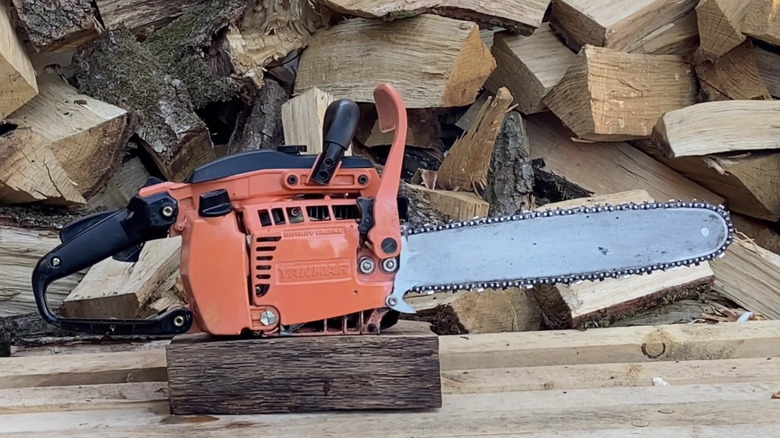
Wankel rotary engine chainsaws work basically like any other chainsaw. They have an engine, a flywheel, a cooling fan, and a carburetor that all work in tandem to turn the chain. The difference is that, instead of a typical piston engine, they use Wankel rotary engines.
Just like the Wankel rotary engines used in cars, such as the Mazda RX-7 and RX-8, a Wankel chainsaw engine has a triangular rotor that spins inside of an oval housing. Since a triangle doesn't fit neatly into an oval, there are gaps on all three sides of that rotor, which effectively act as combustion chambers. As the rotor spins, those gaps move past intake ports, allowing fuel and air to enter. That spinning motion then compresses that fuel/air mixture and pushes it toward the spark plug where it ignites. That ignition keeps the rotor spinning and the process repeating.
One of the cool things about Wankel chainsaws is that, unlike conventional piston engines, they don't have to convert reciprocating motion into rotational motion. Since the engine's ignition already spins the rotor, its motion spins the crankshaft that's connected to the clutch. After that, it works just like a normal chainsaw. The clutch engages when you rev the engine, turning the gear and spinning the chain. Compared to regular chainsaws, rotary-powered versions can rev smoother and even make a cool sound. So it's easy to see why enthusiasts and collectors might want one of these vintage saws to either own as a novelty or use in their rotation of other chainsaws. However, according to the Taryl Fixes All YouTube channel, the Sachs Dolmar offering is a bit heavier than a comparable traditional saw.
Is a rotary chainsaw worth using over regular chainsaws?
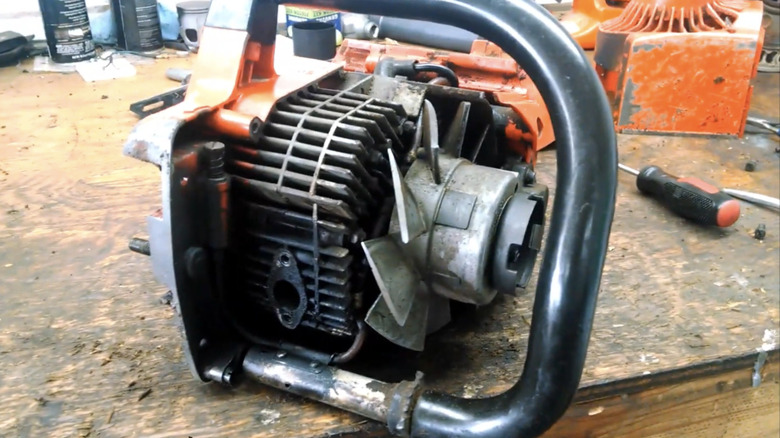
No one denies the coolness of a Wankel engine. They're unusual in their operation, rarely seen, and have some pretty big advantages over piston engines, such as higher revs and impressive power. However, there are some inherent disadvantages, too, like burning a lot of oil and failing oil seals. So, despite their quirky coolness, rotary engines never caught on for chainsaws.
Literature on the KMS-4 Wankel is scarce, but it doesn't seem to have lasted much longer than the '70s. Wankel-powered Yanmar models are even more difficult to find official information on, though there's talk of multiple models beyond the RH 350 S, such as the RH 57. There are also forums like Arborist Site filled with those looking for more information and discussions on these chainsaws, so they might be a good place to look if you want to get your hands on one for yourself.
It's no surprise that both brands stopped making Wankel chainsaws, and it also shouldn't come as a shock that no one else even bothered, either. The benefits of Wankel engines just never seemed to outweigh the drawbacks. Sure, they're smooth-running chainsaws and make a cool noise, but they're hot, burn oil, and aren't typically as reliable as alternatives. Besides, chainsaws aren't performance cars, where you can live with certain drawbacks in the name of fun-loving character. Still, they're cool pieces of mechanical history that can make great collector's items.