

What Separates Porsche's GTS Models From The 'Real' GT Cars?
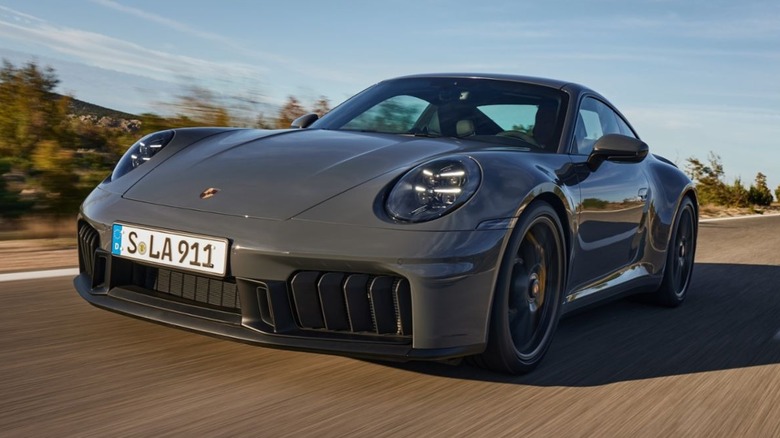
Out of all the manufactured hierarchies and naming schemes in the automotive industry, Porsche has got to be in the running for having the most convoluted setup. Even if you ignore the nerd-nip chassis codes, there are S models, T models, Targas, Turbos, Spyders, and all sorts of Turismos to make sense of and choose from.
A point of confusion one might encounter is the distinction between GTS models and Porsche's "real" GT cars. "GTS" still starts with those two letters, so presumably it falls in the same general echelon as the mighty 911 GT3, right? Nope.
The easiest way to spot "real" Porsche GT cars is to look at what comes after the letters G and T. If it's a number — like, say, Cayman GT4 or 911 GT2 — then it's a real GT car developed by the vaunted GT division headed by Andreas Preuninger. The number, by the way, references the specific racing class that car supposedly maps to. Typically, the smaller the number, the more extreme the car. If there's no number, then it's just a "regular" Porsche — usually.
What's a GTS Porsche?
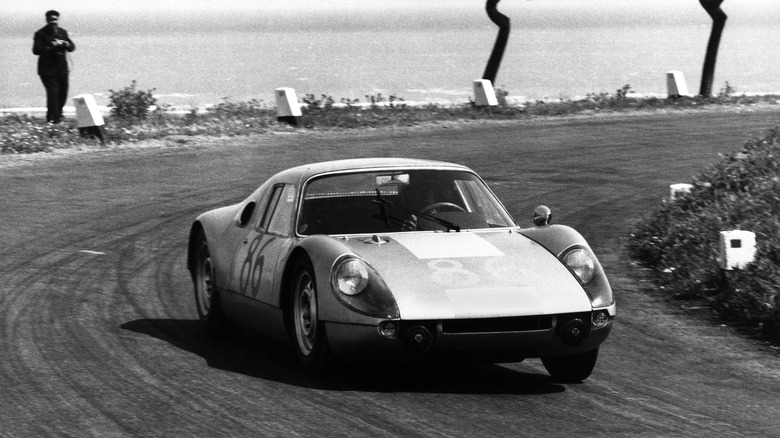
They may not be true GT cars, but the GTS designation also comes from the world of motorsport, first appearing as the 904 GTS that won the Targa Florio race in 1964. For the uninitiated, the Targa Florio was an endurance race held on public roads. Long hours and surfaces that weren't exactly racetrack-smooth meant it was grueling for the drivers.
To make sure racers remained reasonably comfortable, Porsche designed cars that would be winningly quick without also being exhausting to drive. It gave this category of car the name "Gran Turismo Sport" (GTS), as in a Grand Tourer that's also sporty.
Nowadays, Porsche GTS models rock a similar brief: cars that possess enhanced performance over the lesser S, T, and base but retain comparable levels of on-road comfort and livability. The current 911 GTS, for instance, adds hybrid power, brakes borrowed from the previous-generation Turbo, and a lower ride height than the base Carrera, but slots below the new, big-dog Turbo in the 911 hierarchy. This decidedly balanced, middle-of-the-road nature means enthusiasts and car reviewers often refer to them as "Goldilocks" Porsches.
What are 'real' Porsche GT cars?
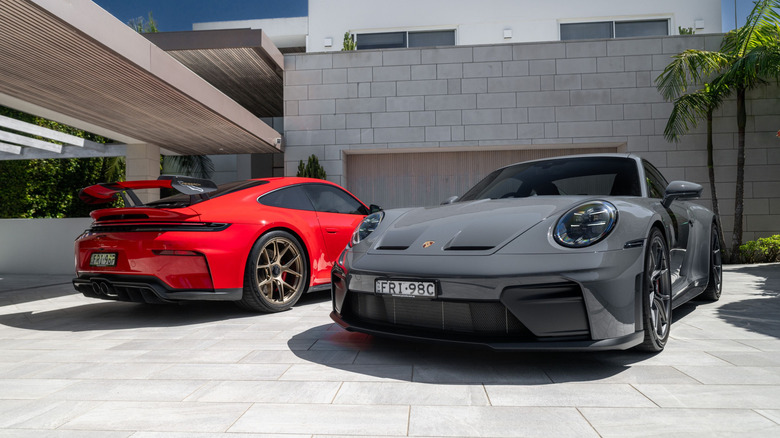
As adaptably appealing as the GTS cars are, they aren't the absolute pinnacle of Porsche performance. For that, you're looking for real GT cars. Lowered, lightened, and often festooned with all sorts of wings, splitters, vents, and canards, these are engineered by a special GT division within Porsche, taking the company's road cars and turning them into some of the world's greatest track toys.
The most famous example is, of course, the 911 GT3 and all its variants. But there's also the 718 Cayman GT4 RS as the holy grail when it comes to Porsche's entry-level mid-engine sports car. Where there are rules, though, there are exceptions, and while the 718 Spyder RS doesn't even have "GT" anywhere in its name, let alone a number after, it's definitely considered a legitimate GT car given it's functionally a drop-top GT4 RS.
As if all that weren't already complicated, there's also the Taycan Turbo GT and Cayenne Turbo GT, which race-ify Porsche's electric sedan and big SUV, respectively, and the real GT division did indeed have a hand in them. Whether these two qualify as real GT Porsches is debatable. Something tells me Porsche's marketing department really wants us to see them both as real GTs, but neither of them gets a number after the GT. GTS cars, though? While they may not be real GTs, they are still fantastic automobiles.