

Blue Origin Put Satellite Into Wrong Orbit In Bungled Launch
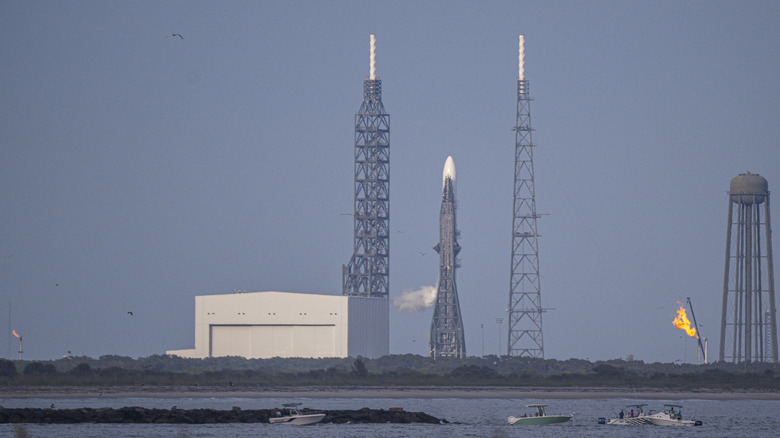
Most private space companies are commercial launch providers. They have one job: delivering equipment from terra firma to space. Blue Origin successfully reused its New Glenn rocket for the first time on Sunday, but there was one significant problem. The rocket placed its payload into the wrong orbit. The tennis-court-sized satellite will face a fiery demise, as it's now slated for swift deorbit. Jeff Bezos' space company had one job and failed spectacularly.
New Glenn's third mission featured the rocket lifting BlueBird 7, a direct-to-cellphone internet satellite, into low Earth orbit. Everything seemed to go according to plan until payload separation. According to a statement from AST SpaceMobile, the satellite's operator, BlueBird 7 was placed at an altitude too low for its onboard thrusters to sustain operations. While destroying a customer's multi-million-dollar satellite isn't good for business, Blue Origin actually foresaw a catastrophic mishap like this. The statement added, "The cost of the satellite is expected to be recovered under the company's insurance policy."
One small step for rocketry, one giant leap for quarterly revenue
Despite the botched payload delivery, the rest of the launch could be considered a success. New Glenn's first-stage booster, named "Never Tell Me The Odds," landed on a company droneship in the Atlantic Ocean. It was the booster's second flight. According to Space.com, Blue Origin became the second company operating boosters with proven reusability, alongside SpaceX.
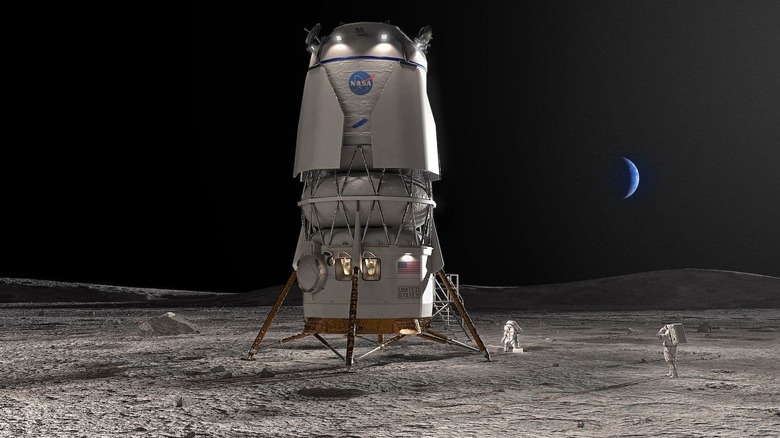
Blue Origin and SpaceX are quickly becoming direct rivals in the private space sector. The billionaire-owned launch providers are potentially set to square off in a head-to-head duel in low Earth orbit next year. Artemis III will see NASA test rendezvous and docking procedures with one or both companies' lunar landers: Blue Origin's Blue Moon and SpaceX's Starship. This mission was originally slated to be NASA's first Moon landing since 1972, but developmental delays with the landers scrapped the original plan. The landing will now be the objective of Artemis IV, projected to launch in 2028.