

Why 3D Printing Is Becoming Invaluable For At-Home Car Repair
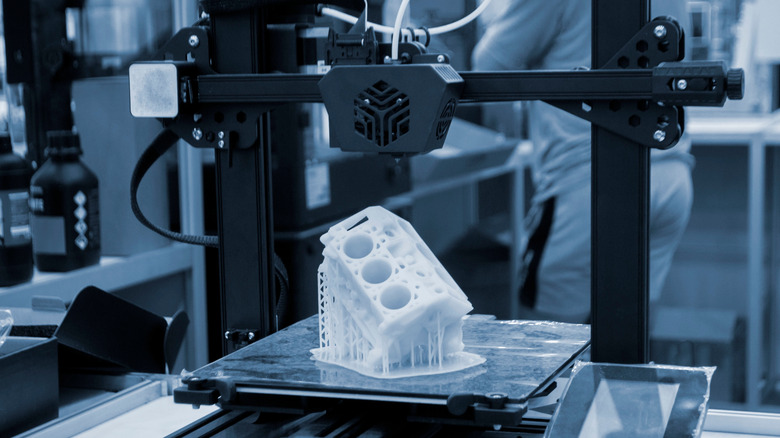
Building a project car can easily turn from a fulfilling experience to a hair-pulling one, especially when working with '80s and '90s project cars with plastic trim. You could end up holding a broken piece of trim from your 30-year-old German or Japanese car, something that went out of production during the Clinton era, and the rare online retailers that stock it charge a hefty premium with a long delivery time.
Enter the world of 3D printing. It's a technology that works by reading a digital computer-aided design (CAD) file, then printing objects in three dimensions by depositing material layer by layer onto a flat surface. 3D printing is moving from a niche prototyping process to becoming a valuable part of manufacturing and daily businesses.
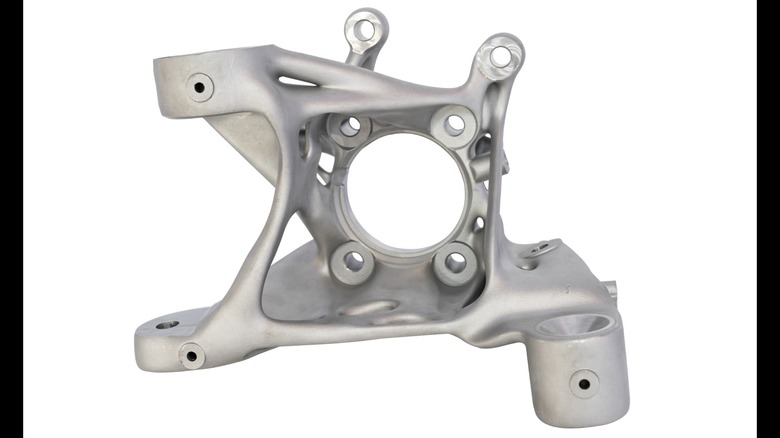
Automakers have been using massive Computer Numerical Control (CNC) rigs for years to build complex concept cars and parts. It's a process that's both expensive and time-consuming, but is set to change with the advent of metal 3D printing. This process uses lasers to melt high-strength metal powders to precise and impossibly complex geometric shapes, letting engineers produce parts with optimized internal channels and crazy organic structures that subtractive machining tools like CNC machines cannot make. In fact, even exotic automaker Bentley is using 3D-printed platinum car parts.
Major manufacturers are actively investing in massive 3D printing/additive facilities to shorten their research and development cycles. The same process that is becoming a part of tooling processes is now filtering down into the hands of ordinary enthusiasts, thanks to smaller and more affordable 3D printers.
From desktop to driveway: The rise of home 3D printers
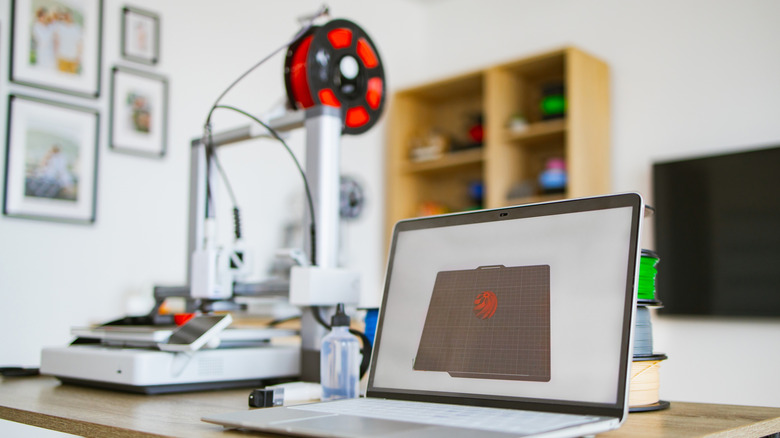
3D printing's greatest triumph is its ability to transcend from corporate laboratories to our homes. Over the last several years, desktop 3D printers have become affordable, bringing high-tier manufacturing into your garage. You can now buy a good 3D printer for as low as $250, which lets you print high-quality parts that can easily replace your crappy, broken old plastic parts. The process to get a 3D part printed is quite simple as well. You don't even need a CAD course.
You can easily download pre-made digital files from massive community databases or use 3D scanners to replicate an existing piece. Once you have the files, you feed them into a "slicer" program. It's a software that converts your 3D design into 2D slices, which the 3D printer then layers atop each other to make a 3D product. The file is then sent to the printer, and the machine lays down molten filament in layers.
Unlike the brittle, useless plastics of early hobby printers, modern desktop 3D printers use materials like carbon-fiber-reinforced composites, nylon, and tough thermoplastics. These advanced materials offer good structural rigidity and high heat resistance, meaning your freshly printed intake snorkel or sensor bracket can easily survive the brutal, vibrating environment of a hot engine bay way better than the original part did.
This accessibility is a big boon for DIYers, giving them the power to make their own specialized component. That means you no longer have to rely on a mega-corporation to supply parts for your niche build — you can simply fabricate a custom-fit component yourself. It's a game-changer for DIY wrenchers and project car enthusiasts who are no longer at the mercy of slow-moving warehouses and discontinued parts that leave fantastic cars rotting in garages.
Bye-bye backorder nightmare, hello infinite customization
The at-home DIY 3D printing culture is gaining steam for simple reasons. Ask any DIYer or car restoration enthusiast about the worst part of car-building culture, and they'll probably mention the long wait for parts. When a crucial plastic clip snaps or a rare interior trim piece on your legacy car crumbles, the traditional option can leave you stuck for days, if not months. 3D printing eliminates that annoying downtime. If a piece breaks, you could potentially look up its 3D file online, fire up the 3D printer, print a reinforced replacement overnight, and have the vehicle back on the road the next day. A 3D printer could help solve all your car problems.
Another reason for the budding 3D printing cuture is its potential as a hobby. One redditor on r/3dprinting says they've gone from having one 3D printer to getting five in under a year. Another redditor printed a replacement fender support for a vehicle he was working on by 3D scanning a new part. He was quite impressed with the finish and strength of the 3D printed part.
3D printing goes beyond just fixing broken stuff — it offers infinite customization. You can even 3D print an Aventador! Enthusiasts are using 3D tech to build bespoke parts such as custom gauge pods, cupholders big enough to hold your smartphone, or even specialized brackets for aftermarket engine swaps.
The beauty of 3D printing is that you can zero in on a design, do a test fitment, tweak the digital measurement by a few millimeters, and reprint a perfect piece, all in just a couple of hours. Thanks to tech like 3D printing, making your own parts is arguably the ultimate expression of DIY ethos.