

Is One-Pedal Driving Really More Efficient?
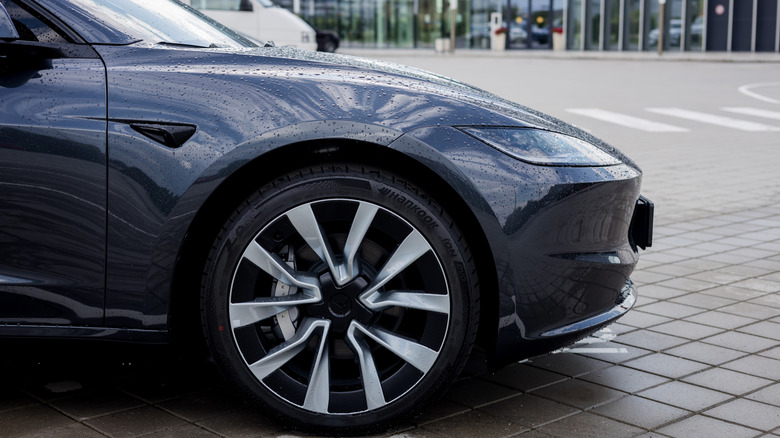
As much as some people might enjoy one-pedal driving, there are others who are not so keen on the exercise. If you're not in the know, one-pedal driving is when your EV comes to a stop after you take your foot off the accelerator, without needing to press the actual brake pedal. The sensation is sort of similar to engine braking. This process leads to the traction motors now acting as generators, harvesting the energy from braking to be used elsewhere. Internal combustion vehicles generally waste that energy as heat because of their sole reliance on friction brakes. Although most new EVs have this feature, certain models do without, with Porsche being the most critical about one-pedal driving's overall efficiency. Tesla is perhaps on the opposite end of the spectrum, giving owners no option to fully disable the feature, especially on newer models.
So, is it really more efficient? Honestly, neither camp is wrong here, as the efficiency argument is very situation-dependent. A study from the Frontiers in Mechanical Engineering showed that one-pedal driving could potentially add 5% range to a Chevrolet Bolt. Such improvements could go even higher, though this is contingent on factors such as temperature, driving style, and so on. Porsche, however, believes that coasting is more efficient, claiming that you end up with twice the energy loss since one-pedal systems recuperate first and convert second. Also, a Polestar representative told Road & Track that one-pedal driving isn't all that efficient on the highway, nullifying its benefits due to the constantly-changing speeds.
One pedal driving has further benefits
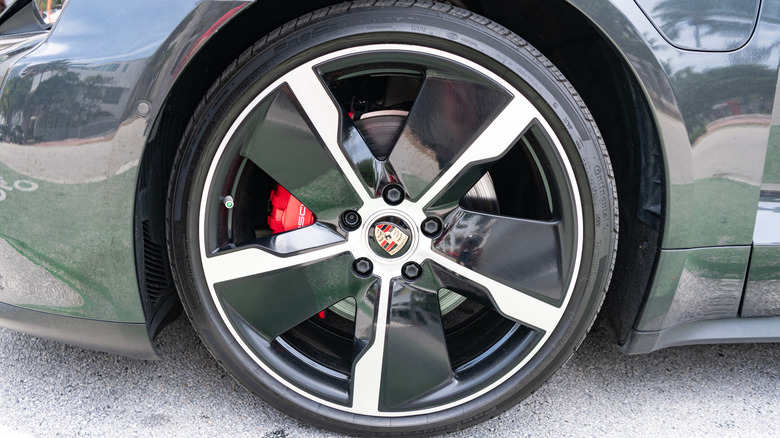
It's not like Porsche is against regenerative braking, which is why you can find it in the newly-launched 2025 Macan EV. In fact, the company admits that the system can improve driving range by as much as 30%. Plus, while it generally isn't keen on the one-pedal idea, sister brands like Audi embrace the concept. You can even find the system in the Q6 e-Tron — which happens to be the Macan EV's corporate sibling.
Keep in mind that while Porsche's coasting argument makes sense on the highway, at city speeds, one-pedal driving can seem more beneficial. Efficiency aside, your vehicle's friction brakes will last longer now, and not having to use or worry about the brake pedal might seem like an actual quality-of-life improvement. Perhaps that's why many manufacturers offer adjustability, allowing owners to tailor the regen settings to their liking. Audi, BMW, and even Porsche have taken things one step further by offering adaptive modes, where the car decides which regen level is best for the situation, helping to further improve efficiency.
It should be noted that one-pedal braking also isn't entirely a replacement for normal brakes. Tesla still makes use of friction brakes, and the regular brake pedal still exists for emergencies. At the end of the day, the winner of the efficiency argument depends on your needs and commute. If you're in bumper-to-bumper traffic and don't want to wear down your brakes, keep it on. Otherwise, turn off one-pedal driving, if possible — something this kid should have done before failing his driving test.