

The Strategy Behind Cruise Ships' Multiple Diesel Engines Is Unexpectedly Fascinating
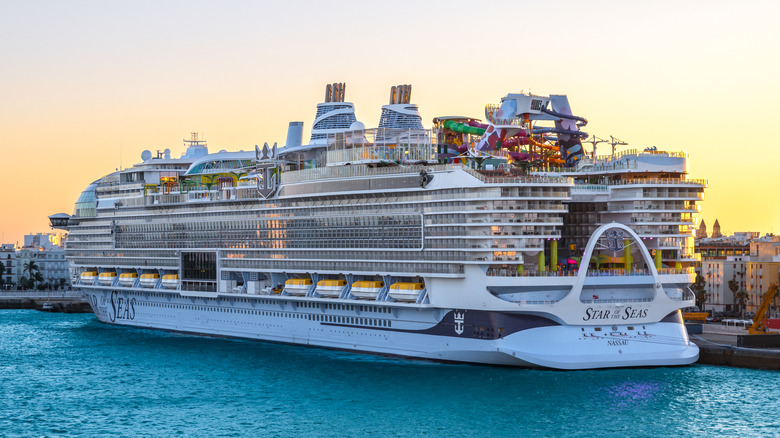
Cruise ships are objectively ridiculous machines. They're the size of mountains, weigh as much as skyscrapers, and burn enough fuel in a single voyage to make entire country coastlines seem clean. Some even have so-called "neighborhoods" on them. However, despite being among the most wasteful vehicles on the planet, the engineering behind making these floating cities work is actually fascinating – specifically how they use multiple different engines with different sizes. Some, for example, provide propulsion power, while others power everything else. It's a clever cooperative dance between vastly different mechanical components that takes brilliant engineering to keep running properly.
Most modern cruise ships use diesel-electric hybrid propulsion, as it seems to be the most effective and efficient power train setup. There are variations of the setup, but the main method seems to be using the engines to generate electricity for the ship's electric propeller units and all ancillary needs, like lighting and HVAC. Even more interesting is that cruise ships often use 12-cylinder, 14-cylinder, and 16-cylinder engines to make it all work.
How do diesel-electric powertrains work, and what does what?
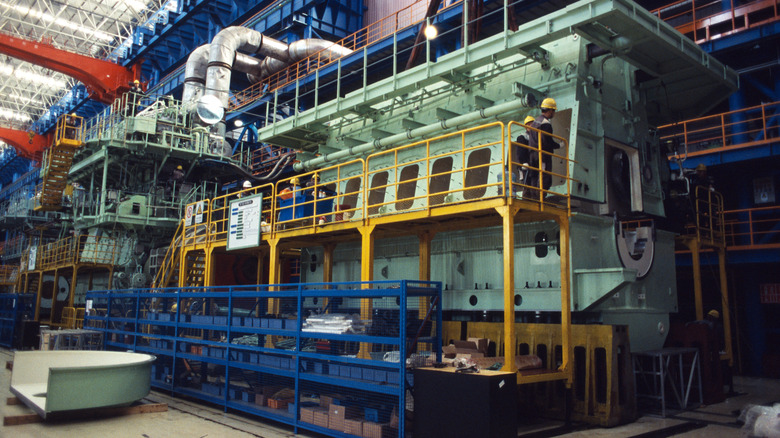
Ships aren't driven directly by reciprocal engines much anymore. While there are obviously still some direct-drive ship power trains, it's far more effective to use electric propellers powered by diesel generators. These are housed in one unit (with a few extra for redundancy), and some weigh hundreds of tons each, with propellers that measure over 20 feet in diameter. They also can rotate 360 degrees, eliminating the need for rudders. Most cruise ships have several of them, but they require a constant stream of electricity — and that's where the diesel engines come in.
Some ships use turbine engines, but diesel is the primary engine of choice of power generation. These can weigh hundreds of tons, but they're happy to steadily chug along at constant, relatively low rpm to maintain enough electricity for whatever the ship needs. For example: the Icon of the Seas is one of the largest cruise ships in the world, weighing in at nearly 250,000 gross tonnes, and it uses three 12-cylinder and three 14-cylinder diesel-electric engines to handle all of its daily needs.
Why use multiple engines with varying cylinder counts?
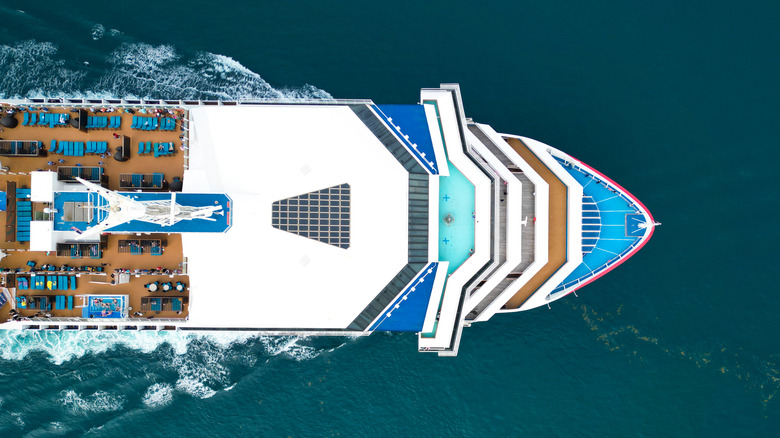
So why would cruise ships use multiple engines with varying cylinder counts? As mentioned previously, cruise ships have two main power needs: the power needed for propulsion and the electricity used by everything else. Those massive propellers require power to move the ship through the water. And since doing that is far more demanding that pushing a plane through the air, for instance, it requires big diesel engines to supply all the electricity needed. That's a major reason as to why cruise ships have monster engines with staggering horsepower.
On the other hand, cruise ships also need to supply all of their passengers with functioning plumbing, lighting, and HVAC. (And margarita machines, because what's the point of even going on a cruise without one?) The aforementioned Icon of the Seas has around 10,000 passengers, including the crew, so that's a lot of power it needs to keep them satisfied.
The load a cruise ship takes for providing power to its passengers is almost always going to be lower than propulsion. But the combined load will vary depending on how fast the ship is going, what the weather is like, and what sort of accommodations there are. But with multiple engines of varying cylinder counts, ships can more efficiently burn fuel for their power demands, have redundant backups in case there's failure in one, and even take advantage of backup generators.