

A History Of Porsche Spoilers And Their Nicknames
Through its history of building sports cars, Porsche has imbued its range-topping 911 with a wide variety of different aerodynamic treatments in the name of speed. When the body shape of a car stays relatively the same for over 50 years, the easiest way to differentiate a performance model is to equip it with a big unique tail out the back. Porsche began experimenting with real aero downforce in the mid-1960s, but it was still something of a dark art in the early 1970s. Most performance cars wouldn't get appreciable aero until the mid-1970s or later, and the 1980s saw all kinds of wild downforce-inducing efforts. Today we're just focused on the various different decklid wings that came equipped on Porsche 911s over the years.
One of my favorite anecdotes about aerodynamic downforce comes from the Gulf-sponsored John Wyer Racing team which was running Porsche 917s early on. During a test day the team's drivers noted that the car was extremely unstable in high speed corners, and later the engineers noticed that while there were a lot of gnats in the air that day, they littered the front bumper but absolutely none were getting splatted on the rear wing of that specification 917. The engineers built up the rear wing on some wood platforms to get it sticking up into clean air and rear end stability came hand-in-hand with splatted bugs. Aero is important to fast lap times.
Since that time, Porsche has experimented with hundreds of different rear decklids and wings to stabilize the roughly wing-shaped 911 body. You've probably heard of terms like ducktail, whale tail, or maybe even tea tray to describe a Porsche wing, but if you don't know what any of that means, we're here to help provide a guide to telling the difference. Class is in session, here we go.
Duck
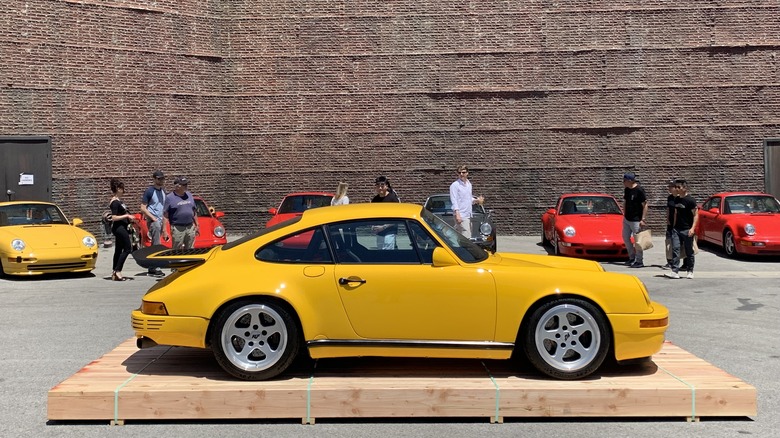
Porsche started experimenting with decklid wings in 1972, trying a couple of different ramp-style designs for that season's official motorsport activities. By the time the company launched its Carrera 2.7 RS for the 1973 model year, it was known that the more powerful track-focused car would need some kind of wing to help it turn faster lap times. Not only was this design needed for production, but also as a homologation part for Porsche's motorsport efforts. Enter the ducktail.
The ducktail is called a ducktail because it flicks up at the rear of the 911 in a way reminiscent of a duck in profile. Where the duck's tail feathers pop up rearward of its wings, Porsche installed a decklid with appropriate ramping. The air coming up over the top of the 911's curved roof and hit the tail like a ski ramp, forcing the rear end of the car to push into the ground. The 2.7 RS was under 2,200 pounds from the factory, so some aero downforce helped a lot with rear end stability at speed.
This wing was almost exclusively used on the 73 Carrera RS 2.7 and 74 Carrera RS 2.7.
 Bradley Brownell/Jalopnik
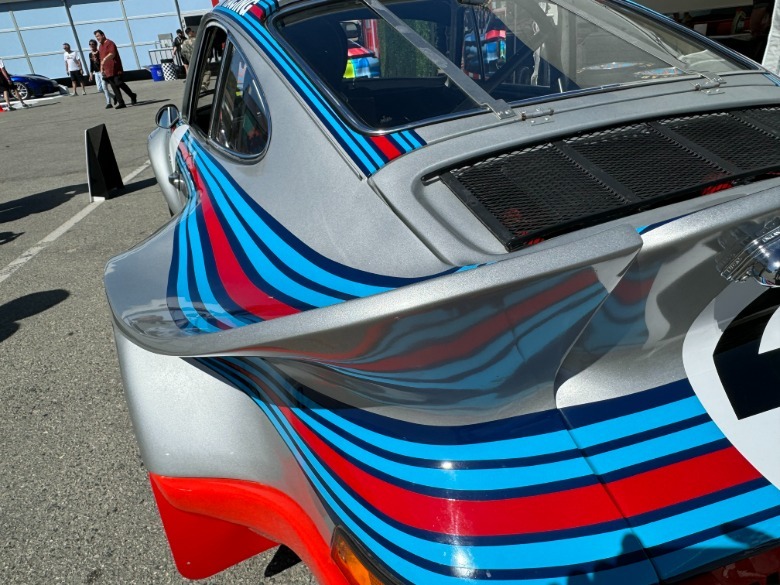
The Mary Stuart wing (above) was the ultimate extension of the ducktail. Porsche equipped two of its factory-entered 1973 RSR race cars with a wrap-around ducktail wing just to see what would happen. As luck would have it, one of them finished fourth overall at Le Mans, which is a pretty big deal. The new style involved an extension of the car's flared rear fenders which connected all the way up to the factory-style ducktail wing. It's colloquially known as the Mary Stuart because it is reminiscent of the neck collar worn by Mary, Queen of Scots.
Whale
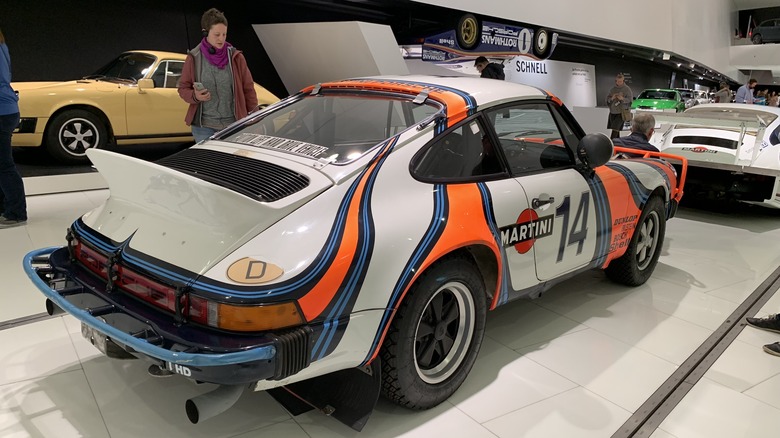
There are a wide variety of Porsche tails that many enthusiasts group under the "Whale Tail" moniker, though not all of them, strictly speaking, are actually whale tails. After another year of testing and trials, Porsche discovered that it didn't need the dramatic ramping ducktail spoiler in order to create downforce for the 911. The guy who won a Grand Prix for Porsche a decade earlier, Dan Gurney, had developed an aerodynamic hack that would come to be known as the Gurney Flap. A small flick up at the end of a wide flat wing could be used to great effect. The engineers set about building a new style of wing.
The car pictured above, an early non-intercooled 3-liter variant of Porsche's now-iconic 911 Turbo, received a whale tail wing but with a polyurethane soft touch edge to fit European pedestrian safety standards.
 Bradley Brownell/Jalopnik
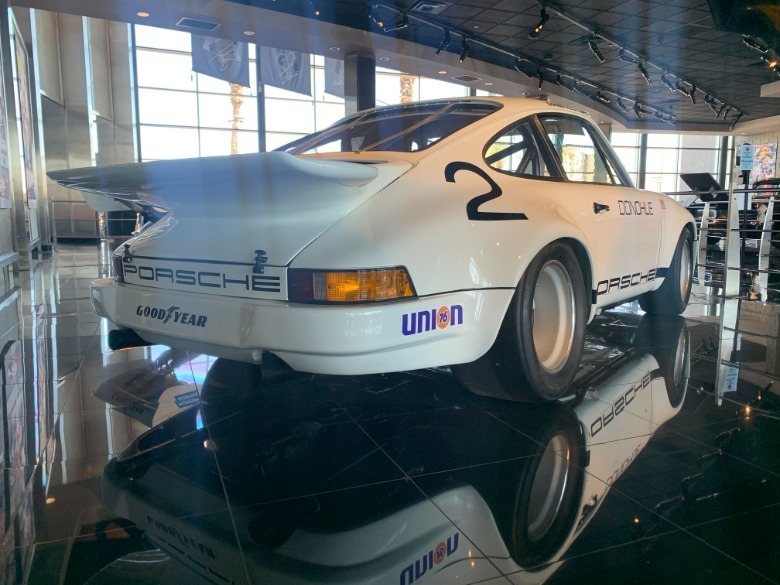
The homologation-special 1974 Carrera RS 3.0 and its racing counterpart the updated 1974 RSR received a larger but much flatter rear appendage. This wing was also incorporated into Porsche's International Race of Champions one-make series race cars. Much flatter and broader than the ducktail, but with a raised upkick at the rear section of the wing, like a Gurney, Porsche built these from fiberglass over a steel frame. Because they extend out from the car aft of the decklid, the tail looks akin to a breaching whale about to slap the ocean waves in a dive. Hence the name.
The original whale tail had a single opening for the engine grille. Later on Porsche added a second grille in the middle of the tail's flat surface meant to provide more engine venting. A third version has a much larger grille installed, meant for an air conditioning condenser. The final whale tail is perhaps the rarest, the UK-only all-polyurethane wing with a large plastic grille. I've never seen one of these in person, for what it's worth.
Turbo And Beyond
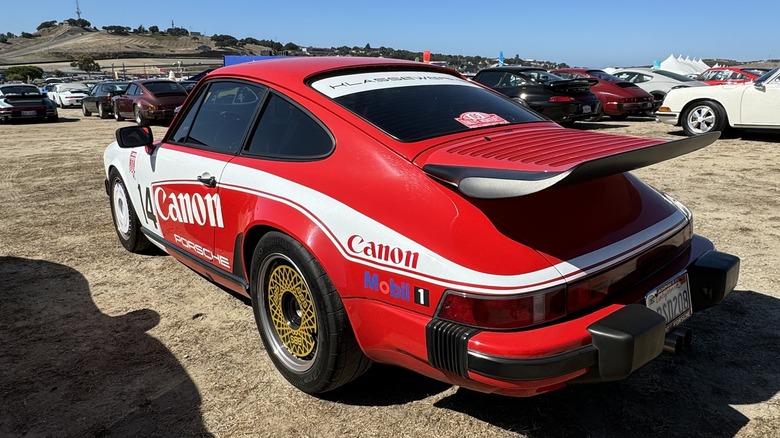
The final iteration of the 911 "whale tail" was the above full-width grille wing that became optional for the 1984 Carrera 3.2 model and extended through the model's demise in 1989. While the wing remains largely the same shape as the whale tail that preceded it, the grille surface is brought upward for a more smooth transition between the rear wing and the flicked up Gurney flap. The grille itself is nearly the full width of the wing on this one, funneling more air into the top of the air-cooled engine compartment's fan.
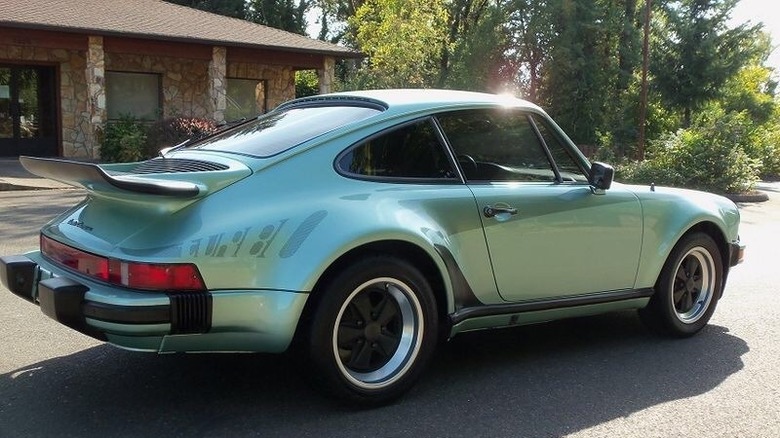
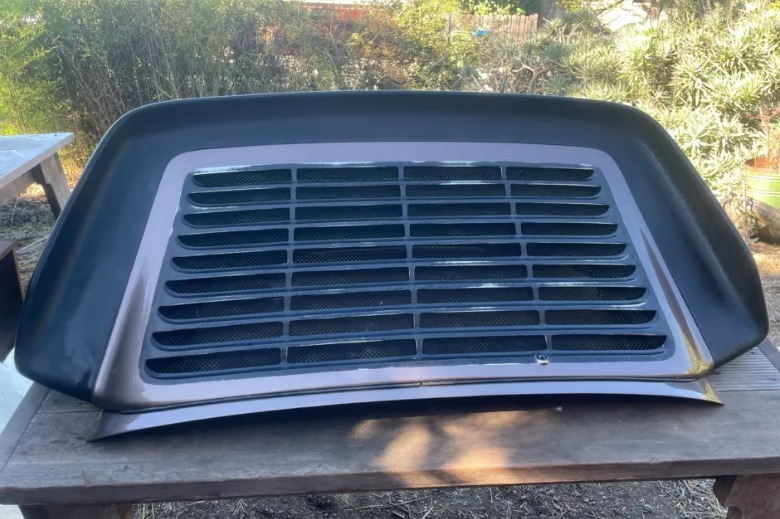
Porsche created an even more exaggerated tail for its intercooled 911 Turbo models beginning in 1978. This one differed from the whale tail in that the turned up Gurney flap extended around both the left and right side of the tail to cup and direct more of the air toward that flap and increase downforce. Because of the way all of its edges turn upward, this particular wing was known as the "tea tray" wing. Here is an example of one that sold on Bring a Trailer recently.
 Bring a Trailer
There are many differences between all of these aero elements, despite most of them looking quite similar from afar. Hopefully with this informative breakdown of this era of air-cooled Porsche spoilers. You will not be able to use your notes on the test, so make sure you study them diligently so you can identify them on real cars in the real world. Make your friends think you're as much of a Porsche nerd as I am, it's a fun game.