

Dodge Is The Last Company I Trust To Build A Miata Competitor
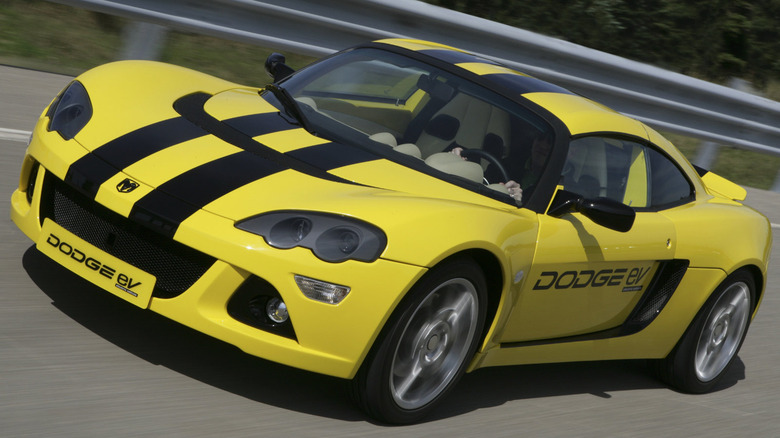
Dodge CEO Matt McAlear has previously expressed support for adding an affordable sports car to the lineup. It wasn't an official announcement, but then, this week, he did it again, telling the Drive that "there's absolutely a market for affordability" and that "one of the things that we owe our dealers and owe our consumers are more affordable-price vehicles that not only just get you from point A to point B, but do so with style, attitude, and performance." Sounds sweet, right? An actual American Miata competitor? Hell yeah! The problem is, I just don't think I trust Dodge to actually make it good.
To be clear, I don't mean that Dodge shouldn't try to build a Miata competitor. Every automaker on the planet should try to take on the mighty Miata, and that includes Dodge. I want to live in a world where you can buy a lightweight, affordable roadster at any dealership you walk into, and I promise you that world is better than the current one. Dodge should absolutely build a Miata competitor, make it so good I have no choice but to start my review with the line, "Dodge, I owe you an apology." I really do want to be wrong here.
But even in a world where Stellantis execs were all on board, do I actually think Dodge could build a viable alternative to the next-generation Mazda Miata and deliver it with a starting price below $30,000, as McAlear initially suggested was the goal? Not a chance. They can probably build a roadster that exists, but it will almost definitely end up being markedly worse than the Miata and/or significantly more expensive.
Sure, Dodge has recent experience building the Challenger and the Viper, but the Challenger never had to be light, and the Viper was never meant to be anyone's daily driver. An affordable roadster or coupe, on the other hand, has to be comfortable and practical enough for daily use, even if it's a second or third car for most owners. While also being light, nimble, engaging, fun to drive, fuel-efficient, reliable, and stylish. If that sounds like a tall order, that's because it is.
Let me count the reasons
Mazda has Miata development down to a science and has more or less perfected the art of cutting corners to save money in ways that don't detract from the driving experience unless you're tall. As for Dodge, I don't think I trust them to approach their affordable sports car project with the same kind of focus. American automakers already have enough of a reputation for building cars that feel like they were designed by committee, being owned by Stellantis only complicates that more, and they'd be working on a project that's pretty much the opposite of anything the American division of Stellantis formerly known as Chrysler Group has done for the last several decades.
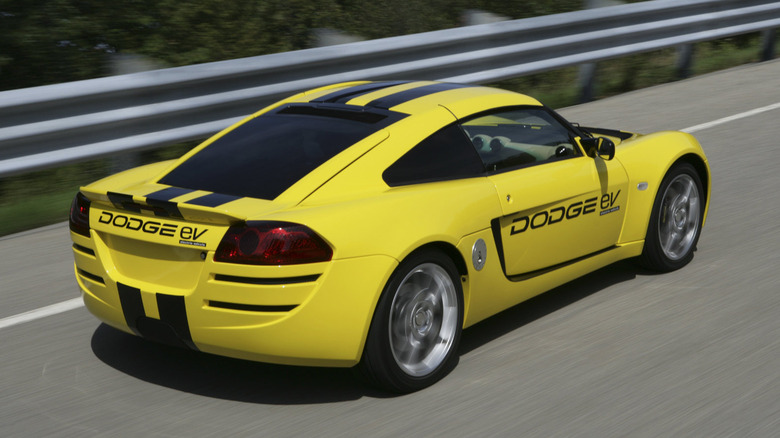
In theory, having a European arm that it could borrow heavily from would be an advantage here, but I also don't know if Stellantis is the partner you want here. The brands that know how to build rear-wheel-drive cars with engaging handling are Alfa Romeo and Maserati, two brands that don't compete at the sub-$30,000 price point until about six minutes after your drive one off the lot. Parts-sharing would help bring down development costs, but would the money saved not developing new parts offset the higher cost of those parts originally being developed for more expensive vehicles? Oh, and the last time Fiat Chrysler introduced an affordable roadster, it had to buy Miatas from Mazda to rebadge instead of developing its own car.
We also know coupes and convertibles don't typically sell in big numbers, making it hard for a lot of automakers to keep them in their lineups. Odds are, Dodge would need it to offer it outside of the U.S., too, in order to sell enough to justify the development costs. And that most likely means making it a hybrid at the very least, if not electric, which adds both another layer of complexity and cost. Plus, even if we assume development is at least a year along, we're looking at probably another three years before it's ready, and who even knows what the world will look like in 2029 or 2030.
If I really had to guess, I'd put my money on Dodge deciding it would just be too hard to make money selling a Miata competitor, and it will never happen. Which is probably for the best. But what if, against all odds, they actually pulled it off? What if Dodge actually built a better Miata? What a world that would be to live in.