

Bad News: The Cars Closest To Depreciation-Proof Are Probably Out Of Your Budget
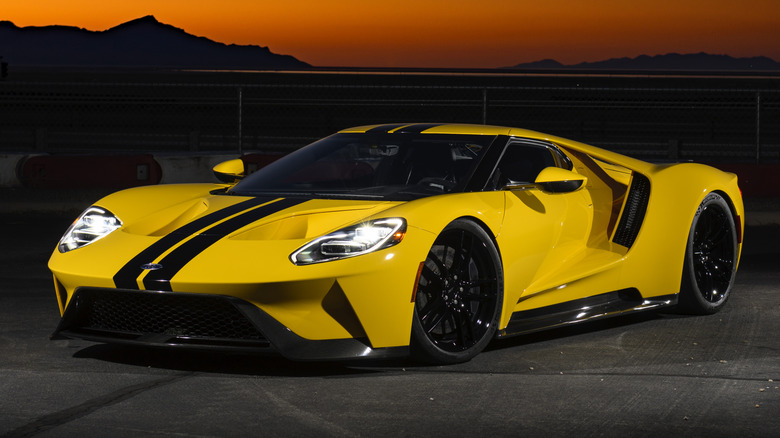
If you're truly worried about the depreciation of your new car, you probably should not be buying a new car at all. The average new car purchase loses around 30% of its value in the first two years, making cars a truly terrible investment commodity. If you think keeping the miles low on your Corvette will make it worth more when you're ready to retire, I promise, it will not. You should absolutely go out there and drive all the miles you want, because you're never going to beat depreciation — if you want a place to invest, try the stock market. If you're absolutely determined to make money on a car purchase, though, you've got to jump into the deep end of the pool.
There are some truly rare cars out there that beat the depreciation curve. Not only that, but if demand is high enough, these vehicles could make some money in the long run. The unfortunate news for normal folks like you or I, most of the vehicles that could make that sort of financial sense are priced deep into the six figure range, if not seven. So it takes a whole lot of money to make even a little bit of money in "investment" cars. Usually, these cars require buyers to already have existing relationships with dealerships, having purchased (and lost on) multiple cars ahead of this one, so it's arguable that even these cars don't net you enough to have been worth it.
Porsche 911R
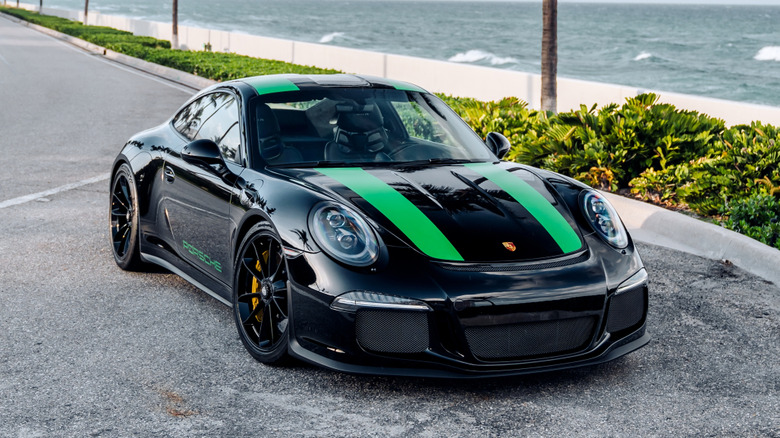
When Porsche launched its new GT3 as a dual-clutch-only affair, the cognoscenti revolted. How could the company known almost exclusively for exquisite driving connectivity turn their back on the stick shift? Porsche's long-time enthusiast buyers were upset, and in an effort to say sorry, Porsche launched the manual-only 911R, which was more or less a manual version of the GT3 with some extra weight removed and some more hardcore mannerisms.
In addition to the 500 horsepower GT3 RS 4.0-liter motor, the 911R received a roof panel crafted from magnesium, carbon fiber hood and fenders, lightweight glass, and deleted the air conditioning and radio, all in the name of a 110 pound weight savings when compared with the GT3. With less sound deadening and a chattery single-mass flywheel, the 911R is hardly a quiet and comfortable place to spend time, but it's fast and visceral, and it'll kick your butt if you don't know what you're doing.
The hitch here is that Porsche only built 991 units of the supreme driver's 911, and it sold out before it was ever offered to the general public. The 911R was initially offered only to customers who had previously plonked down over $800,000 for the 918 Spyder hypercar. With a $143,000 original MSRP, the owners who were offered the chance would have been foolish not to buy one.
From the moment they were delivered to their first owners, prices shot up into the stratosphere. At the time, if you wanted a high-rev naturally aspirated engine from Porsche with a stick, this was your only option. For at least the first few months, these things were trading hands into the half-million dollar range. They settled down into the mid-300s for a few years, then exploded during the COVID collector car rush. Now they're back up with many examples selling for between $700,000 and $1,000,000.
Ford GT
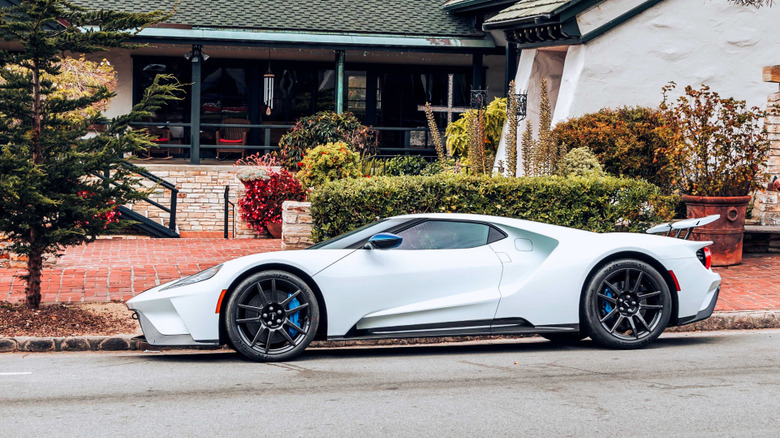
The "new" Ford GT, which was sold between 2017 and 2022, is another one of those extremely rare cars that almost instantly doubled in price and never really went down. With just 1,350 examples produced, Ford knew this one was going to be big, and they made prospective GT buyers sign a contract agreeing not to flip their car on the open market within 24 months of taking delivery. Not only that, but you had to apply to Ford in order to be considered for the privilege of buying one of these machines for half a million dollars.
Very few of these cars have racked up any significant mileage on their odometers since they were built. Almost every one of these that has sold in the last five years has shown under 1,000 miles on the clock. And because every Ford GT was pretty much exactly the same specification (with the exception of some Heritage editions and Competition series), the prices are based almost exclusively on color and mileage.
With a carbon fiber chassis and Le Mans prototype-style aggressive aero, the Ford GT is one of those cars with presence. The look is unmatched, and it's about the most hardcore street car built in the last couple of decades. Despite not having the outright performance to match some rivals, the Ford GT will always be collectible.
The first Ford GT to sell at public auction after the Ford-mandated waiting period went for a whopping $1.815 million. After settling into a range of $800,000 to $1,000,000 between 2018 and 2020, these machines also shot up in a COVID-induced collector car boom, and have since traded hands for between a mil and 1.5.
Lamborghini Aventador SVJ
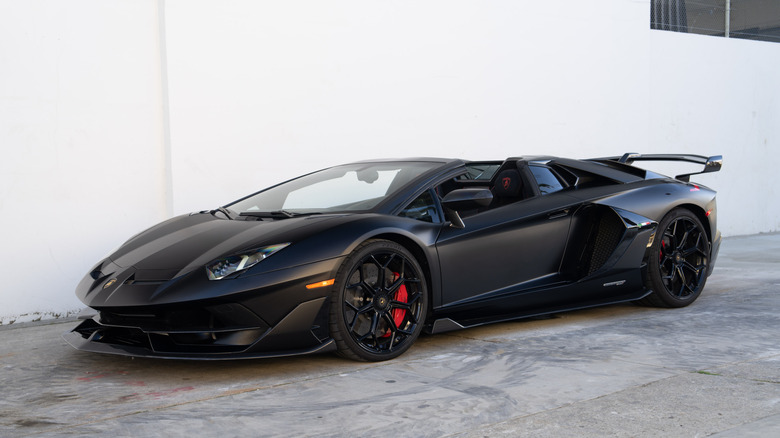
Super Veloce Jota. Those three words instantly cause the price of a Lamborghini Aventador to skyrocket. Produced from 2018 to 2021, the SVJ was more or less the final and most impressive version of Lamborghini's long-lived V12 supercar. Billed as a lightweight track-focused model, the SVJ brought the Aventador a level of excitement it had heretofore never seen. With 759 horsepower, 531 lb-ft of torque, and just 3,362 pounds (dry) to push around, this is one of the quickest Lamborghinis in history. Just 900 units of the coupe were produced, while 800 additional Roadsters were built, along with 63 units of the aptly-named SVJ 63.
This is one of the most visually impactful Lamborghinis ever built, making it an instant buy for the flashy folks with a spare million dollars or so. When these were brand new, Lamborghini was charging around $600,000 for the privilege of ownership. With rarity and reputation as part of the equation, second-hand buyers began shelling out more for the ability to purchase the last true V12 Lambo. The hybrid-powered Revuelto is out now, but that hasn't stopped the Aventador from commanding big numbers.
The last of these cars was sold just four years ago, but they've totally avoided any hint of depreciation. Even the base model Aventadors have started coming back up after hitting a low value of around $170,000. If you're springing for an SVJ, however, you'll be paying a serious premium. The best examples are trading hands into the $900,000 range, while the least expensive examples with high miles are still commanding $600,000 mark.
CTS-V Wagon
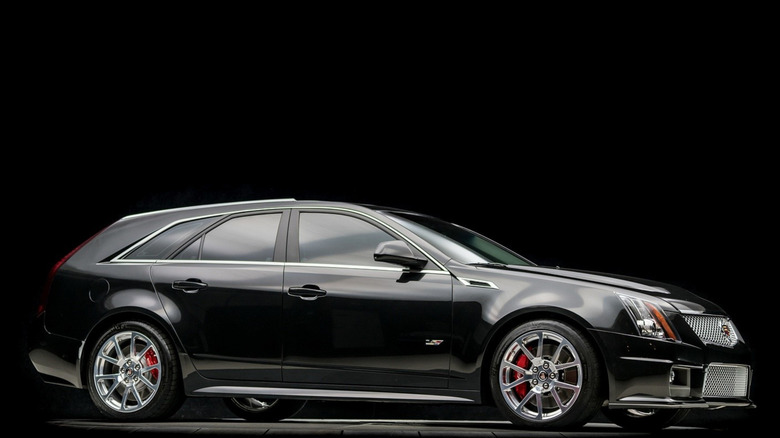
Okay, we've seen some of the cars that beat depreciation by being rare and expensive. Let's look at one that seems to be beating depreciation in a lower price bracket. The 556-horsepower CTS-V was a family hauler that became an instant cult classic, despite never selling in big numbers from the factory. Considering these machines were between $60,000 and $70,000 when they were brand new, it's impressive that some examples — particularly the extra-rare manual transmission version — are still selling for more than that over 12 years later.
Powered by a supercharged 6.2-liter version of General Motors' LS engine, backed by an optional Tremec TR6060 six-speed manual, and delivering power to the rear wheels, this is one of the most exciting wagons to ever come to market. At 4,398 pounds, it wasn't lightweight by any measure, but with a 4.0-second zero-to-60-mph time, this was hardly a slow thing to drive, and it'd do burnouts just by hinting at it. With a 51/49 weight distribution, it was a pretty good handling package, too. It'd pull 0.89g on the skid pad and run the quarter mile in 12.3 seconds, which were supercar numbers just a decade prior.
Estimates say that only 1,767 CTS-V wagon units were made, and of those, allegedly just 514 were manual transmission models. That's a big part of why the stick wagons have not really dropped in value. If you missed out on buying one new, you are going to have to pay a premium to get one today. Low-mile examples continue to trade hands nearly into the $90,000 range. While you might be able to find a less expensive one, you're going to get one with a lot of miles. For example, this 94,000-mile unit sold for a comparative bargain at $39,000, which is a ton of money for a 15-year-old Cadillac with a six figure odometer.