

The Difference Between 4-Low And 4-High When Off-Roading On Rough Terrain
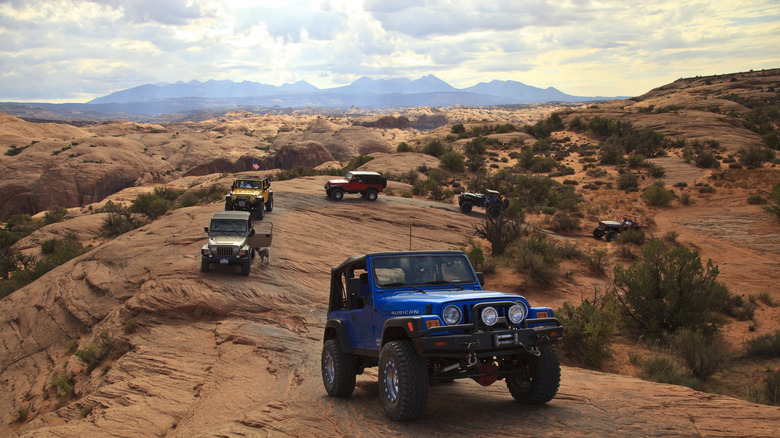
When engaging four-wheel drive, you'll need to choose between high or low on the transfer case. The ability to select these modes manually is just one of the differences between four-wheel drive and all-wheel drive. High and low modes operate at vastly different speeds, gear ratios, and torque output levels. Unfortunately, using the wrong one or engaging the system at the wrong time can cause damage to either the transfer case or the drivetrain. For instance, trying to use 4WD around town (even in 4-high) on dry streets can cause axle binding when attempting to turn.
In 4-high, you can drive at normal road speeds, with the difference being that all four wheels are engaged. This option is good when roads are covered in snow or are slick. With both front and rear wheels locked together, 4-high can improve traction without changing other aspects of your vehicle such as gear ratio and torque.
When you select 4-low, speed is very limited, and this mode is reserved for more challenging off-road scenarios, such as summiting a sand dune or rock crawling up a steep tract. According to Jeep, you should never go over 25 mph in 4-low, as it operates at three times the engine speed of normal settings. Unlike 4-high, the low range setting alters a vehicle's gear ratio. For instance, the Command-Trac 4x4 system from Jeep features a low mode of 2.72:1. Put simply, instead of a 1:1 ratio, one gear must spin nearly three times around for every one rotation of another. In some models, you can find ratios of 4:1 or even higher (higher numbers representing lower gear ratios). The higher the ratio, the more torque is applied to the wheels, helping your tires claw through rugged backcountry with ease.
Only use part-time 4WD in appropriate conditions, otherwise you'll encounter binding
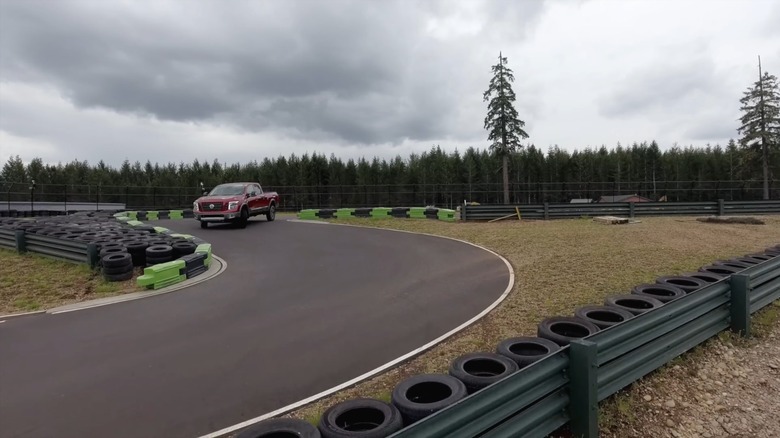
One important thing to remember about part-time 4-wheel drive is that it can't be used on dry pavement, other than when traveling in a straight line. If you attempt to turn the vehicle, it will begin jerking and acting erratic as the drivetrain binds up. In 4-wheel drive mode (high or low), the front and rear drive shafts lock, meaning all the wheels are rotating at the same speed. The wheels need to spin at different speeds while turning, and they can't do so when locked together — trying to turn on dry pavement while using 4-high or 4-low could potentially destroy your axle or damage the transfer case.
When navigating on off-road terrain, the tires can slip a bit, preventing this binding issue. That's why, particularly for 4-high, it's imperative that the road doesn't have dry spots of pavement that could cause your drivetrain to lock up in a battle against itself. However, there are systems out there like limited-slip differentials, which work differently, allowing the wheels to rotate at varying speeds.
Nevertheless, part-time 4WD systems offer a great solution to those who split their time between on-road and off-road driving. For example, Wranglers and Broncos feature competitive off-road specs, while also performing well on pavement. When used properly, these models are among the best options for conquering rugged terrain in between runs back and forth across town.