

Subaru Boxer Engines Keep Showing Up In Small Airplanes: Here's Why
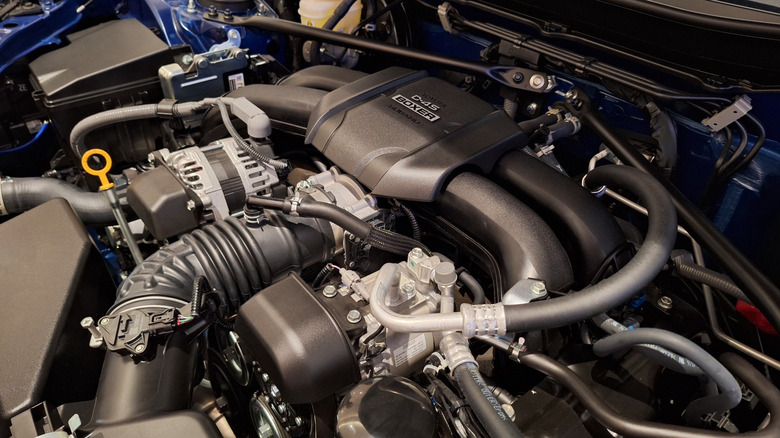
Automotive engines in small, single-prop aircraft aren't anything new. Aviation enthusiast and small aircraft owners have been swapping LS V8s into planes for years. Some of them are DIY projects, while others are done with professionally made kits. Automotive engines aren't typically as durable or as long-lasting as aviation engines right out of the box, as they're just not designed for the same sort of usage, but they can be great budget options with the right modifications.
There are several popular car engines for planes, including the aforementioned Chevy LS, air-cooled Volkswagen engines, and one kind of engine that's gaining quite a bit of popularity: the Subaru flat-four. Over the years, several companies have built small aircraft with modified Subaru engines already in them, like Foxcon Aviation and the Zenith Aircraft Company, and there are more that have created Subaru aero engine packages for retrofitting, like Maxwell Propulsion systems.
These packages usually come with modifications meant for flight-duty, such as stronger internals to handle longer high-rpm run times, as well as reduction gear boxes fitted between the engine's crank and the propeller. The latter is necessary, since propellers shouldn't spin at the 7,000 rpm redline of an EJ25. Props don't really spin past 2,800 rpm, as blade tip speed inches closer to the speed of sound at that point, which drops efficiency.
Boxer just engines work really well in aircraft
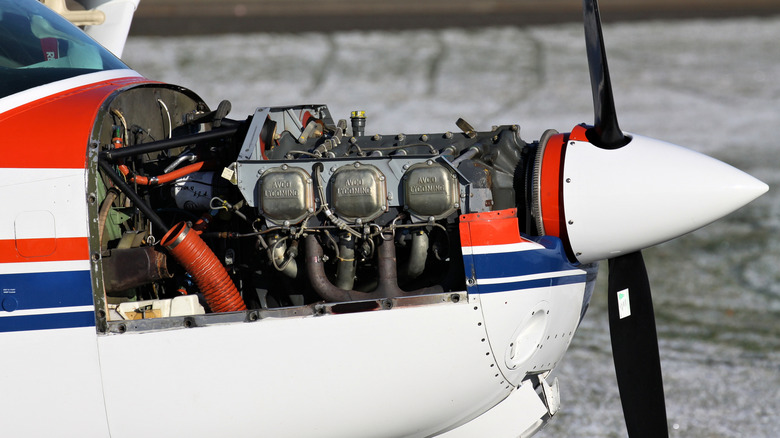
The bigger question is, tough, why do Subaru engines specifically keep popping up in airplanes? Subaru is famous for its flat or "boxer" engines, in which the cylinders are horizontally opposed, creating two banks of cylinders on opposite sides of the crankshaft. Boxer engines have their advantages and disadvantages, but they're more common than you might think. Porsche's 718 and 911 models both have horizontally opposed engines, and the layout is especially popular among aircraft engine manufacturers. Lycoming and Rotax, for example, build horizontally opposed piston engines for planes.
Boxer engines are popular for small aircraft partly because their shape allows for a more streamlined and aerodynamic nose, minimizing drag and increasing performance. Additionally, having both cylinder heads are so exposed makes for very effective air cooling. And if you're going to use automotive engines, Subaru's boxer engines make a lot of sense.
Another benefit of boxer engines is smoothness. Since the pistons are opposite one another, when they fire the engine naturally balances itself out, which is one of the reasons Subaru still makes horizontally opposed engines. Smoothness is important in aircraft engines, too, and not just for comfort. Obviously, passengers don't want their teeth rattling while leisurely cruising the skies, and flat engines help keep vibrations to a minimum. But smoothness is also important for longevity, as excess vibration can stress various parts of the aircraft over time and cause things to break. So keeping things nice and smooth is important, making boxer engines more attractive.
Why go for a Subaru engine versus other flat engines?
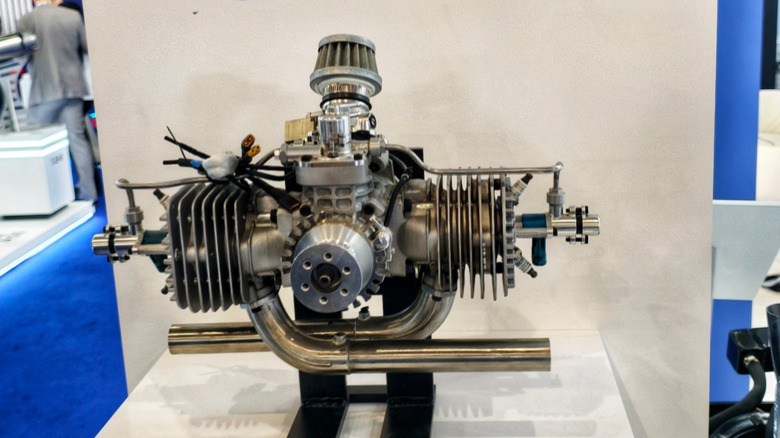
So why use a Subaru engine instead of a flat one from Porsche or a more traditional aircraft engine manufacturer? Cost is a big one. Subaru engines are significantly cheaper than Porsche engines, and Porsche engines look like bargains of the century compared to aircraft engines. You can get a rebuilt Subaru EJ25 flat-four for around $3,500, by a rebuilt Lycoming flat-four can set you back over $70,000. Admittedly, Rotax engines are cheaper, and can be found in the $20,000 range, but that's still far more expensive than a Subaru engine.
Additionally, a Subaru engine can run on premium pump gasoline. The piston engines normally used in light aircraft tend to run on aviation gasoline (avgas), which can cost between $6-8 per gallon right now. While fuel efficiency varies based on the engine, aircraft, propeller, and gear reduction box, aircraft engines can be pretty thirsty. For example, a Cessna 172 Skyhawk, with a Lycoming four-cylinder engine, burns 9.5 gallons per hour. Other planes are more efficient, like the Tecnam P2008, which uses a Rotax engine that drinks 4.5 gallons per hour. It's hard to find data on how efficient Subaru engines are in aircraft, but since results seem to vary so greatly, the fuel cost is what's more important. Premium pump gas is considerably cheaper than avgas.
Subaru engines are also plentiful, and easy to find parts for, so keeping one up in the air will be a bit easier for the hobbyist pilot or experimental aircraft owner. So if you're looking into either buying or building a small aircraft, the right engine for you might just be related to the one that powers your neighbor's Outback.