

NTSB Recommends Ford BlueCruise Changes After Fatal Crash Investigation
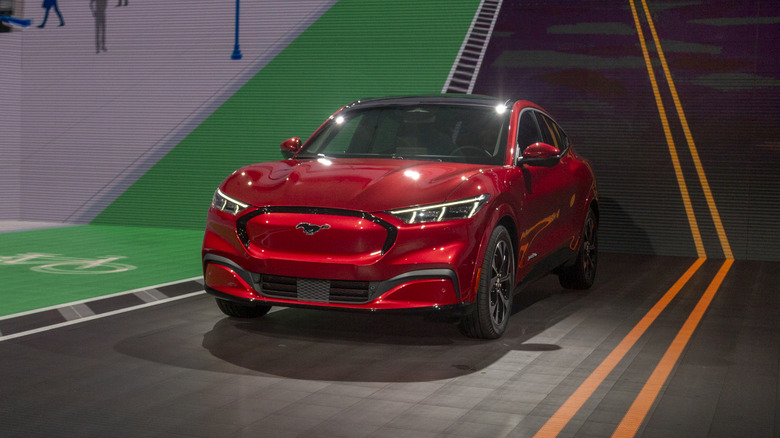
Despite what some drivers believe, an advanced driver assistance system doesn't allow any vehicle to truly drive itself. The person sitting behind the wheel needs to be able to take over at a moment's notice when the software makes a mistake. The National Transportation Safety Board blamed Ford's BlueCruise for not doing an adequate job to keep drivers attentive in two 2024 fatal crashes during a Wednesday hearing. The agency recommended that Ford make changes to its hands-free system not only to improve driver attention but also to reduce "excessive speeding."
Both fatal collisions involved a 2022 Mustang Mach-E hitting stationary vehicles on a highway. In February 2024, a Ford EV was traveling down the center lane of I-10 in San Antonio before hitting a 1999 Honda CR-V. The Ford driver was looking at the infotainment display just before the 74-mph impact. They were injured, but the Honda driver was killed.
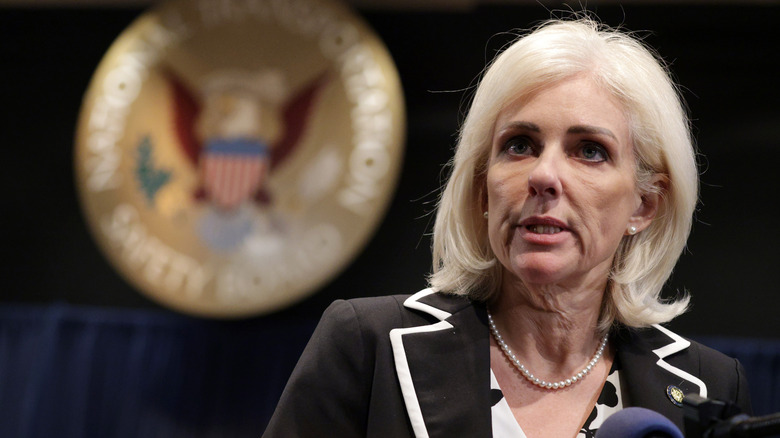
A month later in Philadelphia, a Mach-E struck a 2012 Hyundai Elantra and a 2006 Toyota Prius on I-95. The Elantra and the Prius were both stationary, and both their drivers were killed. This time, the Ford driver was intoxicated and looking at their phone. Neither the driver nor Ford's ADAS attempted to brake or veer away before both crashes. NTSB chairwoman Jennifer Homendy said on Tuesday:
"This investigation highlights the urgent need for stronger safety standards and better oversight of automated driving systems. Manufacturers and federal regulators must ensure these technologies are designed, monitored and implemented in ways that keep all our road users safe. We cannot take a 'hands-off' approach to hands-free driving technology. Lives depend on it."
Hands-free driving technology gets too much leeway
The NTSB noted several issues with driver assistance systems, from their failure to monitor drivers to their difficulty in being regulated. The agency found that these systems are so ineffective at detecting driver disengagement that they can't distinguish between a driver looking at the road ahead and a driver holding a cellphone up in front of their face. Specific to BlueCruise, drivers can actually disable Ford's automatic emergency braking system while using the hands-free system. It's a dangerous combination when drivers can set the adaptive cruise control to go 20 mph over the speed limit.
It would be easier for federal regulators to investigate crashes like these if there were a federal requirement that hands-free driver assistance systems record data during crashes. The NTSB will release its full report on the 2024 BlueCruise crashes in a few weeks. Will the U.S. Department of Transportation impose more stringent safety standards on automakers? Probably not. The USDOT already loosened standards for self-driving cars last year to compete with Chinese automakers.