

Understanding Porsche's 3-Digit Model Names
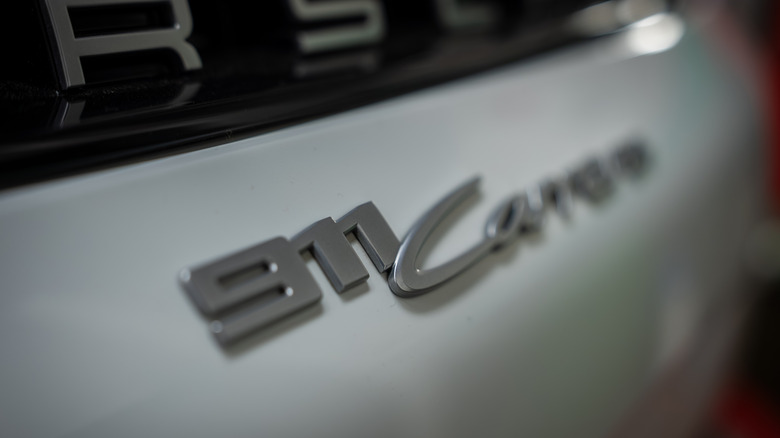
For non-Porsche enthusiasts, its three-number naming structure can be a little confusing. While everyone knows of the exceptionally worthwhile Porsche 911, it isn't the only 900-series numbered Porsche in the brand's history. The folks in Stuttgart don't make things any easier by using three-digit chassis codes for its cars that also start in "9," but that's an entirely different learning curve to handle. So you're forgiven for being confused when you hear enthusiasts talk about how the 997 is better and more reliable than both the 996 and the 991 — although they're talking about three different 911s. A good rule of thumb to follow is that any 911 is a two-door, rear-engine sports car.
However, the 911 is far from the only three-digit Porsche name. There are other 900-series names, like the 914 and 928. Another good rule to follow is that if you see a 900-series name that isn't "911," it's going to be a two-door, front-engine sports car, rather than a rear-engine one. You'd be forgiven for being confused by all of this, but it isn't so bad once you learn the reasons why they're named that way. And it wasn't always so complicated at the start of Porsche's life.
Why did Porsche start using the 911 name?
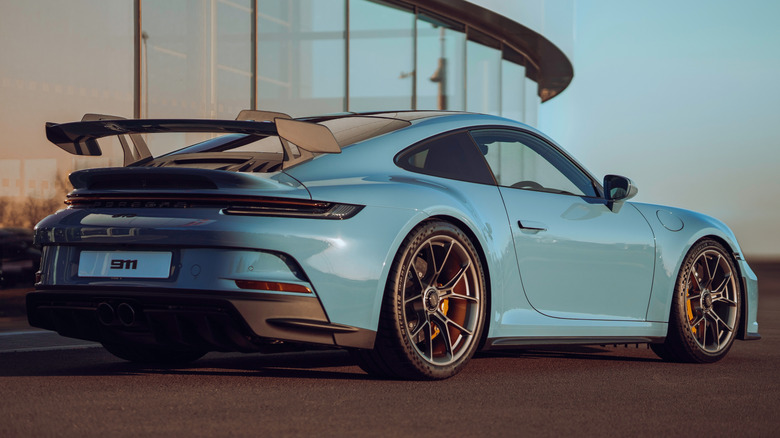
Porsche's first-ever production car was the 356, but that was far from its first project. Since its birth in 1931, the company named each of its projects with a consecutive number. It could have been an engine, a water pump, or literally any other project the company was engineering — it would be designated with the next number down the line. The Porsche 356, while his first-ever road car, was the 356th project, hence the name. Same goes for the 550 Spyder.
But when Porsche's road cars started gaining some real traction with customers, it needed a new model while still wanting to stick with the three-number naming structure. However, since Ferdinand Porsche wanted to keep a friendly relationship with Volkswagen (Porsche had famously worked for the brand prior to starting his own company), he didn't want to use any numbers that might clash with those from Wolfsburg. VW wasn't using any in the 900-series, so Porsche logically started with 901.
Porsche built the 901 with a flat-six engine and showed it off at the Frankfurt Motor Show in 1963. Then, there was a hiccup, but it came from an unexpected place. Peugeot had its lawyers bursting through the wall in Stuttgart like the Kool-Aid man, claiming that it had the rights to any three-number car name with a zero in the middle, as its products have included that since 1929. So Porsche just switched the middle "0" to a "1," and the 911 name was born. That's also why the 912 came to be, as Porsche originally planned for a 902 as a four-cylinder entry-level model to come after the initially-named 901.
The 911 isn't the only Porsche with 900-series names and internal chassis codes
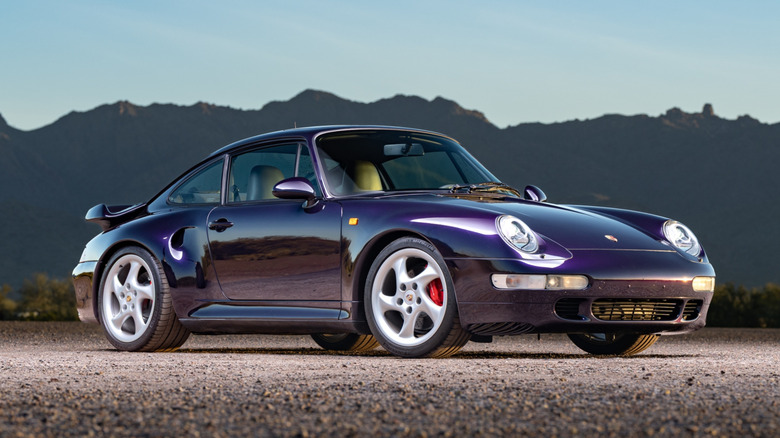
The 911 isn't the only 900-series Porsche, though. Additionally, there's the 944, 924, 928, and 968 — all of which are front-engine, two-door, rear-wheel drive sports cars. The former two have four-cylinder engines, while the latter two have eight-cylinder engines, which does help keep their names straight a bit. Don't also forget the Porsche 914, which was a little mid-engine, four-cylinder sports car in the 1970s. Although, there doesn't seem to be any method to Porsche's naming madness for those cars. If anything, there are more reasons as to why they get certain nicknames, like how the Porsche 930 was known as "The Widowmaker."
Porsche mercifully doesn't give all of its cars numeric names. Sometimes, it uses actual words, with letters and everything. Cars like the Boxster, Cayman Cayenne, Panamera, and Macan are much easier to remember and understand. And if you see "718" attached to the current generation Boxster, that's a nod to Porsche's famous mid-engine race car that debuted at Le Mans in 1957.
All of those numbers might seem confusing, and there are certainly too many three-digit numbers to remember. But once you get a handle on how this naming convention started in the first place, it gets a bit easier. Ironically, this isn't even Porsche's silliest naming convention; that honor goes to the brand calling its top-end electric cars "Turbo."