

Sky-High Gas Prices Won't Drop Overnight, Even If Trump Makes A Deal With Iran
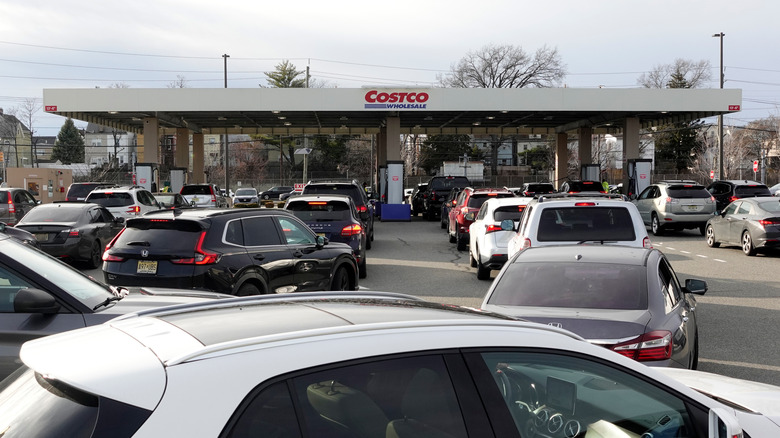
I don't know if you've heard, but filling your car up is a little more expensive than it was a couple of weeks ago. California, of course, pays the highest prices, but even in Comanche County, Oklahoma, the cheapest county for gas in the state with the lowest average price, gas is more than $3 a gallon. Which isn't exactly ideal in a country dealing with an ongoing cost-of-living crisis, and driving is pretty much mandatory if you ever want to leave your house. Especially with CNN reporting that we can expect pricey gas to stick around even if Trump ends the war with Iran.
Of course, that doesn't mean reaching a deal with Iran and bringing the war to an end would be a bad thing. Less death and destruction is, after all, better than more death and destruction. Unfortunately for those struggling to afford the higher cost of fuel, this war has likely screwed things up for a while, even beyond the cost of fuel, and we probably won't see gas prices return to pre-war levels until after oil production is restored to previous levels, which won't and literally can't happen overnight. As CNN put it:
But a lot needs to happen for gas prices to sink back to the sub-$3 range from before the war: Iran needs to open the Strait of Hormuz. Oil production needs to come fully back online. And lower crude prices need to make their way through the system.
None of that is guaranteed. Even if it were, it's not a fast process.
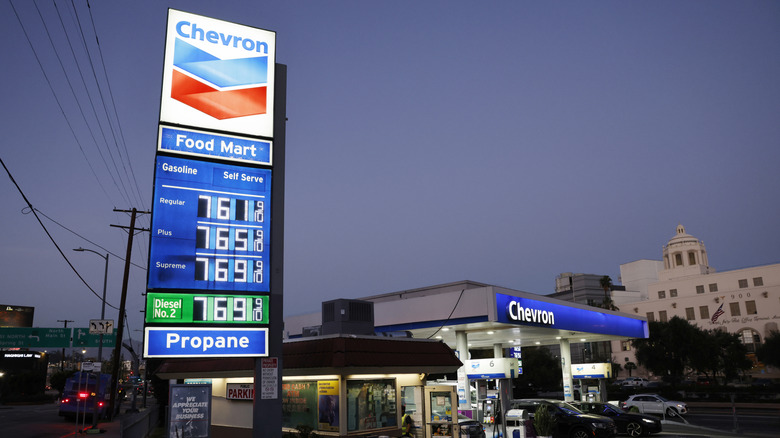
So that's not great news. Especially if you run a trucking company and are getting eaten alive by $5.35 diesel or just don't make enough money to cover your new, higher transportation costs.
The U.S. needs Iran
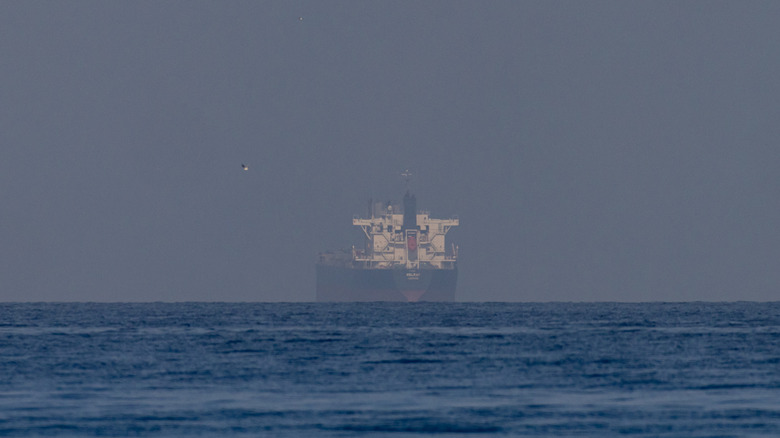
At the moment, it's hard to tell how close the U.S. and Israel are to making a deal with Iran or if a deal is even on the table. Trump's comments and posts on Truth Social paint a picture of a war that's basically over, but Iran has has denied reports that it's already negotiating for an end to the war, and the Strait of Hormuz remains closed to any ships that don't have Iran's explicit permission to pass safely. Until that changes, expect gas prices in the U.S. to keep climbing.
On Monday, Trump told CNN he expects to reopen the strait soon but added the caveat that that's dependent on the negotiations being fruitful. He then claimed his plan is for the U.S. and Iran to share the strait, saying it would be controlled by "me and the Ayatollah." That may sound like a great plan if you're 12, but for some reason, the experts don't appear to be convinced that the new, less-moderate leader of Iran would allow the country that started the war that butchered his family to share control of such an important shipping lane:
That's a crucial admission and the crux of the problem: The United States doesn't currently control the strait — Iran does. Closing off the strait caused instantaneous economic damage to much of the world, giving Iran significant leverage in the war.
"It takes two to TACO," said Helima Croft, head of global commodity strategy at RBC Capital Markets, referring to the Wall Street acronym: "Trump Always Chickens Out."
"I don't buy that it is the beginning of the end," she said.
How this whole thing will end, no one can say, but unless something changes, it sounds like even Trump has privately accepted that "changing the leaders of the regime while insisting it isn't technically regime change" is no longer on the table. If gas prices are ever going down, the U.S. will have to get Iran on board with the idea.
Even without Iran
Even in a world where Trump mounted a full-scale, boots-on-the-ground invasion of Iran, eliminated its leadership, successfully took over the country, and announced plans to turn the Middle Eastern country into an official U.S. territory, however, it would still be a while before gas prices dropped significantly. The cost of a barrel of oil would probably tumble, as we've already seen on a smaller scale any time Trump declares the war is basically over once again, but sadly, it takes time for cheaper oil to lead to less-expensive fuel prices.
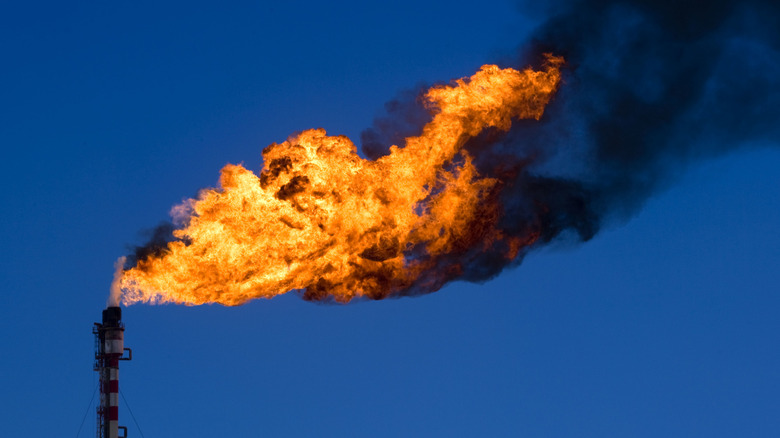
The biggest problem here is that the war has done a massive amount of damage to the region's oil production capabilities, and repairing all that damage won't happen overnight. For example, a recent Iranian strike on Qatar's Ras Laffan liquefied natural gas port reportedly caused so much damage, Qatari officials say bringing it back online and producing at full capacity will take years. Considering it's the world's largest LNG port, that's going to have a big impact on fuel costs thanks to our old friends Supply and Demand.
Damaged production facilities are definitely a problem for future gas prices, but the ones that don't get blown up will also need time to come back online because, unlike a car, oil production isn't something you can turn off and immediately turn back on again. With traffic through the Strait of Hormuz still mostly blocked and nowhere to ship the oil, many facilities remain offline, and restarting them is often a multi-week process. Even in the best case scenario, the experts CNN spoke with expect "it will probably be three to four months after hostilities end in the Middle East before oil and gas production approaches anything close to pre-war production levels."
Only then do we have any hope of finally receiving some relief at the pump. At least in theory.
But wait, there's more!
At the moment, Trump appears to have left Iran with only one option — making this war so economically painful for the U.S. that no one would dare attack them again. So they don't exactly have much incentive to negotiate at the moment, but let's ignore all that and assume the war will end at some point, production facilities will come back online, and oil will start flowing again. Even then, CNN says several other factors will keep gas prices higher than you'd probably like:
Insurance companies will need to be satisfied that oil tankers they cover will be able to safely navigate the Strait of Hormuz — which Iran has mined — without fear of attack. Gas refineries will need to produce gasoline at the lower crude prices, which then need to be piped to wholesalers and shipped to gas stations.
And gas stations, which operate on razor-thin profit margins, will need to be willing to lower prices. No gas station owner in town wants to be the first mover.
That's why the industry describes gas-price changes as "rockets and feathers." Gas prices tend to shoot higher like a rocket when oil prices rise but come down slowly like a feather when oil falls.
Those higher gas prices add up fast, too. In aggregate, an increase of only a dollar per gallon reportedly works out to a whopping $122 billion in additional spending every year or about $1,000 per family annually. Something also tells me neither you nor I will get a raise at work that accounts for the higher cost of living, so that's just extra money families will be forced to spend until Trump and Netanyahu finally decide they've blown up enough Iranians. And even then, it'll probably still take months for gas prices to recover, if not longer.
There's also a lot more to the original article than would be fair to summarize here, so be sure to head over to CNN and give the whole thing a read.