

Yes, You Can Wrap Your Keys In Aluminum Foil To Prevent Car Theft, But There Are Better Ways
We may receive a commission on purchases made from links.
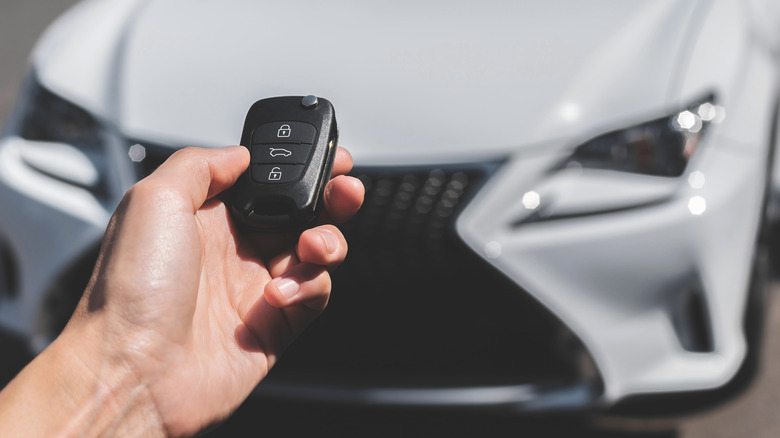
Believe it or not, remote keyless entry dates all the way back to the early 1980's, with the Renault-AMC Alliance. And now, good luck finding a new vehicle without one (although some automakers are pushing for drivers to use their smartphones as a key, an idea that's one of the automotive gimmicks you love to hate).
The problem with key fobs is that while they're ultra-convenient compared to a physical key, security has become a concern. Wireless technology like that used for fobs can be intercepted by intrepid thieves using high-tech tools. For instance, your vehicle doors aren't meant to unlock unless you've walked within a few feet of the car. But illegal gear can boost the fob's range, causing the keyless entry system to activate from a much greater distance, when you're not near the car. And criminals can seize and copy the frequency your key fob uses to talk to the car, gaining access to your ride.
This has caused some concerned car owners to seek cost-effective security measures, like folding up their key fob into aluminum foil, like a half-eaten sandwich being kept for later. Does it work? It can be effective, although testing by Snopes found that foil didn't work equally across brands and models in blocking the fob's signal. But there are plenty of good alternatives and other preventative measures to help protect your vehicle.
Why aluminum foil isn't an ideal choice in key fob security, and alternatives that might work better
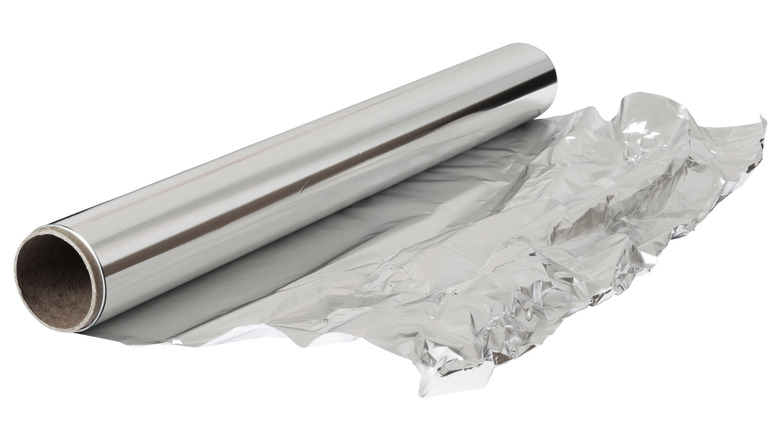
While aluminum foil is readily available and you probably have a roll of it in your kitchen now, it isn't necessarily the best option for protecting your key fob. For example, today's key fobs are already too large, as electronic car keys evolved from simple proximity keys to pricey button-filled fobs. Wrap layers of foil around them and you're only increasing the inconvenience. This could get worse, too: The first time you wrap the fob, the foil will be relatively uniform, but as you continually unwrap and rewrap it (another drawback), the foil may begin to bunch or tear.
Then there's the issue where you pull out your foil-covered key fob in front of others and you look like a conspiracy-obsessed "X-Files" character. It would also be interesting going to a courthouse, through airport security, or anywhere else that requires you to walk through a metal detector.
But there are plenty of alternatives more convenient and stylish than aluminum foil. Take, for instance, the $9.99 Lanpard Faraday Pouch that uses carbon fiber and radio-frequency shielding cloth to protect your key fob. Some of these products are just slightly larger than the fob, creating minimal bulk when carrying in your pocket, or offering clips to attach them to a belt loop.
You can bolster your vehicle security with some other basic tips
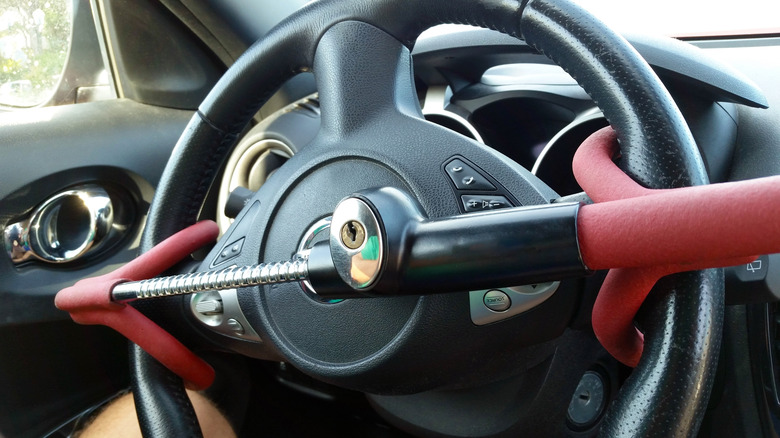
Some other steps can help keep your car secure, too. For example, when you're at home, place your key fob inside a metal bowl or container. This will block the signal from a thief trying to use a booster to gain access to your car outside. You also can use steering-wheel, pedal, gear-shift, or tire locks, and leave nothing expensive visible inside the vehicle to tempt criminals.
For those who don't want the hassle of extra locks, there are also anti-theft devices for your car that aren't annoying to use, such as hidden kill switches and VIN etching. Each layer of security offers yet another hurdle for anyone looking to steal your vehicle, making other, less protected cars more attractive targets.
And there's something even more basic. Convicted car thief Steve Sivertsen, who says he stole around 60 cars during his criminal career, told King 5 TV in Seattle: "You would be surprised at how many cars, and cars of value, that people think don't have value, that they're not locking. So, lock your car doors, even the beater."