

Volvo's Redblock Engine Is Basically Sweden's Chevy Small-Block
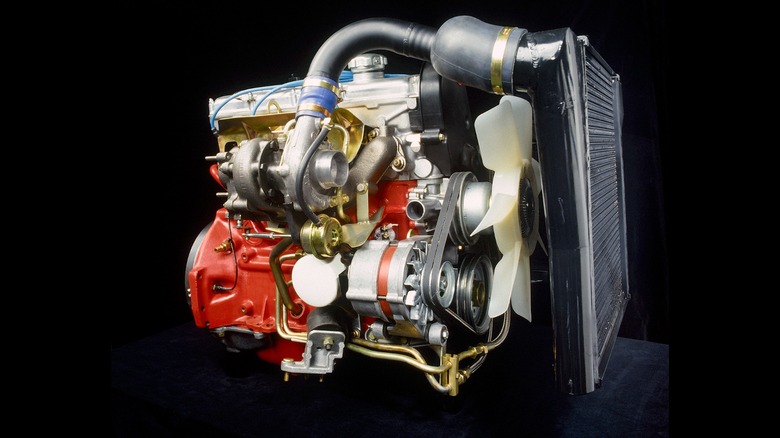
In the library of internal combustion engines, there are two sections. One has engines that are precision-engineered masterpieces. The other belongs to robust engines, designed to survive Armageddon. The Chevrolet small-block is from the latter. It is the undisputed king of tough engines in the Western Hemisphere, a pushrod-actuated lump of metal that powered everything from the Caprice to the C6 Corvette. Across the Atlantic, though, in the frozen forests of Sweden, Volvo was busy developing its own rugged powerhouse known as the redblock. If you thought of Volvo as the maker of sensible boxy wagons, you haven't been paying attention to what happens when you boost its four-cylinder engines.
To understand why the redblock is considered the spiritual twin of the small-block, you have to look at the reason behind its conception. Just like how the small-block was designed to be cheap, plentiful, and modular, Volvo's offering was built to be a foundational bedrock of a nation of engines like the B19, B21, B23, and B230. The redblock is named after its red-painted cast-iron crankcase, signalling its intent to be more durable than some alloy block.
The Volvo B21, introduced in 1974, was the first redblock engine. It was a 2.1-liter, naturally-aspirated, overengineered motor. Like its predecessor, the B18, the B21 was practically bomb-proof. Unlike the understressed B18, though, the B21 explored the limits of its performance with technology, moving from pushrod engine architecture to an overhead camshaft layout, and from cast iron to an aluminum head. In its SOHC configurations, the engine is designed in such a way that if your timing belt snaps, the valves and pistons will keep from smashing into each other and breaking the whole engine apart. You simply swap the belt with basic hand tools and keep going.
Turbocharged transformation
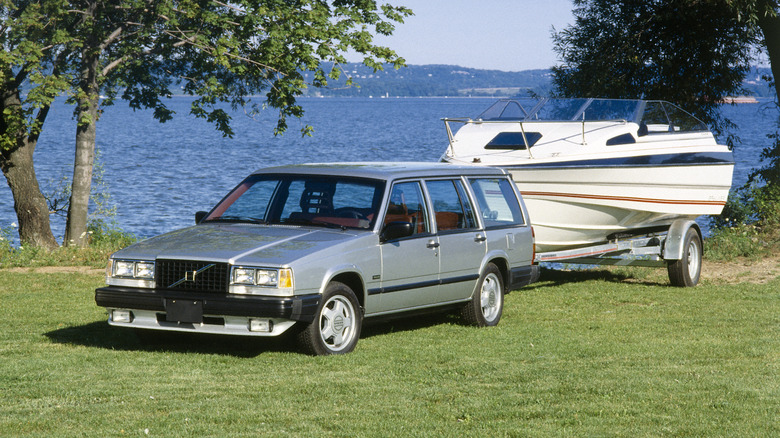
What makes the redblock legendary is its ability to transcend beyond its "sensible" reputation and excel in the small-block's turf of hot-rodding. In the 1980s, Volvo decided to give its sturdy iron block a forced induction push. This turned the humble Volvo 240 and 700 series into "turbo bricks" — cars that looked like boxes but could embarrass most sports cars of their era. The beauty of the redblock, like the small-block, lies in its tolerance for abuse. The engine block was cast from high-quality Swedish iron and the internals were designed for a long service life. Thanks to this durability, tuners quickly discovered that you could coax a B230FT redblock to deliver up to 250 horsepower without even opening the bottom end. Maybe that's why Volvo engine swaps are common in Norway's fastest hill-climbing cars.
The 740 series quickly became a favorite in the Scandinavian drift scene for its cheap and easy tunability. You could simply get a B230 redblock from a junked Volvo and slap a massive Holset turbo on it. The result was a massive 550+ horsepower engine that could consistently perform until your tires turned to shredded rubber. And, similarly to how you could build a Chevy 350 V8 using parts from five different decades, modders found the redblock engine family to have fantastic interchangeability. You could even get the beefier rods from an early B230 for your own redblock. This ease of modularity and modifications created a culture of budget speed, proving that you didn't need Porsche-level money to build a Porsche-slaying sleeper.
The Aftermarket cult
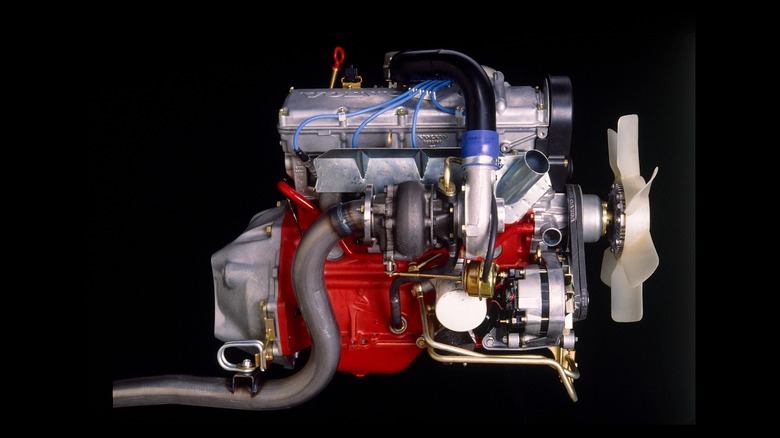
As the last of the redblock engines rolled off the assembly line in the late 1990s, their cultural impact was only getting larger. In the U.S., the small-block Chevy is the default performance engine swap because it fits anywhere and comes backed with infinite sales and service support. In Sweden and most of Northern Europe, the redblock is the default engine for everything, including Cyan Racing Volvo P1800 restomods. It managed to find use in Chevys, Miatas, and even boats, showing just how staggering parts support for these engines is.
Even without the high-end bits, the redblock remains the ultimate survivor engine. It came in the Volvo 240, a legendary car that remained in production for nearly two decades, largely because the engine refused to give customers a reason to stop buying it. And it's cheap, too; you can get an indestructible 1992 Volvo 240 for $5,450, or a 1985 Volvo 245DL for $3,600.
Like the Chevy small-block, the redblock was the people engine, powering everything from day-to-day commutes to local drift circuits. It was an engine that could cover a million miles with nothing more than basic maintenance, and it endured the most outrageous levels of turbo boost without breaking a sweat. To sum it up, the Volvo redblock is Sweden's Chevy small-block because it represents the same ideals. It's a blue-collar motor that will get you home, whether that home is a suburban drive away or across a mountain pass in the middle of sub-zero winter.