

Do Dirt Roads Even Have Speed Limits?
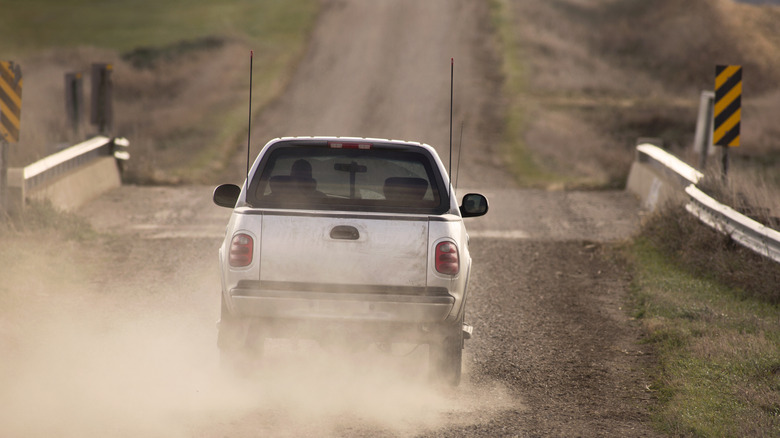
Wait a minute, do dirt roads have speed limits? Apparently, the answer is "yes." Each state in the U.S. has its own default speed limit for any dirt or unpaved road that isn't already marked with a sign. Local municipalities can fine-tune them with signage on specific roads, and although the conditions on those roads are rough, the limits can be higher than you might think.
Most states have pretty low default speed limits for unpaved roads. For instance, New Jersey's default speed for dirt, gravel, or sand roads is 20 mph. Virginia's is a bit higher at 35 mph, and Wyoming's limit is currently 45 mph — but it used to be as high as 55. Pennsylvania's is 55 mph, too, but state representative Christina Sappey wants to lower it to 35 mph. Local municipalities have the power to change those speed limits in most states, though it usually requires a speed study to be done.
Are speed limits for unpaved roads even necessary?
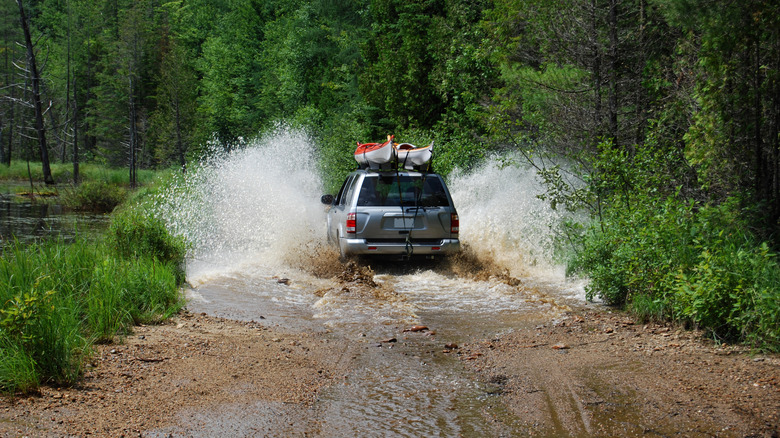
Do we really need speed limits on dirt, gravel, or sand roads? In the end, they're necessary, even on roads that might just lead to nowhere. If road surfaces are loose or riddled with corrugation, cars can easily end up crashing. Maintaining a reasonable speed, especially if the dirt road has tighter corners, is immensely helpful at reducing accidents. According to the Federal Highway Administration, only two percent of fatalities happen on unpaved roads nationwide. But in some more rural states, that number balloons to 20%.
Another reason for default dirt road speed limits is for the sake of maintenance and the prevention of property damage. Speeding on dirt roads can damage the road, making it worse for other drivers thereafter, and it can cause dust and debris to be kicked up. In many rural areas, people live either on or near dirt roads, so that dust and debris can affect their properties. You don't want the speed limit to be too low, though. Dirt roads will sometimes mix residential and commercial traffic, and you don't want people trying to pass slower-moving trucks. Such a situation can easily lead to dangerous head-on situations on narrow roads with loose surfaces.
Why would anyone want to speed on a dirt road anyway?
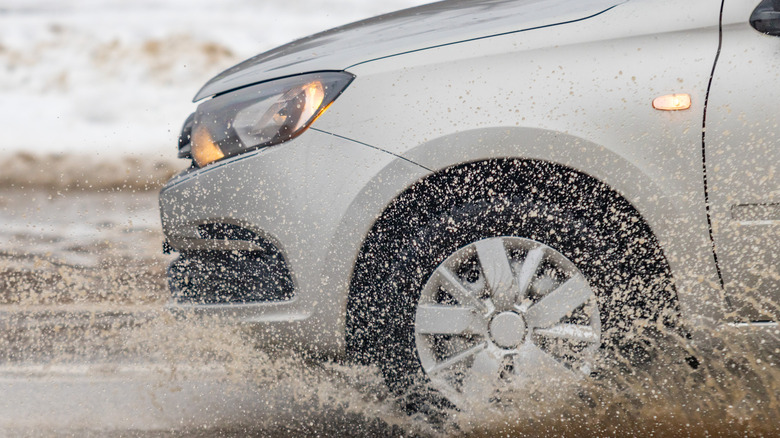
Dirt roads aren't exactly great to speed on, anyway, so why would anyone want to do it? Aside from the fact that it can make you feel like Pikes Peak rally racers or former Acropolis Rally champion Michèle Mouton, drivers can actually pick up speed on dirt roads for comfort. That might sound odd, but if it's a rough and bumpy road surface, speeding up can actually improve the experience inside the car.
MythBusters once ran a test to see if driving faster actually made rough roads feel smoother. The testers looked at the subjective experience of the driver, as well as how the speed affected glasses of water and the car's tires. At lower speeds, the car was bumped around, water splashed everywhere, and the tires were rippling from the pointy surface. But at 40 mph, the driver said it felt smoother and the tires skipped across the surface with less deflection — though even more water spilled out. At 70 mph, the ride felt much smoother, the tires rolled across even easier, and less water spilled out. So, myth confirmed: Driving faster does make rough roads smoother.
This is why you might be tempted to drive on dirt roads as quickly as possible. That, and it seems like it could be fun. But there are several reasons why you shouldn't, including the possibility of getting ticketed if you're caught exceeding speed limits. If you frequent dirt, or any kind of unpaved roads, check your state's default speed limits and see if your local municipality modified them before pretending to be a rally racer.