

The Pros & Cons Of Harley-Davidson's Milwaukee-Eight Engine
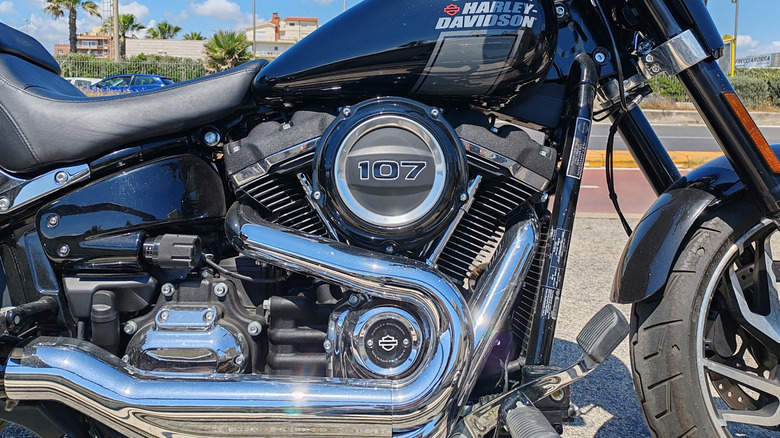
For close to 20 years, the Twin Cam V-twin was the heartbeat of large Harley-Davidson motorcycles. That was the case until 2017, when tightening emissions norms and a shrinking customer base that wanted more grunt forced Harley to rethink its engines. Thus came the Milwaukee-Eight. Named after the place it was born — and the number of valves on its twin cylinder heads — the Milwaukee-Eight is the ninth-generation offspring of Harley's Big Twin engines.
The Milwaukee-Eight was a massive departure from its Twin Cam predecessor, even aside from the shift from the two-cam, two-valves-per-cylinder layout to a more modern single-cam, four-valves-per-cylinder setup. The Milwaukee-Eight also reverted to Harley's older Evolution engine style of having its camshaft be chain-driven. The four-valve setup helped Harley solve its challenge of having better volumetric efficiency by allowing it to breathe better. The result arguably lacks the same "soul" as the engines in the most iconic Harley-Davidson motorcycles, but it's able to breathe and perform like a modern motor.
Pros: Refined and techy
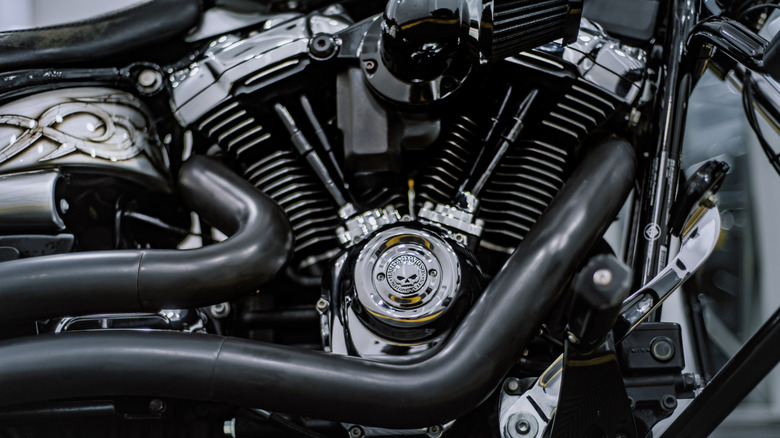
If you have spent quality time on a Twin Cam, the first thing you'd notice with the Milwaukee-Eight is its refinement. Harley-Davidson motorcycles vibrate a lot, but the Milwaukee-Eight uses a counterbalancer, which lets Harley nullify about 75% of the engine's primary vibrations when it isn't moving. This allows you to feel the "soul" of the engine at stop lights without having your dental fillings shaken loose, making it easier to hear Harley's signature "Potato-Potato" exhaust note. This refinement makes the Milwaukee-Eight a legit cruiser, allowing you to do 500-mile fatigue-free rides with ease.
The other highlight of the Milwaukee-Eight engine is its effective heat management despite it seeming to be a simple and large air-cooled V-twin. The basic Milwaukee-Eight 107 features precision oil cooling around the cylinder heads, while the larger engines used in larger touring bikes get "Twin-Cooling" that adds liquid-cooled cylinder heads and radiators. By targeting the hottest region around the exhaust valves, Harley managed to run a higher compression ratio while keeping heat in check. The targeted cylinder head cooling helps a lot, as does the knock sensor that allows for better timing control to keep the engine from getting too hot. The rear exhaust pipe and exhaust catalyst have both been moved to keep heat from blasting into anyone on the bike, further ensuring a comfortable ride.
Pros: A performance powerhouse
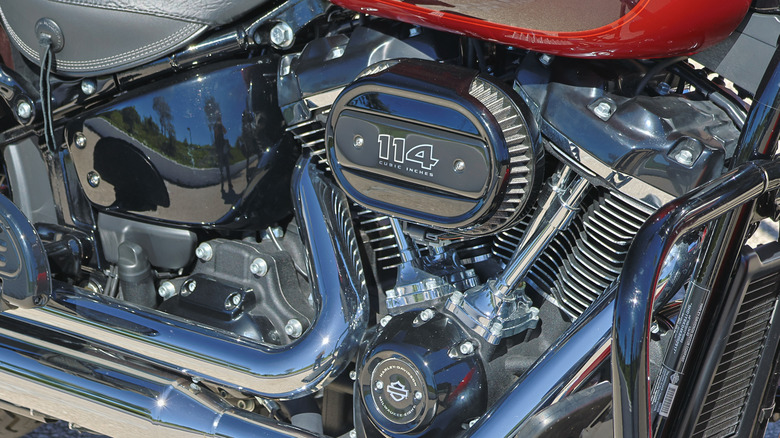
This engine is a fantastic example of stealth modernization. With the Milwaukee-Eight engine's switch to four spark plugs, the engine achieves a much more complete combustion. By comparing the 107's specs against the previous Twin Cam 103 it replaced, you can see that the new motor did more than just add displacement. It also added refinement and performance, with about an 11% increase in torque and an 11% improvement in acceleration.
Then, there's the literal torque on tap. The Milwaukee Eight delivers its peak torque at low revs, with the 107 cubic-inch V-twin delivering around 111 pound-feet at 3,250 rpm. The larger 117 cubic-inch version delivers up to 130 pound-feet at the same rpm — enough grunt to make highway overtakes an effortless affair. The Milwaukee Eight also features a 50% increase in battery charging output at idling speed. This allows you to run extra accessories such as heated grips and seats, GPS, and even Harley's "Boom! Audio" system without worrying about having a stranded motorcycle with a dead battery.
Cons: Sumping and siphoning
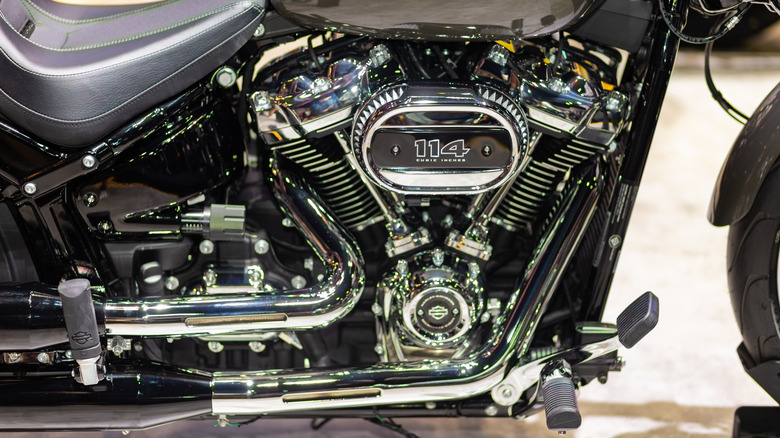
The early (2017-2019) Milwaukee-Eight V-twins did have issues that were corrected in the later models. One in particular was a phenomenon known as sumping. The inadequately-designed oil pump could not keep up with the demands of scavenging oil. Instead of the oil returning to the tank, it would accumulate at the bottom of the engine crankcase. As a result, parts like the flywheel had to work against the extra drag created by the excess oil. This churning also aerated the oil, causing trapped air bubbles to affect the flow. Other side effects were the loss of performance and even increased wear. This issue was resolved for the 2020 model year with a new oil pump design.
Some early Milwaukee-Eight engines also suffered from an oil transfer issue where large amounts of oil from the transmission would collect into the primary case. This happened due to excessive pressure in the transmission case, where oil would be pushed into the primary case through the main transmission shaft. This issue was meant to be resolved through an existing transmission breather tube, but its ineffectiveness led to Harley offering a breather vent kit for the models which seemed to be affected. Some 114 engines also faced engine breakdowns due to a faulty crankshaft configuration, causing the flywheel to slide out of place on the crankshaft spline. The flywheel would run afoul of the crankpin, causing further failures and leading to the entire crankshaft needing to be replaced.
Cons: Missing character
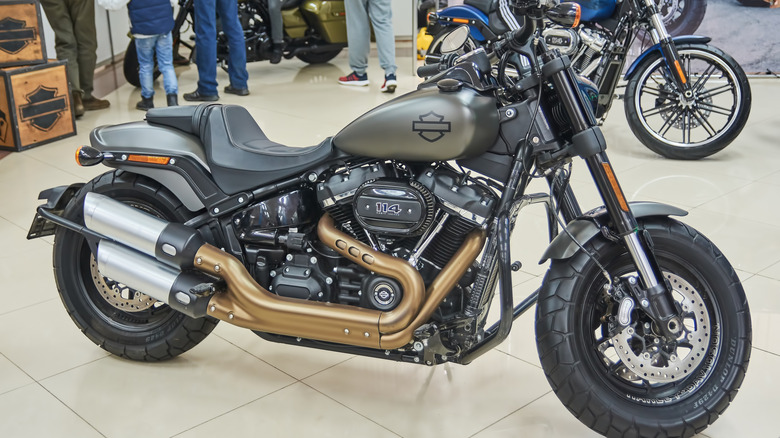
A more subjective negative for the Milwaukee-Eight centered around the engine's feel. The lack of violent shake and mechanical clatter – traits that defined the brand for a century — had purists bemoaning a lack of character. The Milwaukee-Eight was powerful and efficient, but for many, it lacked the Harley soul.
The other issue for purists was the motor's complexity, which made "driveway wrenching" quite the daunting affair. The four spark plugs (two of which are situated under the tank) and complex cooling system meant that simple maintenance was no longer simple. While the Milwaukee-Eight was fairly reliable, the larger 114 did suffer from intermittent issues. This included radiator blockage, the harmonic balancer causing excessive vibrations, cold starting, rattling noises, and the clutch not working correctly.
The Harley-Davidson Milwaukee-Eight is a polarizing engine. While purists may still pine for the Twin-cam's and Evolution motor's character, the Milwaukee-Eight is arguably the most powerful and most efficient high-capacity air-cooled Harley engine ever made. It's an engine that not only helped the brand pull its touring range past the post-Euro 5 emissions standards, but also offered modern performance without losing most of the Harley soul.