

With Gas Prices Rising, What Are The Most Efficient Ways To Get Around?
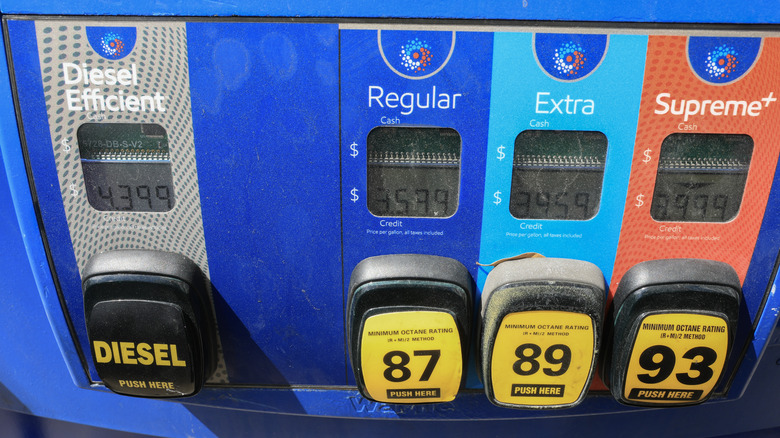
We started a war with Iran earlier this month, and it's already come back to bite us in ways both predictable and so, so very predictable. The big one you've likely already noticed is the cost of fuel: Gas has shot up and keeps rising, while increased diesel costs for the trucking industry are set to boost the prices of everything else. Now, more than ever, you're likely looking to save a few bucks on your daily commute.
Lucky for you, I've compiled a list of vehicles sorted by their efficiency: Gas, electric, it doesn't matter. The key metric here is energy spent per mile traveled, which we can determine for any means of propulsion. I'm standardizing everything to kilowatt-hours per mile, since automakers brag about that stat for EVs and we can convert it easily enough in gas cars — a gallon of gasoline holds about 33.7 kWh of energy, according to the EPA. So, with that target metric, let's look at some vehicles in increasing order of efficiency.
Number 12: New York City Subway, per train-mile - 4.53 kWh/mi

In last place, something you might not expect: New York City's subway system. Public transit is hailed as a more efficient way to get people from point A to point B, but it turns out trains are still pretty big and heavy — they take a lot of energy to move around. From the raw perspective of "energy to move a vehicle," the subway sure takes a lot.
It's also worth mentioning that this is pulled from the entire subway system, not from numbers on any individual train. Of course, a subway isn't exactly going to run without signals, so it's worth taking a holistic view at the system here. Still, there are other ways to look at the numbers that end up being a bit kinder to my beloved trains — ways we'll get around to looking at once we're further up the list.
Number 11: 2026 Mustang GT Manual - 1.89 kWh/mi
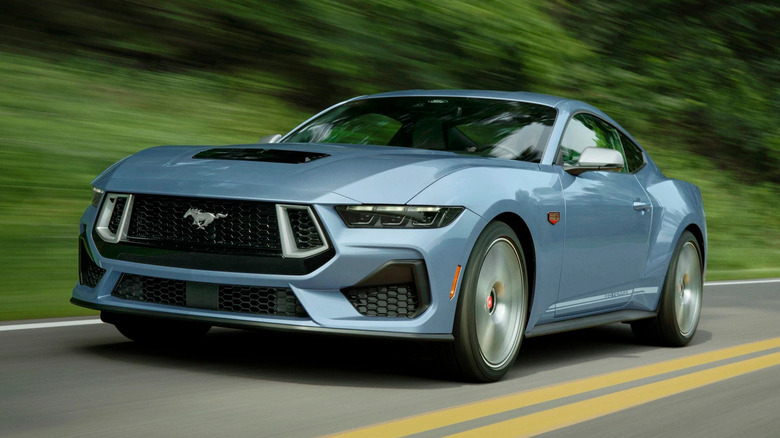
By my deeds, I honor him, V8. The Mustang may be the people's muscle car, but that really only refers to its initial purchase price — once it comes time to fill the tank up, you may start feeling the economic effects of all those cylinders. The 10-speed automatic actually does a bit better according to the EPA, but I know which transmission you'd buy. This is Jalopnik, after all.
As much as we all love the Mustang, it's never exactly been famous for sipping fuel. The four-cylinder model is the more fuel-efficient option, but Ford killed off the manual for that engine. That's a shame, because the 2.3 EcoBoost is a genuinely fun little engine. I liked it in the prior Mustang, and it's a shame that buyers of the current model year won't get to share in that same fun. At least they get some more gas mileage out of it.
Number 10: 2018 Ducati Panigale V4S - 0.96 kWh/mi
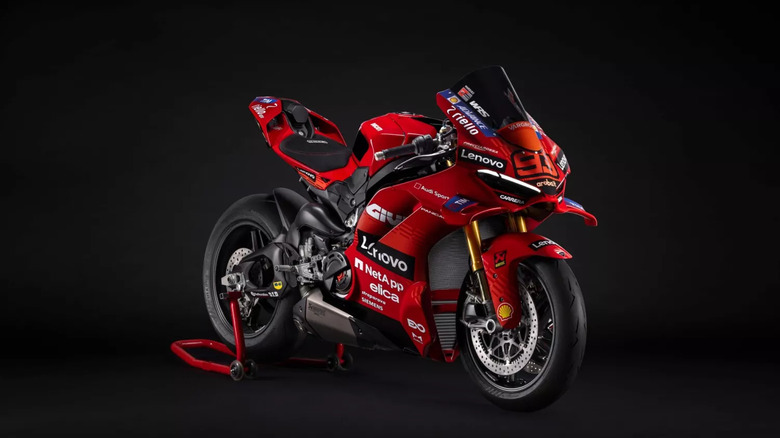
What, you thought I was going to make a list of vehicles ranked by efficiency and not include some bikes? C'mon, check whose byline you're reading. It can be tough to find exact numbers for motorcycles, since manufacturers rarely want to brag about the fuel economy of their hopped-up sportbikes, but a quick trip over to Fuell shows what mileage people are getting in the real world.
The Ducati is twice as energy-efficient as the Mustang, but we're still in the territory of performance vehicles here. As we go on, engines start to be tuned for gas mileage rather than for fun. If you want fun without all the pain at the pump, consider ditching two of your wheels. If you want gas savings at any cost, though, you probably can't talk yourself into a Panigale. Maybe if you just ride it really, really gently.
Number 9: 2026 Honda CR-V FWD - 0.84 kWh/mi

First off, this press photo has to be the wildest ratio of coolness-of-photo to coolness-of-car in history, right? The CR-V marks the end of our enthusiast vehicle section (for the most part, you can make the argument about a couple more entries down the line) and the beginnings of a world where fuel economy is never sacrificed in the name of fun. The CR-V is a very good crossover, but it's not exactly a roller coaster.
Still, if cutting your personal reliance on gasoline is your goal, you could do a lot worse than the humble CR-V. It's the most efficient "Mid-Size Station Wagon" according to the EPA, and it's not even a hybrid at that. With what you save at the pump, you could probably afford that dirt bike from the press shot. That looks a lot more fun than paying attention to what's going on in the Strait of Hormuz anyway.
Number 8: 2025 Hummer EV - 0.72 kWh/mi
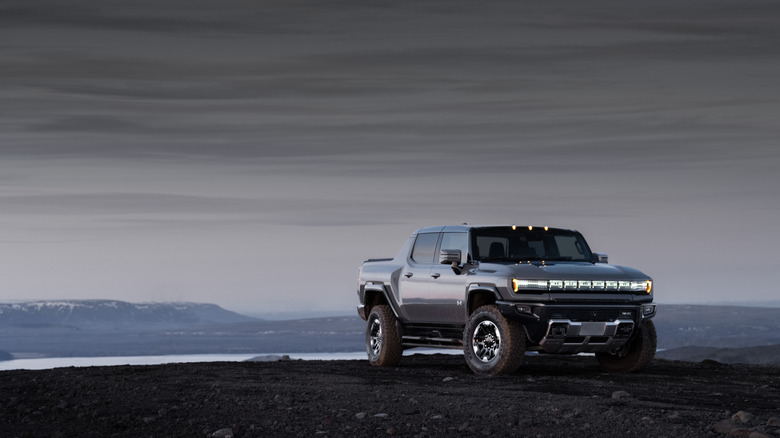
We now go from very efficient gas cars to very inefficient EVs. I once wrote that the Hummer EV was the least-efficient EV you could buy, and the EPA says that's still true — depending on the tires you buy, at least. The base models of the Hummer, with more road-oriented tires, actually score slightly better than the least-efficient trim of the Rimac Nevera. Strange times we live in, folks.
The Hummer EV is a comically oversized vehicle, seemingly compensating for its own fear of sacrificing its masculinity to its electric powertrain with blunt edges and sharp corners. Still, in terms of raw energy needed to go a mile, the Hummer manages to beat out the aerodyamically-shaped Honda CR-V. Sometimes the world is weird like that, and we just have to live with it. The Hummer EV is cheaper to run than a family hauling Honda. Sure.
Number 7: 2026 Toyota Prius - 0.64 kWh/mi
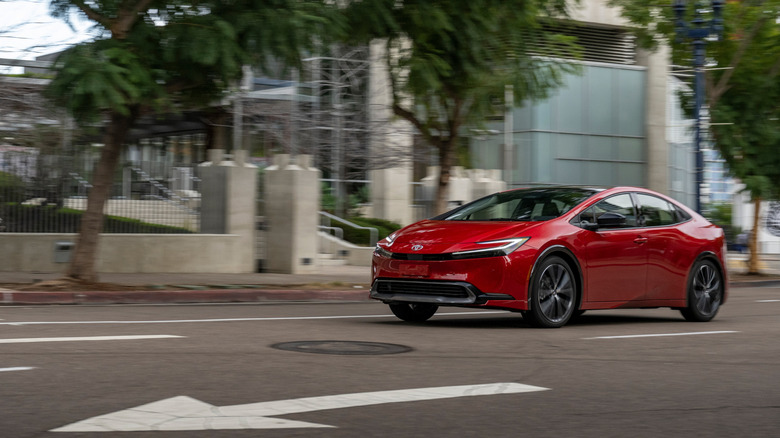
Okay, we're back in the land of sense. The new Prius may look far cooler than prior generations, but it didn't sacrifice its famed fuel economy for style. Toyota claims 57 miles per gallon combined, and the EPA numbers back that up. Is the Prius the most stylish way to save money on gas? No, given the other entries in this list, but it does beat out some other entrants for appearance alone.
The Prius has long been the benchmark for fuel-efficient vehicles in the United States, so you could say this is the point where this list truly gets good on gas — or on electricity, as we approach the end of ICE-powered transportation in our rankings. In fact, there's only one internal combustion vehicle on this list that beats out the Prius for efficiency, and it does so by cutting both displacement and weight relative to the Toyota.
Number 6: 2025 Honda CB300R - 0.46 kWh/mi
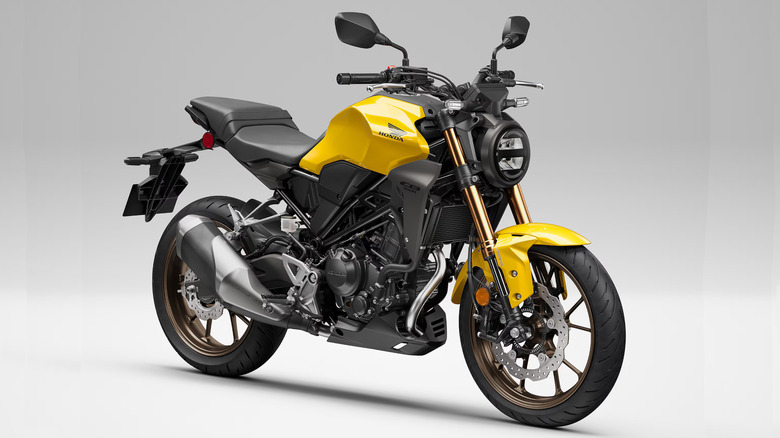
And we're back to bikes, baby! The CB300R shares its engine with Honda's Rebel 300, which is the first bike many folks swing a leg over at the Motorcycle Safety Foundation's Basic RiderCourse. If you're switching to two wheels to save on gas, it seems you may as well just stick with that first bike — this little engine may not have quite the fuel economy of the even-smaller Grom, but at least a CB300R can sit comfortably at highway speeds.
You can sometimes eke out better fuel economy from a bike with fairings, tucking behind a windshield to make yourself aerodynamic, but I rarely find it worthwhile. Bikes are already very efficient, a random entry-level Honda uses less energy to get around than a Prius does, and hypermiling is rarely worth the effort. This is the end of the line for internal combustion, and after this it's all electricity — or another, older form of power.
Number 5: 2026 Kia EV6 LR AWD - 0.32 kWh/mi
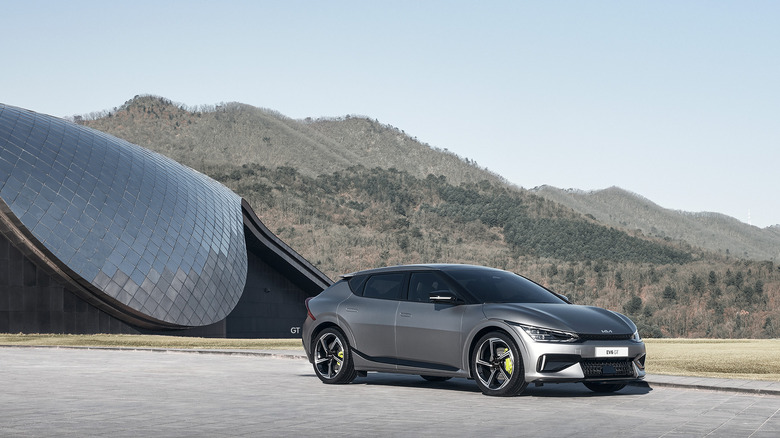
The Kia EV6 was my first thought for a daily-driveable, totally usable EV. It's neither the most nor the least efficient, neither the biggest nor the smallest, neither the cheapest nor the most expensive — it's just a regular vehicle that happens to not run on gas. That's to its benefit, as it's even less energy-hungry when getting around than that tiny Honda motorcycle. Not to mention the Prius, which I do think looks better than the Kia.
In addition to all that efficiency, though, the Kia also gives you an experience. Kia is maybe the only company doing EV sounds correctly, and I commend the brand's engineers and product designers for getting that part of the equation right. We don't need EVs that sound like poor imitations of ICE cars, we need EVs that sound like spaceships. The EV6 is the future we deserve.
Number 4: 2026 Lucid Air Pure RWD - 0.23 kWh/mi
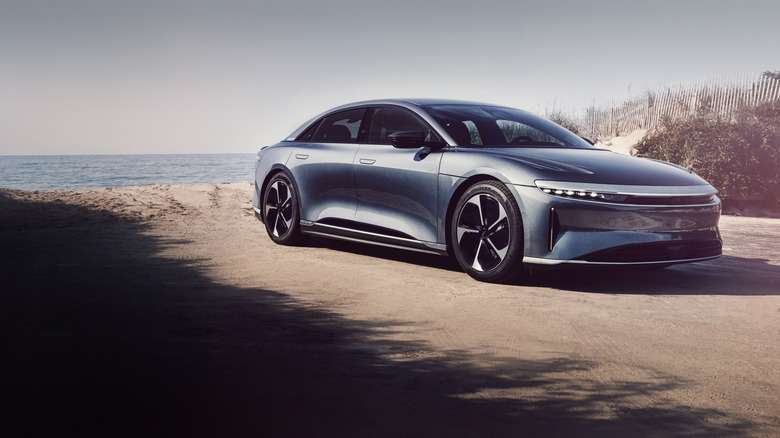
What could possibly be more efficient than a practical electric car like the Kia EV6? Well, a pricier electric car, for one. The Lucid Air isn't a cheap commuter, even in Pure trim, but it does stand to save you some cash on energy. Sure, gas prices aren't directly affecting electricity prices at the moment, but wouldn't it be nice to dodge those datacenter-induced price hikes from your utility provider?
Even among EVs, the Lucid is an outlier for its efficiency. That generally translates to range, when you're the marketing wing of an EV-maker, but here it also helps us cut costs. If we can't make full charges cheaper, we can make them less frequent and still end up spending less of our paychecks on commuting. That's the real goal here, getting around on as little energy as possible regardless of its form.
Number 3: New York City Subway, per passenger-mile - 0.21 kWh/mi

I warned you the subway would come back! See, the average car trip only moves 1.5 people, but the average subway train — remember, that earlier statistic was per train, not per car — holds slightly more than that. When you break down the subway's energy use by ridership, it actually becomes one of the most efficient ways to get a person around.
Of course, we didn't break down our cars by ridership, so it's not the most fair comparison either way. Still, the New York City subway is a neat benchmark here. You can make massive efficiency gains just by packing more people together, because the amount of energy needed to move each person drops drastically even in passenger cars — turns out, the average human doesn't weigh much when compared to a few thousand pounds of metal, glass, and batteries. Maybe try carpooling to work, and splitting gas with a coworker.
Number 2: Walking - 0.09 kWh/mi

Man, don't you just hate it when you end up doing an "Abbey Road" photoshoot in the Void Realm? Anyway, it turns out that for short distances there's a method of transportation more efficient than all these vehicles: Using your own two legs. Sure, it won't hold up over tens of miles of commuting, but walking is a great way to get around for minimum energy expenditure possible. In this case, "energy" is more measured in groceries than in gas or electricity, but turns out we've been measuring groceries like that this whole time! That's all a calorie is!
Evolution has made us very mobile creatures, and as we're persistence hunters it's made us good at moving around while expending minimal calories to do so. Of course, this will all depend on your own gait and bodyweight and speed, so these numbers are based more or less on me. Still, if you're really curious how many calories you burn walking around, any number of fitness apps will tell you. The number is likely going to be much lower than if you were moving a car.
Number 1: Bicycling - 0.05 kWh/mi

What could possibly be more efficient than walking, though? Well, a walking accessory so well-suited to us that we perfected it long ago: The bicycle. Scientific American once found that a human on a bicycle is not only just about the most efficient way to move a human around, but the most efficient way to move anything around within the entire animal kingdom — save one of those areo-focused recumbent bicycles. Those are dweeby, though, and regular bikes are cool.
So, there you have it: The most energy-efficient way to get around, whether that energy comes from gas or the power plant or a burrito, is a bicycle. Out here in Brooklyn we're finally getting back to bicycle weather, and I for one am looking forward to cutting down my own fuel expenditures with my Orbea. Plus, I'd much rather spend my gas money on burgers than on 93 octane.