

You Just Hit A Pothole, Time To Pull Over And Do These Things
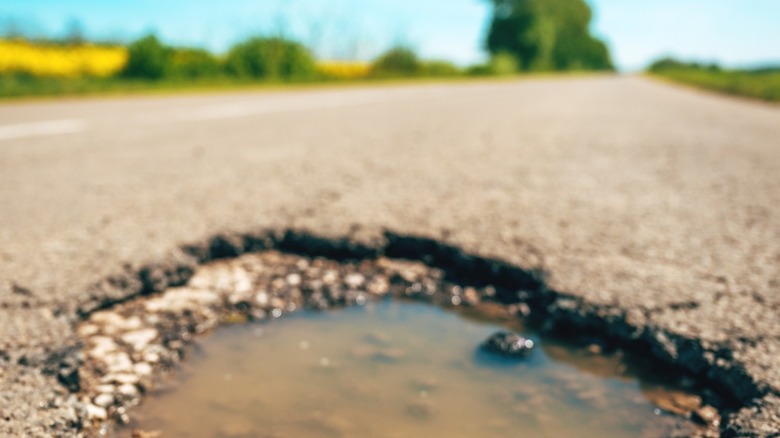
Maybe you didn't see the pothole until it was too late to avoid it. Maybe you drove over the hole because it was filled with water and you underestimated just how deep it was. Maybe you were looking at your phone (tsk tsk). Whatever the case, you've hit a pothole and it sounds like you may have taken on some damage. It happens. But what should you do?
In a scenario like this, you should accept that you will likely arrive at your destination later than you hoped. It's time to pull over and check your car before you do any more damage to it. What should you check? Start with any new warning lights on your dashboard. Then, of course, you're going to check your tires and your rims. You'll also want to check your undercarriage and look for any leaking fluids. Then, check your steering, to see if your car pulls in either direction. If it does, take your car to get checked and aligned as soon as you can. Remember, skipping your wheel alignment could cost you more than your tires.
Damage from potholes is no joke. If you hit one, there's a good chance you'll end up needing repairs. That's not cheap, either. According to the AAA, the average cost of a pothole-related repair in the U.S. is around $600.
Get out and check the car
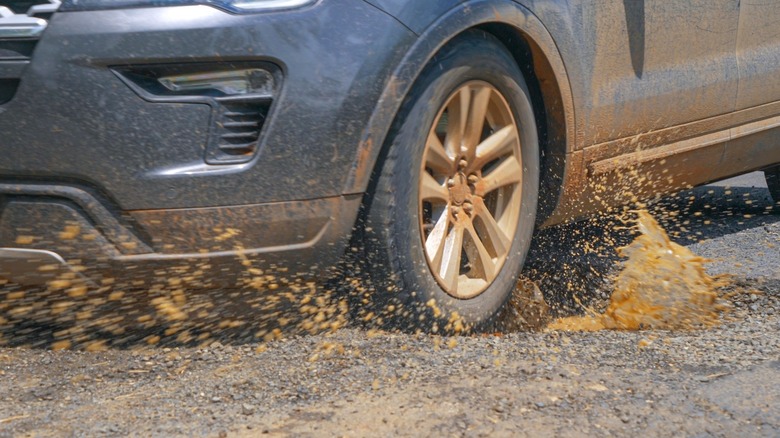
Obviously, you don't want to keep driving your car on a flat tire or bent rim, but your safety comes first. So before you get out and look at your car, flip on your hazards and find a safe place to park away from traffic. And while you're still in the car, check your dash for warning lights. Your TPMS is mostly reliable and can be useful in a situation like this. Just don't continue on your merry way, ignoring signs of something wrong, like an odd noise, vibration, or change in how the car is handling.
First, check your tires. You're not just looking for a flat. You want to make sure there aren't slashes, ripped tread or sidewalls, or bulges. If so, change the tire before driving any further. You'll also want to check your rims. Are they bent or cracked? Driving on a rim in that condition can be dangerous, as you're risking your tire coming off.
Next, you're going to look under your car and check for leaks – a flashlight helps if it's dark outside. If you see drops of water coming from the direction of the air conditioner, don't worry; that's normal. Any other leak, though, is a sign to call a tow truck. Finally, test the steering to see if the car pulls to one side at low speeds.
Filing a claim
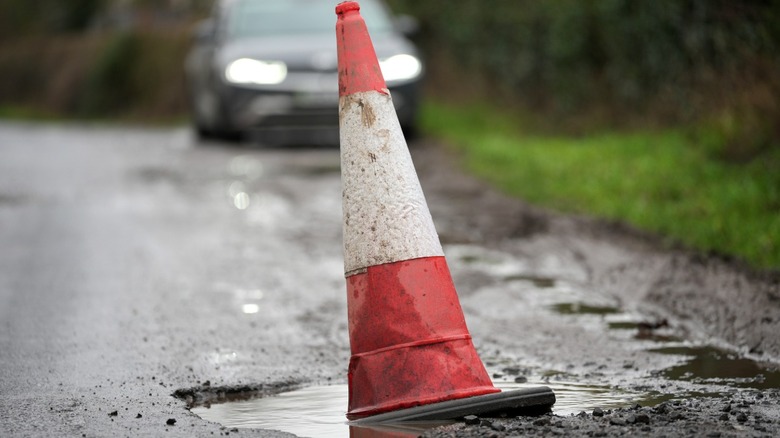
If you do have damage, take pictures of everything: the damage to your car, the pothole itself, and the surrounding environment before you leave the scene. It's good to document everything and report the pothole, in case you want to file a claim later. You might want to have a mechanic look at your car, even if you didn't see any damage. We talked about things to check that might be an immediate concern, but other parts, like your muffler and catalytic converter, may have been damaged. Make sure the mechanic notes any issues they find.
Where are you going to file your claim? Check with the local, county, and state governments to see if they offer reimbursement for pothole damage. Some don't, but it's worth checking into. You might also want to check with your insurance company, depending on the size of your deductible, to see if your policy covers pothole damage. If they do, you'll have all of your supporting documentation in place.
Of course, a pound of prevention is worth a pound of cure, as they say. So be aware of your surroundings when you drive and cut down on distractions. Drive at a speed that is slow enough to allow you to avoid potholes. Everyone hits a pothole at some point, even the most careful of drivers. If you do hit one, you'll likely escape without damage, but you never know — hitting a pothole cost one Cybertruck owner $34,000.