

Lucid Is Working On A Two-Seat Robotaxi Called Lunar That's Aimed Right At The Tesla Cybercab
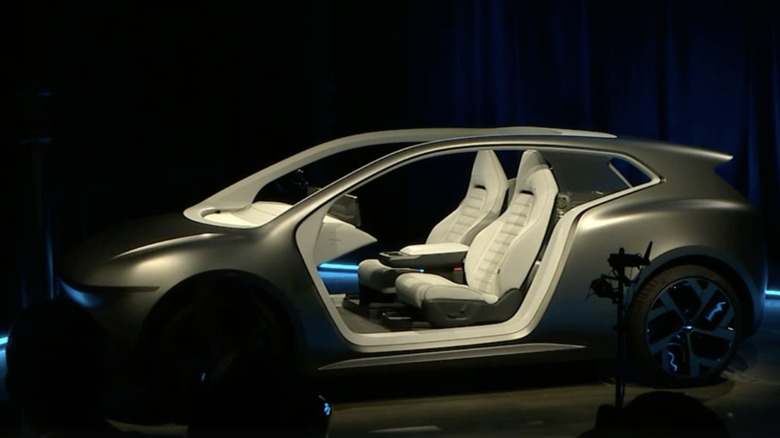
It seems like every automaker and its mother is working on some sort of robotaxi right now. Well, Lucid is the latest to throw its hat in the ring with its own two-seat robotaxi that looks to take on the likes of the Tesla Cybercab and Rimac's Verne. Speaking at Lucid's Investor Day conference in New York City with Uber COO Andrew Macdonald about collaborations and future plans between their two companies, Lucid interim CEO Marc Winterhoff pulled the cover off the automaker's robotaxi concept vehicle that it calls the Lunar.
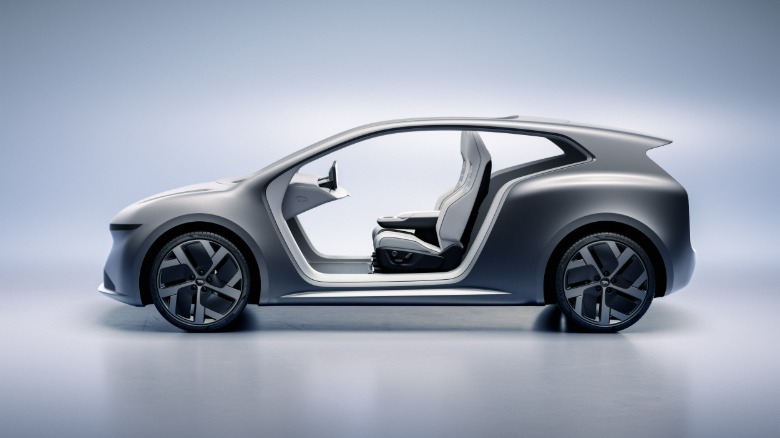
It's underpinned by the same platform as Lucid's newly announced trio of midsize crossovers — called the Cosmos, Earth and something else — but it doesn't seem to have too many similarities with those vehicles, other than a handful of interior aspects. As you can tell, based on the fact it doesn't have doors, this is just an idea-showcasing concept that's fairly early in development in partnership with Uber, but there's still plenty of important information we can glean from this quick preview of the little two-seater.
 Lucid
Lucid
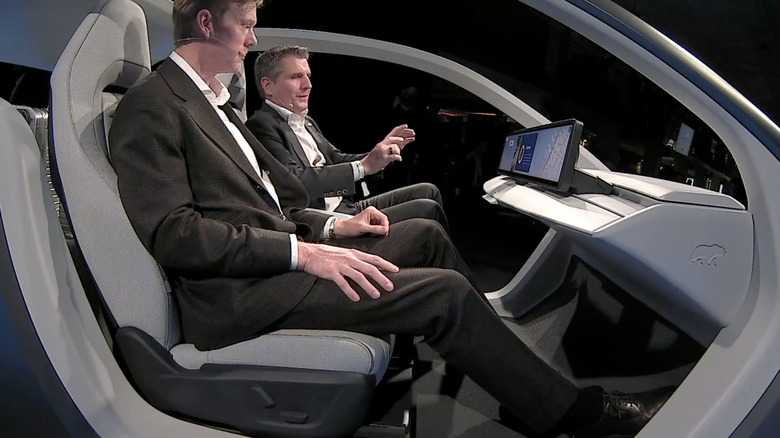
Macdonald and Winterhoff sat down in the car to tell the room of journalists and Lucid investors more about the new robotaxi concept. Of course, the first thing you probably noticed is the fact it only has two seats, which is becoming a bit of a recurring theme in the bespoke robotaxi space. Winterhoff says the car will have over 42 inches of passenger legroom for the two people riding in it, and they'll be faced with the same 36-inch centrally mounted infotainment screen found in those midsize crossovers.
What we know
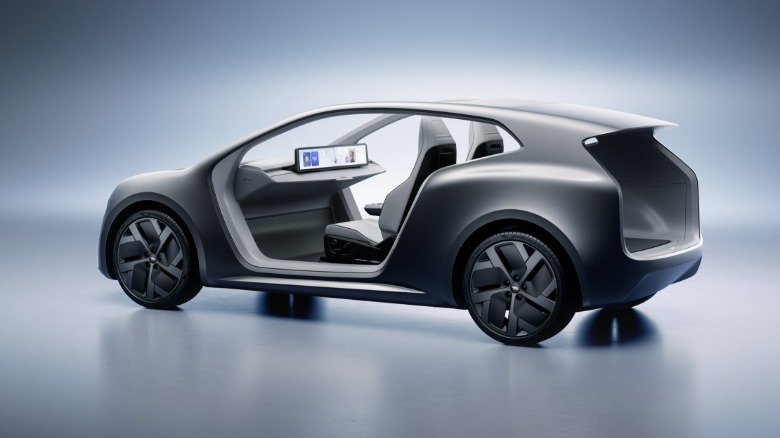
On the outside, it's got a far more crossover-looking and hatchback-y shape than the Cybercab does, despite its similar two-seat capacity. In all likelihood, that means it'll have far more trunk room than the Cybercab for your luggage and other things you're traveling with. I can't say that's a bad thing. It's certainly an interesting shape, and it fits in with the rest of Lucid's design ethos. If I were a betting man, I'd say it has conventional doors, as well.
Mechanically, it'll use the same 69-kWh battery and Atlas motors (there's no word on how many motors it will have) as the the midsize crossovers, but it'll be more efficient than those vehicles. Winterhoff says Lucid is targeting 5.5-6 miles per kWh of driving, giving the robotaxi a theoretical range over 400 miles. The midsize crossovers should be somewhere around 4.5 miles/kWh. He also said it should be able to add over 200 miles of range in about 15 minutes of charging.
 Lucid
Lucid
It's not clear exactly when Lucid's robotaxi will hit the road. Hell, Winterhoff even admitted the specs aren't locked in just yet, so things could certainly change. Until then, Lucid will still be working with Uber — supplying the ride share company with self-driving Gravity crossovers. Eventually, Lucid will build midsize crossovers for the company, but that's a bit further down the line.
It's an exciting time if you want to take a taxi ride but don't want to talk with a driver. Just make sure you aren't bringing too many people with you.