

Neglecting Your Spark Plugs Does More Damage Than You Think
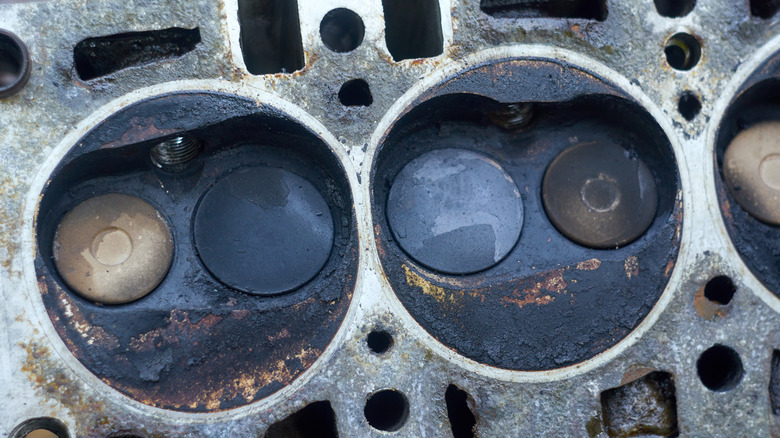
Neglect can do a lot of bad things to your car's engine. Not changing the oil as frequently as recommended is a surefire way to an expensive overhaul. If you've dealt with thick, gooey sludge before, then you probably know what we're ranting about here, because it'll take more than a flush or degreaser to rid the internals of heavy sludge. And besides, sludge doesn't flow as well as fresh oil, so prepare your wallet to correct the friction and heat damage caused by it to internal components.
It's the same deal with spark plugs, but those will provide telltale signs when it's time to replace them. Although the wear rate of spark plugs will depend on many factors (engine size, the spark plug type, driving conditions, etc.), they won't last forever and will eventually need servicing. If not, worn plugs will manifest as rough or erratic idling, hard starting, poor fuel economy, and engine misfires.
The latter is most problematic since persistent misfiring can damage the engine and other necessary components. A misfire happens when one or more cylinders are not burning the air/fuel mix as efficiently as possible, resulting in harsh vibrations, jerky acceleration, exhaust backfiring, hesitation, stalling, and poor emissions. We're aware that misfires can be caused by many things (fuel delivery issues, bent valves, and bad piston rings, to name a few), but it's good practice to check the spark plugs first whenever a misfire error code triggers the check engine light.
The longer an engine misfire persists, the more damage it can cause. It's why we caution people against driving a misfiring engine since stalling in the middle of the road or at an intersection is not exactly our idea of fun.
Bad plugs can damage other parts
Neglecting to replace the spark plugs will certainly cause misfires, which, in turn, can cause accelerated wear and tear to the ignition coils or plug wires. When the electrodes of a spark plug wear out, the spark gap increases, and the ignition coils need to work harder and generate higher voltages to maintain a clean and steady spark.
The added workload also produces voltage spikes and more heat, which can accelerate the damage to the coils. You don't necessarily need to replace the coils when swapping the old plugs for new ones, but it's a stellar idea to have them checked if your car's been misfiring for a while.
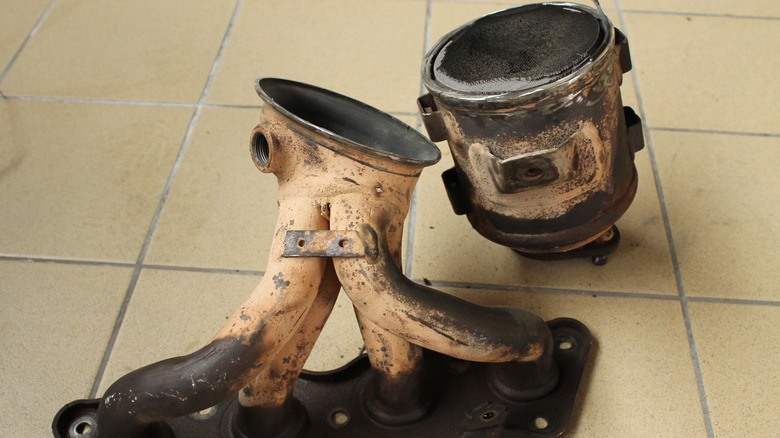
Moreover, bad plugs can permanently damage the catalytic converter. You know, that thing under the car that uses precious metals like rhodium, palladium, and platinum to reduce emissions? It wasn't designed to handle liquids, particularly unburned fuel caused by spark plug misfires, and this can mess up how the cats are supposed to work. The cats need heat (800 to 1,600 degrees Fahrenheit) to facilitate the chemical reaction of converting harmful gases to less toxic carbon dioxide, oxygen, and water. When raw fuel instead of gases enters the honeycomb structure of the catalyst, it causes the internal temperatures to rise unnecessarily (up to 2,000 degrees Fahrenheit), causing the catalysts to melt.
The chunks that melted away will eventually clog the catalytic converter, necessitating an expensive replacement costing anywhere from a few hundred to thousands of dollars, and it's all due to bad spark plugs that only cost $4 to $30 each (depending on the spark plug type). As if that's not enough, constant misfires caused by faulty plugs can also damage the pistons and valves, and repairing them will also cost thousands of dollars in parts and labor.
Periodic replacement prevents future problems
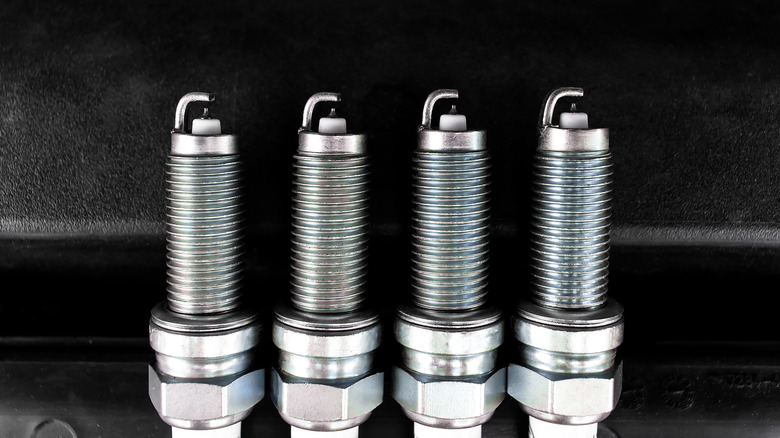
It's better not to wait for stalling, erratic idling, mediocre fuel economy, and misfires to happen before replacing the spark plugs in your engine. Chances are, it's time to swap them for new ones if you can't remember the last time you did. Spark plugs are inherently durable and can endure thousands of miles of intense heat, pressure, and vibrations inside the cylinder head. However, not all of them wear out at the same rate.
The first rule of thumb is to consult the owner's manual of your vehicle. If the thing says to change the spark plugs every 60,000 miles, do it regardless of the engine's running condition. Copper plugs are the most affordable option but have a shorter lifespan, typically around 20,000 miles. Engines with platinum or iridium plugs need replacing every 60,000 or 100,000 miles. If you do a lot of city driving, towing, or off-roading, you may need to replace the plugs more often.