

Have Turbos And Hybrids Closed The Difference Between Small Block And Big Block V8s?
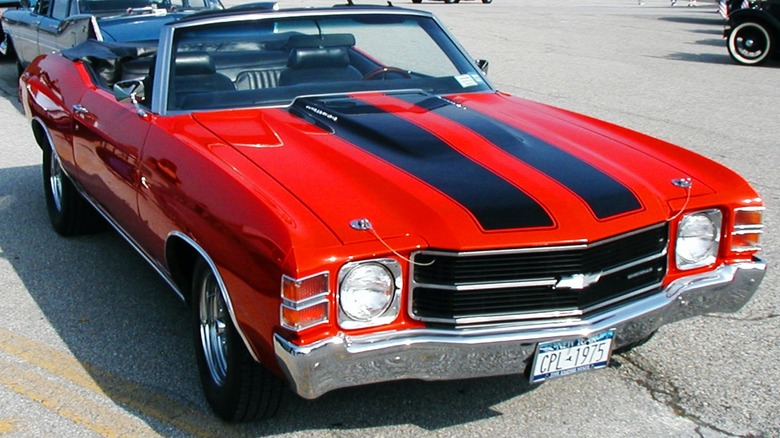
It used to be, if you wanted a more powerful V8 engine, you'd have to build it bigger. It was a simple numbers game: Typically, the higher an engine's displacement, the higher its horsepower.
This difference was apparent in the 1960s and '70s, when automakers often offered big block V8 engines alongside small block (under-400-cubic-inch-displacement) options. For example, the 1971 Chevrolet Chevelle offered no fewer than six V8 engine options. They included three "Turbo Fire" small blocks and three "Turbo Jet" big blocks. The Turbo Fires could crank out 200 to 270 horsepower, while the Turbo Jets were rated from 300 to 425 hp.
But times have changed. Engines for the most part have become more and more efficient. It's pretty common for today's smaller V8s to produce a lot more horsepower than the big block engines from the past. And part of the reason is the addition of turbochargers and hybrid electric motors.
Turbochargers are there to force more air into the engine so it will produce more power, even with smaller cylinders. Some engines have two turbochargers for an additional boost. Hybrids up the power game, as well. They come with one, or sometimes two or more electric motors that produce their own horsepower. The engine's output can then be measured by the combined horsepower of the gas engine and electric motors.
Historical differences between big block and small block engines
To really compare apples to apples, we'll need to see big block and small block engines from the same period stacked up against each other. Let's start with the V8 lineup of engines offered by Plymouth, Dodge, and Chrysler in 1966. Two small block (B Series) V8 options were available for these brands, the 361 and 383, the numbers representing their displacement represented in cubic inches. Their big block (RB series) lineup consisted of three offerings, a 426 and two 440s, one of the 440s sporting dual exhausts.
Not surprisingly, the big block engines were the powerhouses. The most horsepower you could expect out of the small blocks was 325 hp from the 383. Among the big blocks, you'd think the 440s would crank out more power, but the 426 produced higher horsepower, likely because it was the sole option with the Hemi. While the 440s did outperform the 383 at 350 and 365 hp, the 426 could crank out 425 hp, 100 more than the most powerful small block.
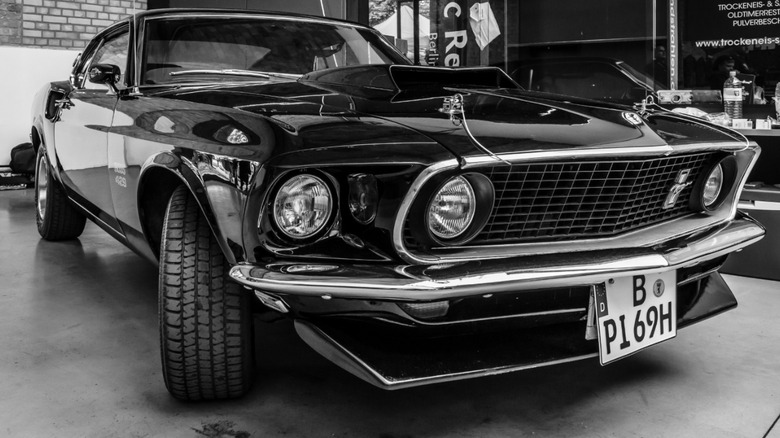
This difference also was evident in other automakers' engines. For example, Ford put out two versions of the Boss Mustang in 1969, the size of the engines being the main factor that differentiated between them. The Boss 302 was rated at 290 hp, while the Boss 429 was rated much higher at 375 hp.
Pros and cons of a big block engine
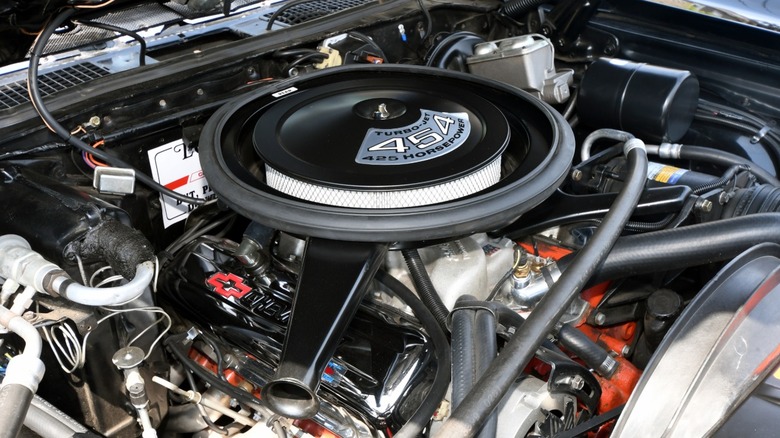
One of the obvious advantages big block engines have held over small block engines is power. Larger cylinders and longer strokes mean more displacement. In other words, more air and fuel can be pushed through the engine, which translates to more power. They don't need turbochargers or any kind of forced induction. There's an old saying, "There is no replacement for displacement." (Modern turbochargers would beg to differ.) And, of course, those same elements that let these engines produce more power also result in more torque.
Big block engines have their disadvantages, of course, which is why you don't see them in new cars anymore. One pitfall is their weight. As you can imagine, big block engines are much heavier than small blocks, and this weight sits right over the front axle, which affects handling. Also, since so much more fuel is being pushed through these engines, gas mileage isn't exactly great. And their extra weight doesn't help.
Big block engines cost more than small block engines, too, and are more expensive to fix. Parts can be harder to find, and big block engines take up more space than small blocks. That means trying to swap a smaller engine out for one of these beasts can be a real pain.
Pros and cons of a small block engine
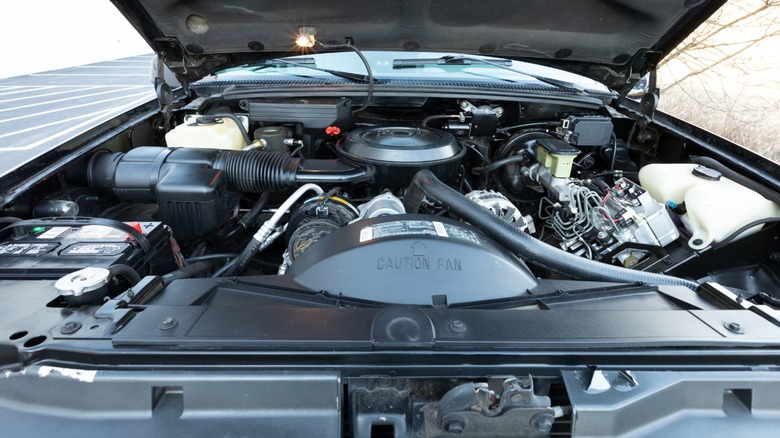
Small block engines are obviously lighter than big blocks. That smaller size brings better balance and quicker acceleration, which improve the overall driving experience. Smaller engines also offer better weight distribution and can rev faster. Fuel efficiency is easier for a lighter car, an area where engine weight can make a huge difference. Another plus is that small block engines don't need as much upkeep as big blocks. Sometimes they even last longer.
A small block engine can more easily fit in a larger variety of cars, too, making engine swapping much easier. Modding a small block engine is also easier because aftermarket parts for them can be found everywhere. Those parts are usually less expensive, as well. And small block engines provide a nice equilibrium between power and weight, especially when they've been tuned for more horsepower.
That's not to say that small blog engines are without their disadvantages, but they're few and far between. The main downside is raw power, especially if you're comparing naturally aspirated engines that have no direct fuel injection. In that case, a small block engine can't compete with a big block engine. Still, the pros of small block engines outweigh the cons, especially for street cars and daily drivers, so their popularity is no mystery. In fact, the small block Chevy Turbo Fire was the most produced engine of all time.
How turbochargers and superchargers have closed the gap
We're going to group turbochargers with superchargers because they're both forced-induction devices that perform the same function, forcing air into the engine to produce more power. A turbocharger uses the engine's exhaust to spin its turbine, which powers its compressor, which pushes air into the engine. A supercharger is usually powered by a belt turned by the camshaft instead of the engine's exhaust.
Have superchargers and turbochargers closed the gap between big block and small block engines? Well, it's not uncommon nowadays for small block V8s to crank out 700 hp or more. For example, the 2022 Ford F-150 Raptor R was fitted with a 5.2-liter supercharged V8 that could put out 700 hp. Meanwhile, the supercharged 6.2-liter Hemi Hellcat engine in the 2015 Dodge Charger SRT Hellcat could produce 707 hp. The new $300,000 Ford Mustang GTD has a supercharged 5.2-liter V8 that churns out 815 hp.
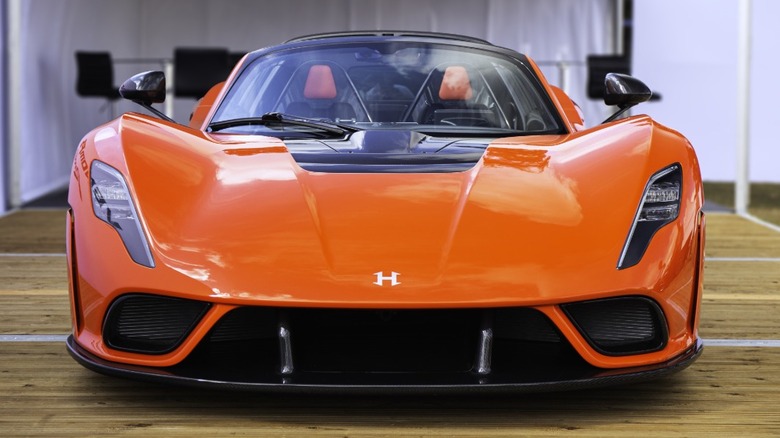
And some modern small blocks can crank out horsepower with four-digit hp ratings. The new Chevy Corvette ZR1 is a shock to the supercar system with a twin-turbocharged 5.5-liter flat-plane crank V8 that rates 1,064 hp. The Koenigsegg Jesko Attack can put out 1,280 hp when fueled with gas, with an astounding 1,600 hp when using E85 biofuel. And most impressively, the Hennessey Venom F5 can pull 1,817 hp out of its V8 twin-turbo engine.
How hybrids have closed the gap
It almost seems like cheating to give the V8 engines in hybrid vehicles credit for the cars' combined horsepower ratings. "Combined" horsepower is what it sounds like. The horsepower ratings of whatever electric motors are in hybrid are added to the horsepower rating of the gas engine. The result is horsepower that rivals the big block V8 engines of yesteryear.
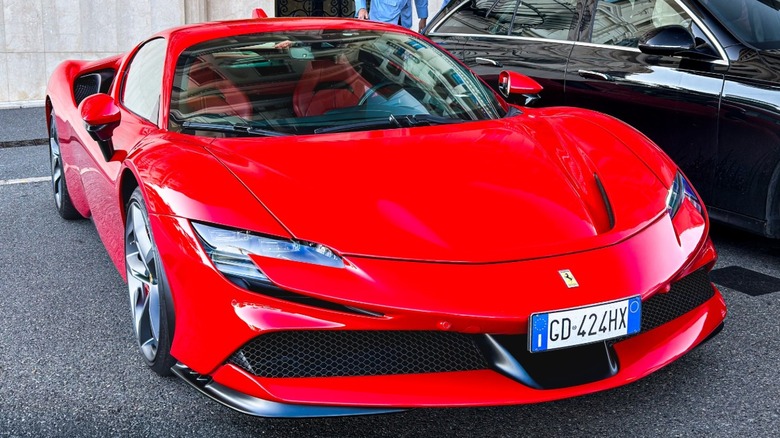
For example, the 6.2-liter small block V8 in the Chevy Corvette E-Ray can get 495 hp on its own. That's not too shabby, but combine it with the 160 hp of the vehicle's electric motor, and you've got 655 hp, though one test of the Covette E-Ray indicated it can produce even more horsepower. If you think that's something, consider the Ferrari SF90 Stradale. This is the first plug-in hybrid ever produced by Ferrari. Its twin-turbo V8 is rated at 769 hp, which is already impressive. But it has three electric motors that add a combined 217 hp, bringing the combined number to 986 hp.
The horsepower figures we've pointed out are all rather astonishing. But if there's one thing that ties them all together, it's progress. Engines keep getting more and more efficient. Add a turbocharger or an electric motor to one of these power plants, and you've got an engine that can rival or best anything from the big block era.