

Using Wipers Without Headlights In Bad Weather Is Illegal In These US States
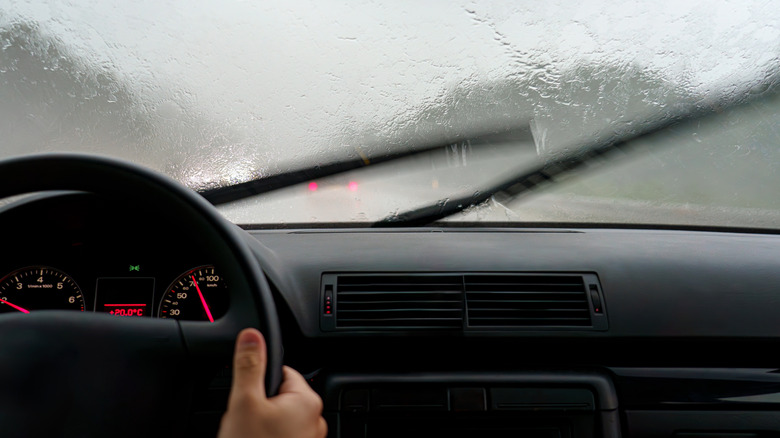
Depending on the state where you earned your driver's license, certain practices behind the wheel have likely become ingrained in your psyche. This is especially true when it comes to second-nature safety decisions based on weather conditions, which may have left you feeling confused by the fact that not everyone turns on their headlights while it's raining. Well, it turns out that variance could be a result of the states that drivers come from and the rules they learned while driving there.
So what does the law truly say across all 50 U.S. states? We've dug through every state's department or bureau of transportation resources and compiled a breakdown of what we found to help shed some light on the matter. All told, we found 23 states with laws that required the use of both wipers and headlights in bad weather, although many more have rules related to the use of headlights in low visibility conditions.
Additionally, there are some states where wipers aren't explicitly mentioned. Perhaps unsurprisingly, some states' rules around atmospheric conditions like fog are, well, a little foggy. Here is what our investigation into the laws regarding headlights and windshield wipers uncovered.
When wipers are on, headlights are on
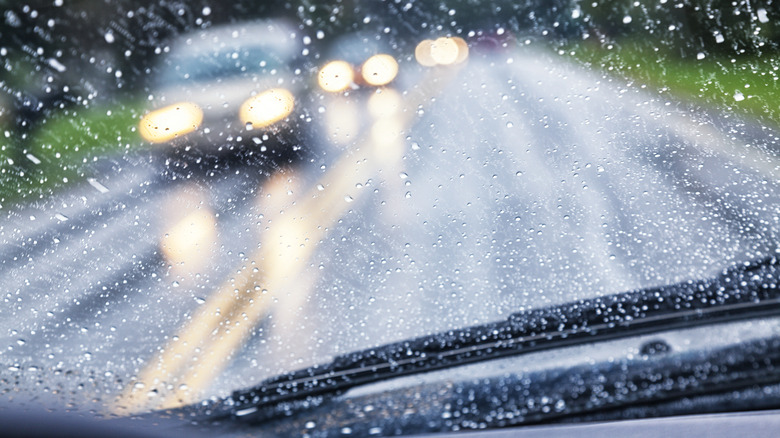
The following states require headlights to be on when wipers are in use due to rain, sleet, or snow: Alabama, Arkansas, California, Delaware, Illinois, Kansas, Kentucky, Louisiana, Maine, Maryland, Massachusetts, Missouri, Nebraska, New Jersey, New York, North Carolina, Ohio, Oklahoma, Pennsylvania, Rhode Island, South Carolina, Tennessee, and Virginia. Interestingly, New York says daytime running lights aren't enough, and that the same low beams used for night driving must be on in wet conditions. Then, some states really get down to brass tacks and outline that intermittent misting doesn't require headlight use.
Some states' laws don't explicitly state that headlights must be on when wipers are on, but still have it covered with any form of wet or inclement weather — particularly our visibility-killing friend, fog — or when there is not sufficient light. Or, "unfavorable atmospheric conditions," as Utah and a few other states describe it. These include Alaska, Arizona, Connecticut, Florida, Georgia, Hawaii, Idaho, Indiana, Iowa, Michigan, Minnesota, Mississippi, Montana, Nevada, New Hampshire, North Dakota, Oregon, South Dakota, Texas, Utah, Vermont, Washington, West Virginia, Wisconsin, Wyoming.
It's worth noting that the Colorado State Patrol says headlights are not required in the rain, while New Mexico only has a statute concerning the use of headlights in conditions where there is "not sufficient light to render clearly discernible persons and vehicles on the highway at a distance of five hundred feet ahead."
DRLs, low beams, and just being visible
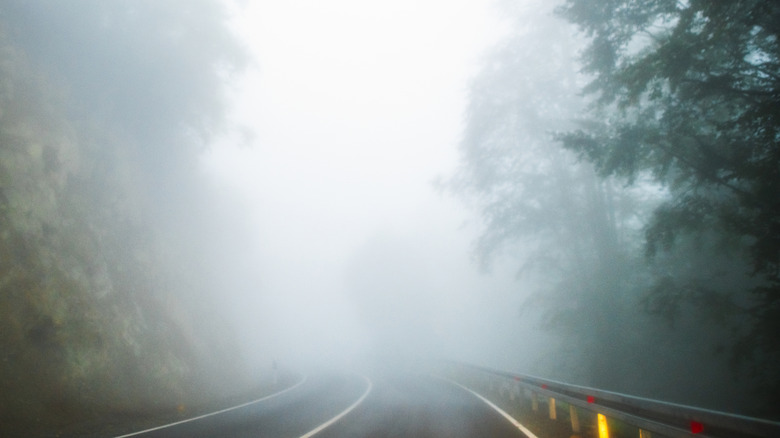
After digging into whether using wipers without headlights in bad weather is illegal in these U.S. states, there's one overarching takeaway — when Mother Nature restricts visibility, you should use the tools you have on your vehicle to help clear things up and make yourself more visible. So please, listen to your fellow drivers and turn your headlights on.
Additionally, ask anyone who's ever piloted a small sports car or hatchback in any weather, such as this author — it's a good idea to always keep your lights on, whether that's DRLs or low beams.
Finally, it's worth digging into your individual state's laws regarding high and low beam use, DRLs, fog lights, spotlights, lights that dazzle (yes, that's language outlined in government documents), using lights while passing on two-lane roads, light color, lights that flash, and much, much more. These get incredibly specific depending on the state.