

Do Harley-Davidsons Need Back Pressure?
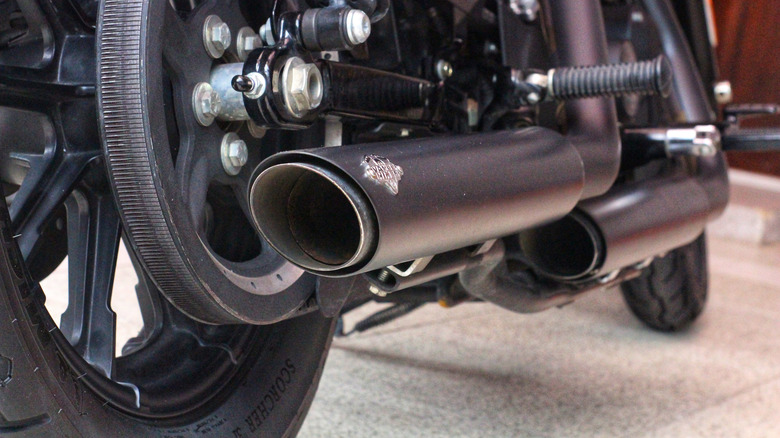
If you belong to the camp of people who still believe that back pressure helps your Harley-Davidson, or any engine, for that matter, we hate to break it to you, but you're wrong. Ask any engineer, exhaust expert, or engine builder, and they'll tell you that exhaust back pressure is completely undesirable and will do more harm than good. In other words, it'll simply rob the engine of power and make it less efficient, regardless of whether it's a Twin-Cam or Harley's relatively modern Milwaukee-Eight.
There's no arguing that baffles add back pressure by reducing exhaust gas velocity. Most aftermarket Harley exhausts, like a 2-into-1 performance setup, typically have some form of baffles built in, but they're nowhere near as restrictive as the factory ones. The misconception, however, stems from the fact that just removing the baffles alone (without adding a tune) makes the mid-range performance noticeably weaker, but putting them back on makes it better. So, you're misled to believe that your Harley needs some level of back pressure.
Understand that you make the engine more efficient by taking away back pressure, and not the other way around. Having fewer restrictions in the exhaust will allow the spent gases to exit sooner, which means the engine does less work to push them out after combustion. Ergo, you have reduced exhaust pumping losses and better scavenging, unlocking more power and improved fuel economy.
Put simply, increasing the exhaust gas velocity will bring along a noticeable improvement in your motorcycle's low and mid-range performance. But, you may ask, doesn't this counter the previous statement about baffles? Yes, but it'll all make sense once you understand the concept of harmonic exhaust reversion.
Busting the back pressure myth
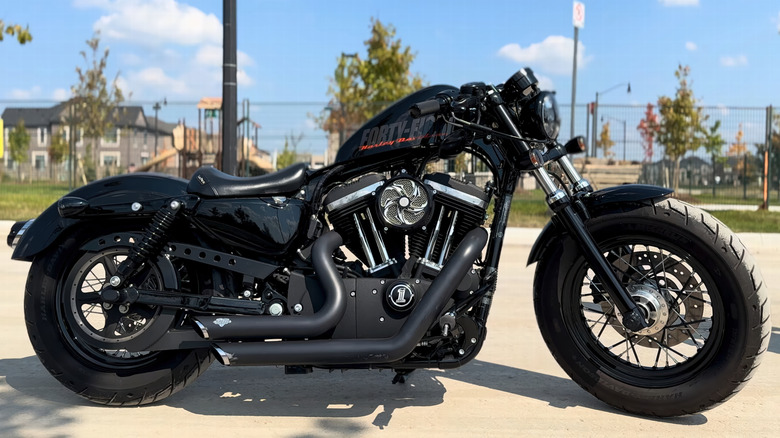
Without getting too technical, exhaust reversion occurs when some of the spent gases are slowed down or sent back into the cylinder by the exhaust pulses/waves reversing their direction due to a pressure differential. This, as you'd imagine, is not good for performance. The baffles inside your Harley's exhaust, in addition to adding back pressure, also help reduce reversion by limiting the backward flow of those spent gases. In most cases, the perceived gain in performance after putting the baffles back in place is because the power lost through added back pressure is less than the power gained by reducing exhaust reversion.
Essentially, it's not the back pressure that's helping the engine — instead, the restriction reduces exhaust reversion, which leads to improved performance. If you're still not convinced, here's some math. At high rpm, 7 to 8 psi is the back pressure you can reasonably expect from a typical stock exhaust system. For the sake of the argument, let's not factor in blowdown and assume the 8 psi is experienced fully by the piston. That means, on a Milwaukee-Eight with a 4.25-inch bore, a force of roughly 113 pounds is acting on the piston during the exhaust stroke, which is precisely the kind of pumping loss you don't want.
That said, understand that this is just one part of the whole exhaust equation. As we've seen in our single versus dual exhaust discussion, the pipes' diameter, length, and how they merge can all affect scavenging and back pressure, which directly impacts the engine's output. So, the next time someone tells you that back pressure is necessary, you can confidently tell them how monumentally wrong they are.