

The Simple Upgrades That Make Your Cheap Car Feel Expensive
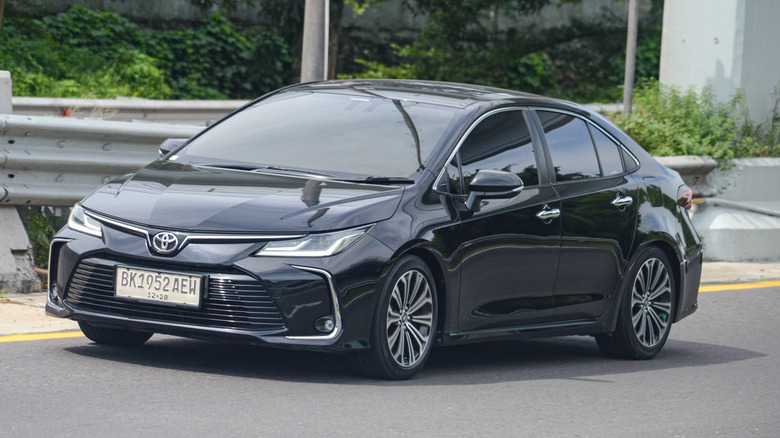
Most of us have been there. You're sitting at the stoplight in your beat-up jalopy when a swanky car comes up next to you. You can't help but notice the shimmering paint job and opulent cabin, comparing it to your beat-up paint and stained, cloth seats. But here's a secret the auto industry does not want you to know: Luxury is not about the price tag. It's about how you feel when you get inside your car; the smell, the tactile experience, the visual appeal. What makes a premium car a luxury one is the collection of sensory inputs, like how the supple leather seat grabs you, the way the high-end audio surrounds you with crisp music, and the lack of any mysterious rattling noises.
Most people are put off by the thought of upgrading their car because they are thinking of extremes like $5,000 air-suspension kits, or $6,000 engine swaps, or $10,000 paint jobs for that deep mirror finish. It simply does not make sense if your car's worth just four figures. The idea here is to remove the elements that make your daily driver feel cheap.
Why do it? Because, in any given year, you spend hundreds of hours inside your car. If every second of that time is spent feeling like you're in a budget motel, you're gonna end up loathing your commute. If you focus on improving the touchpoints of your car — points you can see, hear, and feel — you can trick your brain into thinking that you are in something more expensive. And it can be way cheaper than going for a predatory new car loan. A sorted, personalized old car is way cooler than a newly-leased base model luxury SUV.
Faux-leather seats: The perfect compromise
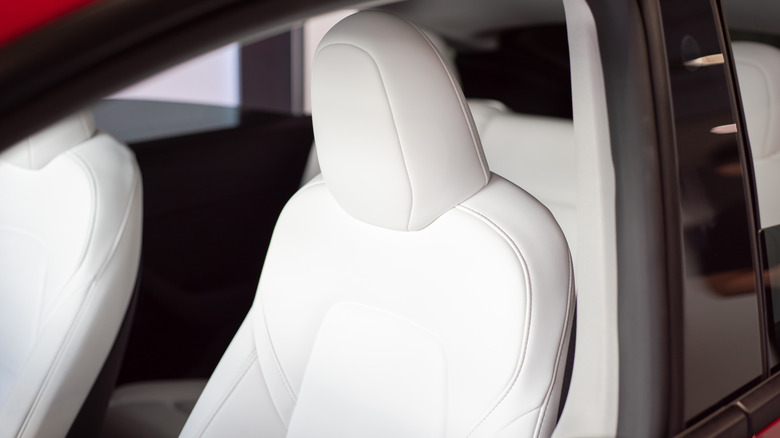
One of the biggest visual and tactile differences between an economy base model and a top-spec luxury car is the seats. Cloth seats get the job done, but as time passes, they attract stains and spills that are hard to completely get rid of. Leather seats look cool and are far more resistant to such mishaps, but they can be prohibitively expensive. If you want the proverbial Lexus cabin vibe for cheap, a well-fitted faux leather upholstery can get the job done.
We aren't talking about the loose, baggy, one-size-fits-all seat covers available in your nearest big box store. For the premium experience, look for vehicle-specific seat covers from brands like Clazzio. These seats are specifically designed to fit over your seat foam like a surgical glove, and they usually cost between $100 and $500. To be safe, you can get it professionally fitted, which could cost an additional $50-$500.
While synthetic leather seats look as expensive as regular leather seats, they are easier to live with and clean; they just need a quick wipe with a damp cloth. Besides faux-seats, you can additionally add some aftermarket heating elements. For around $100 extra, you can have a warm backside during those cold winter drives.
Audio system: Sounding good shouldn't be expensive
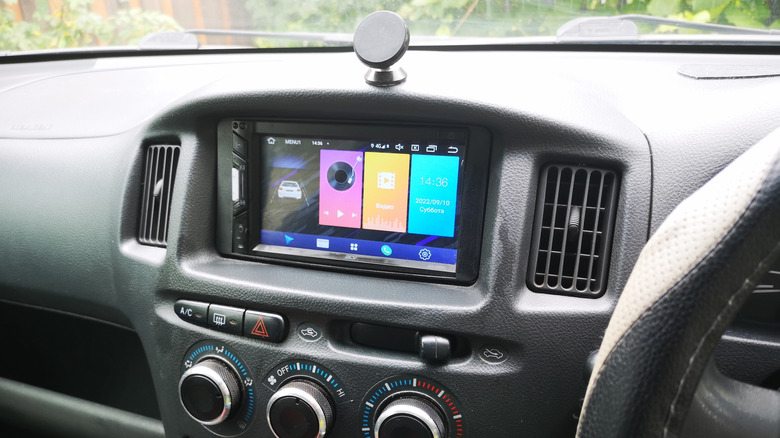
Modern luxury cars are quite impressive in the audio department. Some of them have the best factory-installed sound systems in the industry. Meanwhile, most budget cars make do with paper cone speakers and a basic head unit. To achieve the best sound, you don't need massive subwoofers that fill up your boot and rattle your windows. Getting an audio system for your car is an individualistic experience, though nailing down the music to your liking can lead you down a deep and expensive rabbit hole. However, to keep it simple and get a good quality music setup without breaking the bank, you need a three-pronged approach.
First off, you need a head unit. A modern touchscreen unit with features like Apple CarPlay and Android Auto Compatibility will cost you $300 or more. It helps manage the entire setup and will also help your dashboard look better, provided the head unit cleanly slots in. High-end systems in luxury cars use DSP (Digital Signal Processing) that helps time-align sounds. Most modern entry-level head units have built-in DSP, so check if your preferred head unit has one.
Next up, get component speakers; entry-level sets can cost around cost around $150-$250. The last thing you need is sound deadening. $100 worth of Butyl rubber sheets should cover a simple mid-sized car. Sticking them inside your car doors should improve audio quality while reducing outside road noise. If it's all executed well, for under $1,000, you can have an audio setup that sounds better than the stock music systems found in cars that are three times more expensive than your daily driver.
Alloy wheels: Up your car's sneaker game
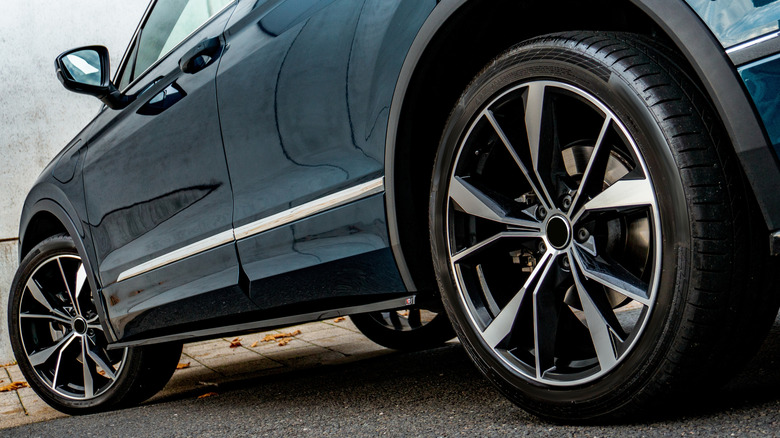
Wheels are like shoes for your car, and a good pair of alloy wheels can really elevate its look. While some cars do look good with steel wheels, they scream "base model" and they look even gaudier with plastic hubcaps on. There are other benefits to alloy wheels; for example, most of the time, they're lighter than steelies. Switching to alloys helps reduce unsprung weight, allowing your suspension to react quickly to bumps, thus improving your ride quality. They also dissipate heat better than closed steelies, which helps your brakes stay cool.
It is important to choose the right size for alloy wheels if you are looking to upsize. Don't go for the biggest rims that you can fit inside your wheel wells. For example, fitting 20-inch rims on your car that specifies 16-inch rims will ruin your ride quality while making you come across as a wannabe. Keep it classy by only upsizing within 3% of your tire's original diameter.
While there are cheaper alloy wheels, a good set of four flow-formed alloys (which are stronger and lighter) will cost you anywhere from $800 to $1,200. They might feel expensive, but they are worth the investment. Another pro move you can try is to look for factory alloys from the higher variants of your car. Called "take-off" wheels and tires, most customers swap these out at the dealership for fancier ones — and most of the time, the dealership does not buy these back. If you are lucky, you could find a set of almost brand-new factory alloy wheels for cheap from third-party sellers.
Detailing: A clean look screams class
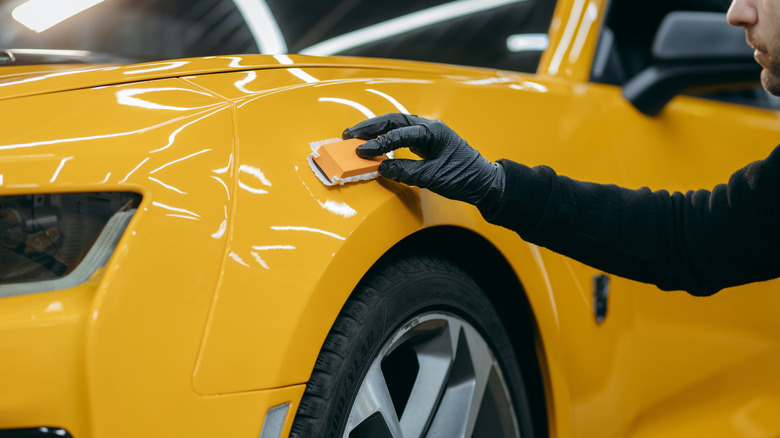
Your two-year-old car can look like a ten-year-old beater if it's dirty and has scratches all over. Simple examples of value are the 20-year-old and 50-year-old show cars that look like a million bucks, mainly because of their deep, spotless, gleaming paint job — and that's one thing they have in common with expensive cars. If you want to make a cheap car look expensive, having it spotless is an important step, as you can see from this video of a Porsche that was left in the woods for 20 years.
Start with the exterior. Those swirl marks and spider webs you see on the paint surface under the sun are a result of regular wear and bad car washes. The good news is that you can get rid of most of it yourself with a dual-action polisher kit (which is about $50-$150) and a high-quality compound to level it out. Once you get rid of the marks, follow it up with a DIY ceramic coating kit (usually priced from $60 to $100). Unlike wax polish, a ceramic coat creates a semi-permanent layer that prevents light swirl marks and surface contaminants. As a bonus, ceramic coating also gives the surface a glass-like finish and does a good job of repelling water.
Over time, the car's interior plastics get dull and scratched. Use a dedicated interior restorer to bring back the deep black or gray finish. When your paint shines and your interior looks fresh, your car goes from being a beat-up jalopy to a well-preserved ride. Detailing a car is important, as the luxury feeling comes from the absence of neglect, and keeping it shiny requires more elbow grease than money. As a bonus, a well-preserved car also holds its resale value well.
Maintenance: Peace of mind is luxury too
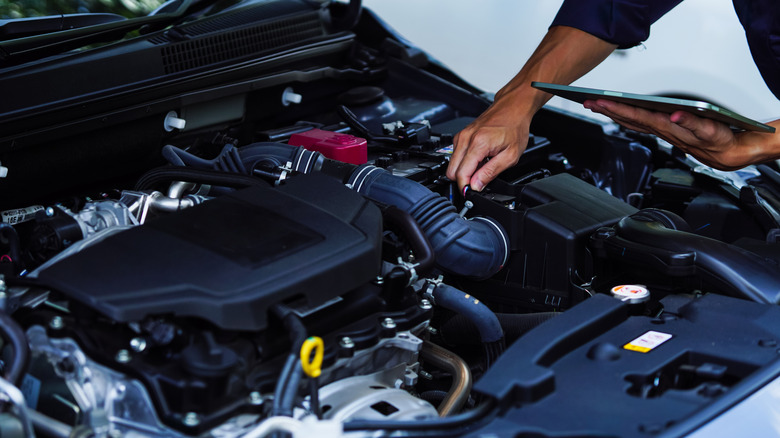
There is no point in doing all of the above if your car isn't mechanically sorted and keeps breaking down. Having a car that can hold up well should be your priority, and that includes every part of it. You can have the nicest wheels and the softest leather seats, but if your air-conditioning takes 10 minutes to cool the cabin, or if your turn indicator makes the frantic double-click sound due to a blown bulb, that illusion of driving an expensive car is shattered. Simply put, an expensive car works flawlessly, so a cheap car working flawlessly will feel expensive. That's why it's worth brushing up on your car maintenance skills.
The first step is to ensure your AC is working flawlessly. Make sure its gas is recharged and get its leaks plugged if you need to; this will cost around $250-$350. Get your yellow and fogged headlight lenses restored with a $25 restoration kit, and replace your interior light's halogen bulb with warm-white LEDs to make your cabin look more modern. A $25 can of silicone spray used on door seals and bushes should eliminate the squeaks and groans associated with an old car, too. Having all of this sorted allows you to enjoy the drive instead of managing a list of so-called quirks. That peace of mind is the ultimate luxury, turning your cheap car into a reliable companion that punches above its weight class.