

Do You Need To Use Turn Signals In Roundabouts?

Roundabouts are known by many names such as a "roundyrounds," rotaries, and traffic circles, among other names. In case you've never navigated one, it's essentially an intersection with no traffic lights in which drivers travel around a circular road that features exits splitting off. When viewed from above, it can look similar in shape to a giant wheel — and the rules for moving through one are different from straight-on streets.
Drivers wishing to enter an American roundabout must yield to those already navigating the circle. However, although it's recommended that motorists use their turn signals in a roundabout, that doesn't mean it's necessarily written into the law. Recommendations vary, too, with some directing drivers to indicate when they plan to exit and others asking motorists to also signal if they're going to continue around the circle.
Unaware that turn signals and roundabouts go hand-in-hand? You're not alone. There are several factors at play here: laws aren't consistent across the country, many drivers fail to use turn signals in general, and roundabouts aren't as prevalent in the U.S. As an example, Connecticut drivers have struggled to simply drive through roundabouts, and knowing when they should signal is the least of their concerns at that point.
What are the rules? It depends, but many drivers may never encounter a roundabout
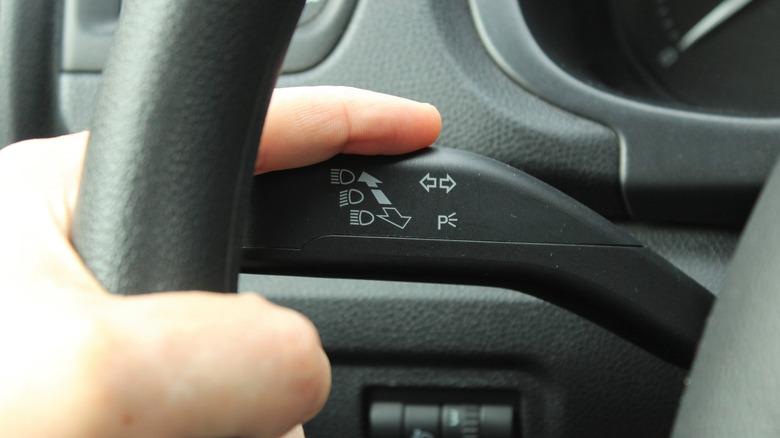
In 2026, a Kansas Senate bill was proposed to make turn signals mandatory for the circular intersections in the state, with many officials only then realizing it had never been made law before. Over in Minnesota, once a vehicle enters a roundabout, it's not required by law to signal when exiting. But Florida's law states that you must signal prior to exiting a roundabout. A Washington Department of Transportation instructional on "How to get around a spiral roundabout" doesn't even mention using a turn signal. This lack of consistency makes it confusing for motorists that may be accustomed to certain roundabout procedures, but not others.
The other issue is that the U.S. simply doesn't have many roundabouts, especially compared to the size of the country. For instance, the British Isles have around 25,000 roundabouts, whereas the states only feature 7,000 or so. It's conceivable that some of the drivers awkwardly navigating roundabouts have either never seen one or motored across very few. Then again, some Americans apparently love them, as demonstrated by YouTubers driving a Dodge Charger around a roundabout for 24 hours straight.
Many drivers don't just fail to use their blinker at a roundabout, but everywhere else too
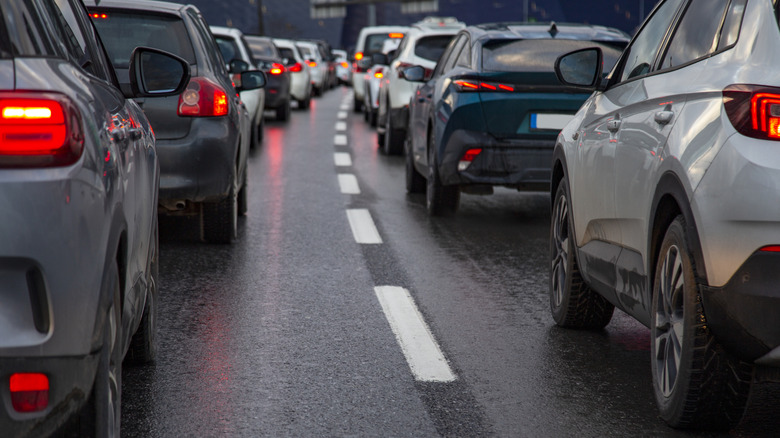
Turn signals are a critical communication tool designed to alert other motorists of your intentions. However, in one of the largest studies on turn signal use by the Society of Automotive Engineers, as reported by KGW8, almost 50% of drivers changing lanes fail to signal, and 25% don't bother when turning. The law in this case is clear, with every state not only requiring functioning blinkers to drive legally, but also for motorists to use them when changing lanes or turning. So why are so many drivers failing to signal?
Interestingly, Response Insurance ran a survey for this exact question, as reported by Philadelphia Magazine. The majority of respondents claimed it took too much time, while a notable percentage disclosed that they were too lazy to bother with it. It's difficult to wrap one's mind around these excuses, considering that prior to modern blinkers, drivers had to stick their arm out the window to signal — and the signals weren't consistent across the world, either. Nevertheless, whether or not your state requires it by law, using your turn signal in a roundabout is widely advised. Communicating to other motorists helps keep traffic flowing smoothly, which is the basis for roundabouts in the first place.