

How Piston Shape Impacts Engine Performance And Efficiency
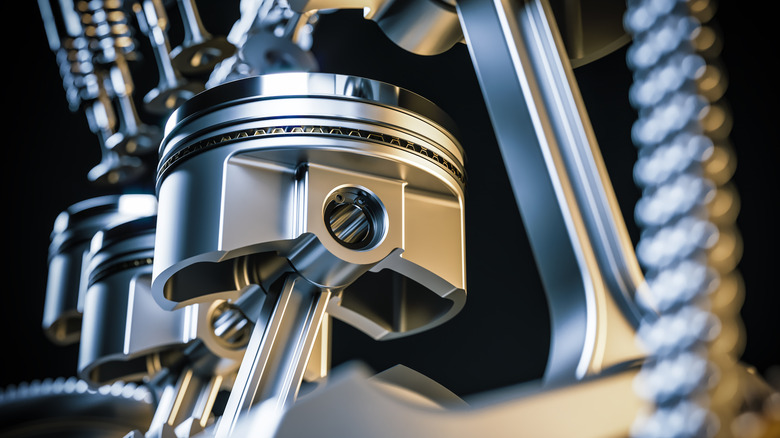
There's more to piston shapes than you might think. Whether it's domed, flat, or dished, all pistons have their fair share of pros and cons when it comes to performance and efficiency. Understand that piston design, especially the crown (or the "top" of the piston), plays a huge part in determining the flame propagation, quench, valve clearance, fuel spread (if directly injected), and the inlet air characteristics, including swirl and tumble.
As you can probably tell, piston design is complicated, with manufacturers having to factor in variables like cam lift, ignition, compression, and fuel type/quality. Not only that, but weight saving is also an important consideration, as are durability and longevity. But whatever the case, a piston designer's first priority is valve clearance; everything else comes second.
Choosing a domed piston may allow for more engine compression, which is good, but it isn't everything. You may, however, run into valve contact issues, which can be avoided using dished pistons, but then you sacrifice compression, reducing the engine's overall efficiency. As you may know, a higher compression engine unlocks more power and better efficiency, as it manages to squeeze more useful work from the available air and fuel mixture.
Turns out, using flat pistons is a great middle ground, simply because it offers the best burn quality, which in turn improves combustion efficiency. While there are tangible benefits to dome and dished pistons, modern head designs, higher octane fuels, and advanced fuel-injection systems have all given engine builders very little incentive to stray from the flat top style. Even if they do experiment with various designs, they tend to stick very close to keeping them flat-ish.
Dome versus dished pistons
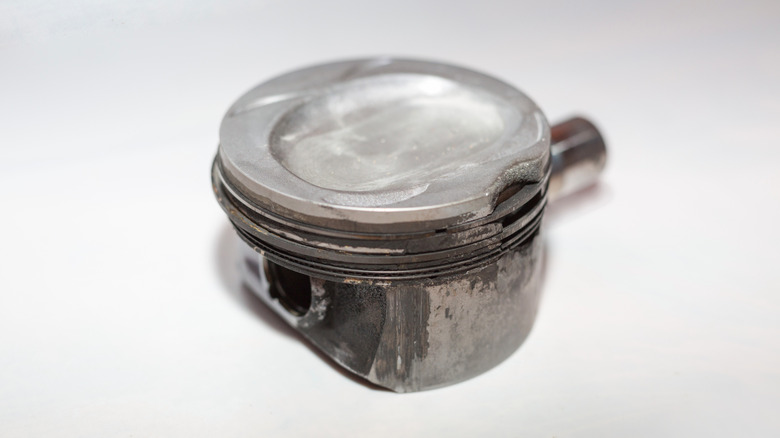
Flat pistons might be cheaper to source, but they may not be able to offer the highest compression ratio possible. A domed piston, such as those you'll find in a lot of Dodge Hemi engines, is often used to increase compression, but getting the right balance remains tricky. A large dome (higher peak) can interfere with the flame front, creating a slow burn. Pair that with a physically small combustion chamber, and you may find it difficult to design the appropriate valve pocket (otherwise called valve relief), especially if you're chasing more compression. Engine builders often prefer using broad and less peaky dome styles, as opposed to pistons with a tall dome.
When you're chasing a volumetric efficiency (VE) beyond 100%, which is the case with most force-fed engines, the requirements for safe operation are very different from those of a naturally aspirated engine. You're often compression-restricted when you're trying to improve the engine's power/VE by running a turbo or supercharged setup. In these situations, most engineers prefer using a dished piston, which reduces the engine's compression ratio, thereby reducing any risk of pre-ignition or detonation, especially if the engine has a small combustion chamber. As far as piston designers are concerned, dished pistons are the least challenging. This sort of design is also preferred in applications where there isn't too much cam lift.
Choosing the right piston shape depends on a variety of factors, including the sort of application the engine is designed for. A race engine may run a different piston style when compared to a street engine, but there are nuances to that. Generally, though, flat-tops are the go-to choice for many engine builders.