

The Dash-To-Axle Ratio Is A Delicate Balance That Can Make Or Break Styling
While some car designers chase form, others follow function. But whatever the case, the dash-to-axle ratio is something they should pay close attention to. Why? Because if you screw up the ratio (which is essentially the distance between the dashboard/windshield and the front axle), you get all sorts of weird-looking cars. Enter Chrysler's Crossfire, the Bill Thomas Cheetah, and, dare we say, the BMW Z3 M "Clown Shoe." The new Jaguar Type 00 Concept is another example.
Generally speaking, car design is subjective. For instance, we may have favorable opinions about the SLS AMG's long, stretched hood, with which you may agree or disagree. When it comes to dash-to-axle ratio, though, the key point to remember here is proportions. A large ratio can give the appearance of speed and power, while too much ratio drifts into weird-looking territory — see the examples above.
At the end of the day, designers have to work around the mechanicals and not worry exclusively about curb appeal. For example, a massive engine requires more space, which is what drove wealthy 20th-century motorists to put up with long hoods in the first place. It not only signaled status, but it also meant power (both literally and figuratively). Some enthusiasts even call the ratio the "prestige gap."
Luxury land yachts like the Rolls-Royce Phantom have managed to pull it off rather brilliantly, which arguably cannot be said about the $400,000-plus Cadillac Celestiq EV. Likewise, the Jaguar Type 00 is a far cry from the beautiful and proportionate shapes of the E-Type and Ian Callum's F-Type. And because it's an EV, the long hood isn't even necessary in this case, so the prestige argument holds, apparently.
It's not just about looks
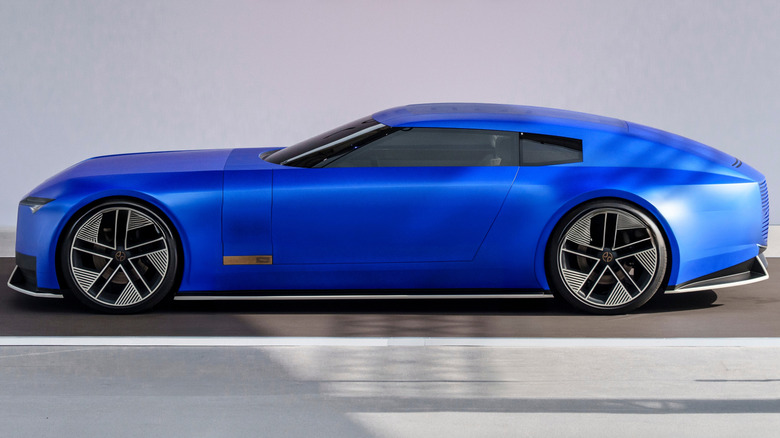
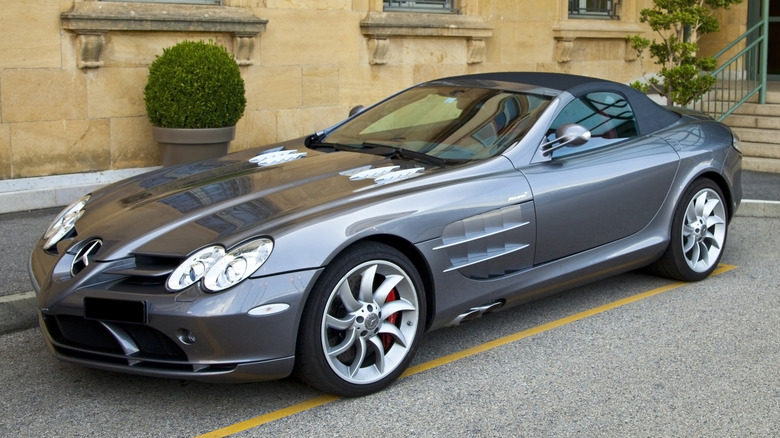
The biggest concern, at least from a designer's perspective, is finding the right balance. The Mercedes SLR McLaren, a Gordon Murray masterstroke, got it right (in our opinion), but the new Toyota GR GT perhaps went a bit too far, as did the Z3 M and Cheetah.
Understand that shoehorning a massive V8 or V10 behind the front axle will inevitably lead to the car featuring a long hood. However, doing so can also bring along handling benefits, which you'd want in a sports car. Long dash-to-axle ratios, which are typically what you'd find in front mid-engined cars, help with proper front-to-rear weight distribution. Not only does this improve the car's eagerness to turn by reducing understeer, but the layout also dramatically changes how the car feels around corners, making it more agile.
But Audi has taught us that you can still make good cars even if they're not of a front mid-engined variety. Although modern-day shared platforms allow wheelbase and track width alterations to some extent, stuff like axle-to-dash ratio pretty much remain untouched, which should tell you that this debate largely applies to expensive, sporty cars (sedans or otherwise) with longitudinal engines.
However, that's not to say cars with short axle-to-dash ratios can't be sporty. Take the Porsche 911 or C8 Corvette, for example. Both cars fall in the short axle-to-dash ratio camp, as do several FWD cars. Although FWD vehicles feature short front-ends, which often translates to nose-heavy, understeer-prone behavior, there are dashing examples of FWD hot hatches that re-imagined how such cars handle. We doubt someone would find a Civic Type R or Golf GTI boring around a windy stretch of road.