

5 Easy Ways To Put A Tape Deck In Your Car (Because Lexus Was Right All Along)
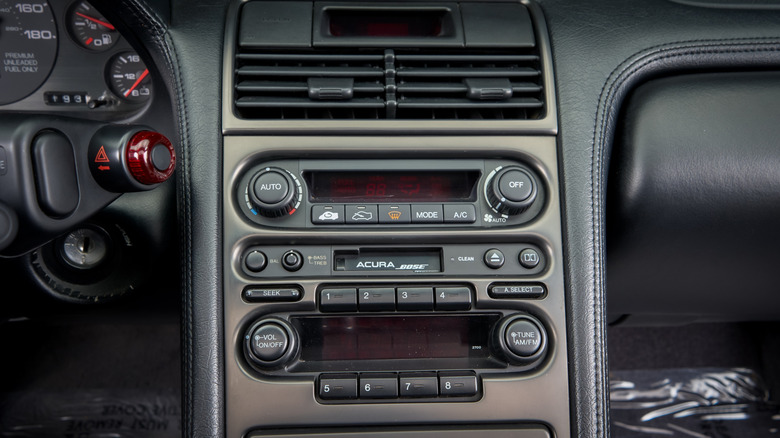
If you have an affinity for music, you've probably noticed that everything sucks now. I don't mean pop music is bad — the music girlies belting out the hits today are better than they've ever been. You can't listen to Sabrina Carpenter, Charli XCX, or Olivia Dean and objectively say it's bad. Rather, the state of music in 2026 is bunk because everybody is paying huge amounts of money every month to rent their music.
Gone are the days of physical media like CDs, and even longer gone are the days of cassettes and 8-tracks. We no longer own physical copies of our favorite songs, and instead we're fed an algorithmically-approved loop of the same 25 songs, over and over. Take control of your life, install a tape deck in your car, and go back to your roots. It's time to drop the streamers, stop pairing to your phone, and stop Bluetoothing terrible-audio-quality files to an even worse OEM stereo. Make your mobile audio system a part of your personality. Go get a rack of tapes from Goodwill for a dollar. You know you want to.
As recently as 20 years ago, there was an entire cottage industry around in-car audio. Every Best Buy in the country dedicated a quarter of the store's floor plan and two garage bays to doing installs. Every town had a massively popular car audio shop that would advertise on every radio station. Then car companies started integrating dumb little screens into the "infotainment" system, and we all just stopped caring about sound quality. Grow up, you've been brainwashed! Pull the computer out of your dashboard and replace it with a tape deck. If you don't do it, you'll prove you're just a coward in the pocket of big OEM audio. Here's how to do it.
The OEM Plus route
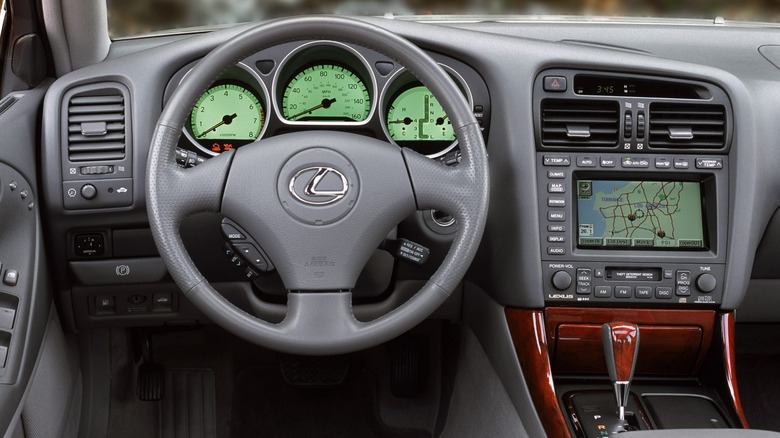
For those of us who daily drive older vehicles, it's possible that you could make a nice, easy transition to tape decks. You might already know that Lexus was the last manufacturer to offer a standard tape deck from the factory (other manufacturers offered it as an option), with the long-legged SC430 luxury convertible ending its tenure in 2010 — leaving tapes to the dust-heap of historical features that we don't get in cars anymore. They were right to keep tape decks in their cars all along, though. They made the experience better, gave us ownership of our music, and forced us to listen to albums instead of singles (or at least make awesome mixtapes).
We have collectively lived for sixteen years without a new car that can play a tape, but there's hope for those of us who buy and drive pre-2010 vehicles. If your car was offered from the factory with a tape deck, you can just hop on eBay or head to a junkyard and find yourself a complete original tape-included infotainment system from a compatible version of your vehicle, and it should be a more-or-less plug-and-play installation.
This is typically the easiest and often cheapest way to install a tape deck. Check around on marque-specific forums for your audio options, and YouTube probably has an install guide you can follow to get the job done on the cheap, and with a factory-style finish when you're done.
Blessings upon DIN head units
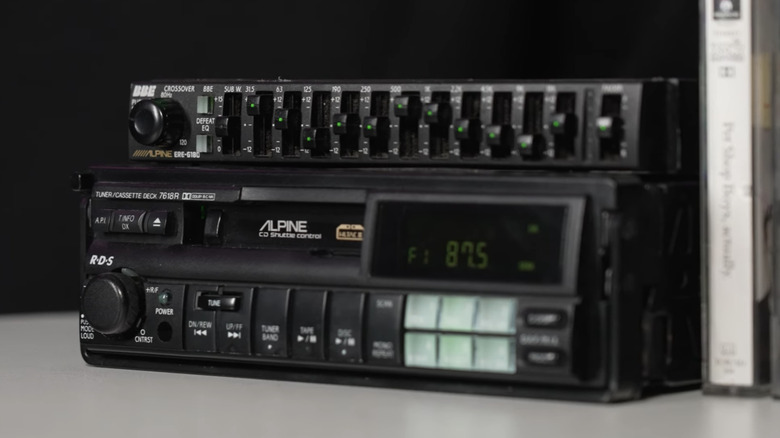
The perfect time for in-car audio was when everything was built to the same sizing standard. There used to be a standard size for audio equipment, making it possible to not only upgrade your stereo to a higher-quality aftermarket head unit, but to bring that unit over to your next car when you traded it in, or wrecked it, whatever the case may be. That standard was created by the DIN, Deutsches Institut für Normung, or German Institute for Standardization, because of course it was. There were typical Single DIN or Double DIN stereos, referring to the size of each unit, and with both of those sizes, there were all sorts of options for aftermarket replacements. It was so nice!
If you have an older car that still has a DIN-style stereo inset on your dashboard, then installing a tape deck is a super-easy process. You can pick from all sorts of options for vintage single or double DIN tape decks on eBay or at your local junkyard, usually for little to no money. Once you have chosen your deck, you can probably find a jumper wire adapter to get the pin out from your car to correspond to the pins on the deck. I typically just cut the harness and solder the new stereo directly into the car, but that's an order of difficulty higher, and it's a less reversible way of doing things.
This is, and always has been, my favorite method of modifying car audio and one of the best bang-for-your-buck car modifications. It's one of the reasons I stick with older cars, because I know I can swap out the audio system in an afternoon with minimal tools. Car audio is so easy to work on, and it's pretty hard to mess up, so watch a YouTube tutorial and get working!
Use the aux port
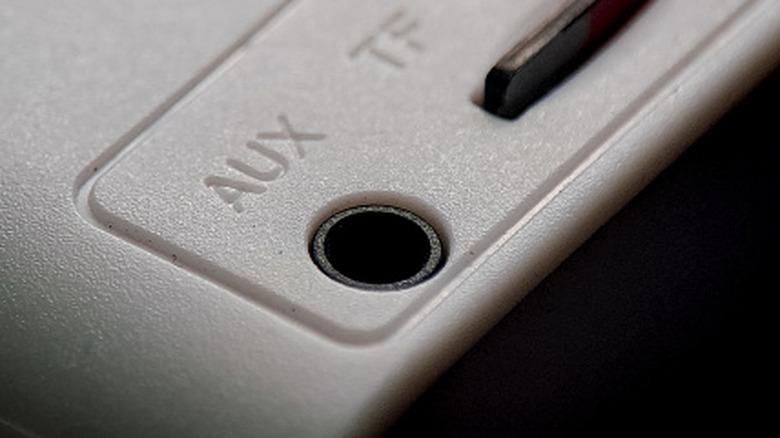
Pass me the aux! Another piece of once popular but now largely extinct car audio ephemera is the aux cable. It's not technically a tape deck, but it gives you the ability to hook up a portable cassette player with ease. For about fifteen years, nearly every single car and every single portable audio player had an auxiliary 3.5mm input/output jack. It was such an easy method for connecting an iPod or your phone to your car, and it was at this point in history that technology peaked.
Of course, this all fell apart when Apple decided to transition to the proprietary in/out lightning cable port, and things got even worse when they removed the headphone jack altogether and demanded everyone go to Bluetooth. For a while, it was so easy to connect a variety of audio players to your car, whether it was an MP3 player or a Sony Walkman.
If you have a car with an aux port, you're in luck. Go get yourself a portable tape player (Walkman or otherwise) and connect it to your car like you're one of the Na'vi tapping into the mother tree. With a humble go-between cable, the simplest audio component in the world, you can connect a creation of a bygone era to most modern automobiles. You will find pure bliss in the aux cable, so do not underestimate this method.
Hide a second deck in your glove box
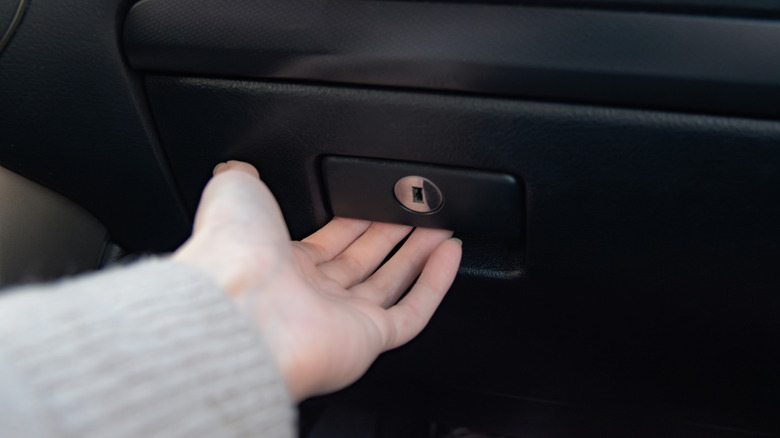
It was fairly common in the 1980s, when stealing tape decks was a lucrative crime, to hide your deck in the glove compartment of your car. Glove compartments were typically lockable, and with the deck out of view, thieves would have no visually attractive reason to break into your car. Obviously, tape-deck theft is less of a concern in 2026, but you still have the opportunity to hide a tape deck in the glove compartment of your car and use RCA jacks to transmit the audio from the aftermarket tape deck to your car's OEM audio.
This is a great option if your car is too new for a DIN-style radio or if you want to maintain the factory backup camera. Not all systems are compatible, but this would be an easy enough project for a car audio place to figure out. Depending on how your car's infotainment system works, you should be able to just flick the stereo input to AUX or ACCESSORY, and it would play whatever output your secondary tape deck wanted to. With a custom mount and switched power, you'll be listening to tapes in style.
This isn't my favorite option, as I would prefer to do away with screens and touch buttons altogether, but if you don't want to deal with your dashboard looking a little Frankenstein'd together, this is probably your best bet. Besides, you're probably going to keep your tapes in the glovebox anyway, so now you can just have everything in one convenient location.
A boombox in the back seat
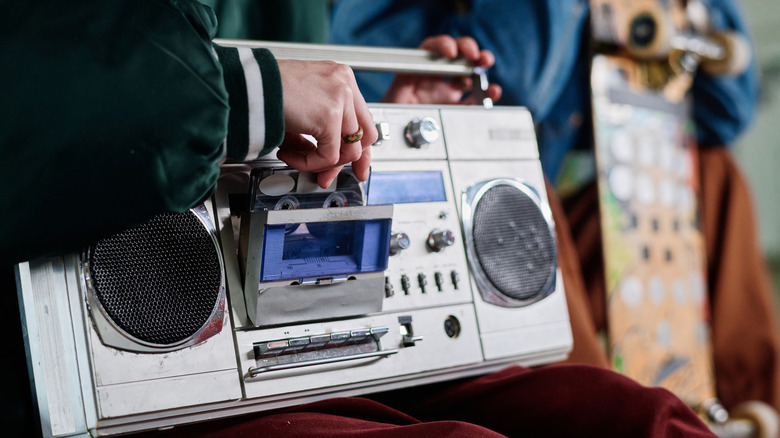
If none of the other options appeal to you, you can always just pick up an old boom box unit on Facebook Marketplace or your sketchy neighborhood electronics forum. Jam this bad boy full of massive D-cell batteries (in 2026, I recommend getting rechargeable ones for the cost savings) and buckle it in to the back seat for a pure listening experience. This is pure period-correct, my friend. There's nothing more 1980s nostalgia than a booming deck.
Sure, the audio is pretty poor compared to a typical car audio system. The sound stage is tiny, the speakers are usually not the best quality, and you can't really find the right balance and fade settings to suit anyone. That said, this is the number one move for ease of install. There's nothing to hook up, no wires to splice, no terrible butt connectors to crimp, just a stand-alone audio system that does exactly what you want it to. Plus, you can take it with you when you hit up your local '80s-themed party.
There's nothing quite like listening to period-correct music in your older car, either. Jamming to Linkin Park's Meteora in the tape deck of a 2002 Nissan 350Z is a singularly good experience. It would be nearly impossible to beat that level of peak driving. Let's go tape gang, let's petition to get tapes back in cars. It's the perfect audio medium for a vehicle. Tapes don't skip like CDs do over rough roads, and they're way cheaper than a monthly subscription service.